

Maddy summaryThis bill authorizes the Department of Homeland Security and Department of Justice to detect, identify, monitor, and mitigate drone threats to specific high-risk facilities including government buildings, airports, critical infrastructure, and locations hosting special events. It establishes a 5-year pilot program allowing state and local law enforcement agencies to use drone detection technology under federal oversight, with strict privacy protections requiring 180-day data retention limits and mandatory training for personnel. The bill requires coordination with the Federal Aviation Administration to minimize impacts on air traffic and mandates regular congressional reporting on how these authorities are being used. It sets an expiration date of 7 years after enactment for these new authorities.
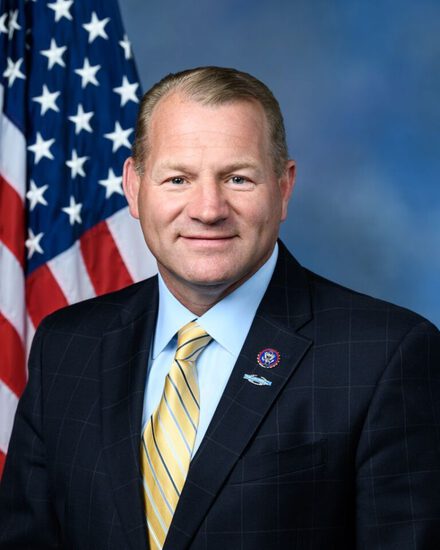
Rep. Troy E. Nehls
Sponsored bills
Maddy summaryHR 4321 prohibits the U.S. government from providing any federal loans, grants, or financial assistance to state or local governments that enact reparations programs based on slavery, race, ethnicity, national origin, or related historical practices. This bill directly affects state and local governments that pass such reparations laws by blocking access to federal funds for those specific programs. The key provision bans all forms of federal financial aid - including from the Federal Reserve and independent agencies - to the jurisdiction enacting the reparations program, without applying to other government functions. The bill focuses solely on restricting federal funding for these programs, not on creating or funding reparations themselves.
Maddy summaryThe SAFE Act of 2023 extends a 2018 law that prohibits slaughtering animals for human consumption to include horses, donkeys, and other equine animals, such as ponies. It amends Section 12515 of the Agriculture Improvement Act of 2018 by updating the language to replace "dog or cat" with "dog, cat, or equine" in both the section title and the main prohibition. This change directly affects the livestock industry and slaughter facilities by banning the processing of equines for food. The bill modifies existing law without adding new enforcement mechanisms, closing a gap in animal protection.
Maddy summaryHJRES 44 is a congressional resolution seeking to block a 2021 rule by the Bureau of Alcohol, Tobacco, Firearms, and Explosives (ATF). The rule classified firearms with stabilizing braces as "short-barreled rifles," which would have required additional licensing and regulation. This resolution uses a specific legal process (under Title 5, U.S. Code) to formally disapprove the ATF rule, meaning the rule would no longer be in effect. It directly affects firearm owners, manufacturers, and dealers who would have been subject to the rule’s requirements.
Maddy summaryThis resolution (HRES 544) states that the House believes the U.S. President cannot bypass Congress's constitutional authority to declare war or authorize military force when acting under the North Atlantic Treaty (specifically Article 5, which triggers collective defense). It clarifies that even if military action is taken to protect NATO allies, Congress must still formally approve such hostilities through a declaration of war or specific authorization. The resolution does not change existing law but expresses the House's position on the separation of powers regarding military engagements. It directly addresses the relationship between treaty obligations and Congress's constitutional role in authorizing war.
Maddy summaryThis resolution (HRES 538) seeks to formally erase the December 2019 impeachment of President Trump from House records, claiming it was based on "wrongful accusations" and insufficient evidence. It states the impeachment should be treated as if it "never passed the full House," citing an unclassified FBI document referenced in the resolution. As a non-binding House resolution - not a law - it has no legal effect and cannot alter historical records or constitutional processes. The resolution directly addresses the 2019 impeachment proceedings but does not change any legal status or impact ongoing matters.
Maddy summaryThis resolution (HRES 461) expresses the U.S. House of Representatives' disapproval of using public elementary or secondary school facilities to shelter individuals not admitted to the United States. It specifically references incidents in New York City where school gymnasiums were used for this purpose, arguing such use diverts educational resources, compromises student safety, and disrupts school routines. As a non-binding resolution, it does not create new laws or directly affect anyone but serves as a formal statement of opposition to the practice. The bill focuses on condemning the use of school facilities for sheltering non-admitted individuals, without proposing policy changes.
Maddy summaryHJRES 45 is a congressional disapproval resolution targeting a specific Department of Education rule about federal student loans. It seeks to block the rule implementing "One-Time Federal Student Loan Debt Relief" (including modifications to Perkins, FFEL, and Direct Loan programs) by invoking the Congressional Review Act. If passed, this resolution would nullify the rule, preventing the Department of Education from using it to modify or waive student loan obligations. The bill directly affects borrowers who might have qualified for debt relief under the targeted rule.
Maddy summaryHR 277 would require Congress to approve major federal regulations before they take effect. Major rules are defined as those with significant economic impact ($100 million+ annually), major cost increases for consumers or industries, or significant adverse effects on competition, employment, or innovation. Agencies must submit detailed information about these rules to Congress, including cost-benefit analyses, before they can take effect. Congress would have 70 session days to approve the rule with a joint resolution; if they don't act within that timeframe, the rule would not take effect. This would increase congressional oversight of federal regulations and require more detailed information about proposed rules before they become law.
Maddy summaryHJRES 69 is a resolution seeking to disapprove an Environmental Protection Agency (EPA) rule published on June 5, 2023, which established a "Federal Good Neighbor Plan" for the 2015 ozone air quality standards. The rule aimed to address ozone pollution crossing state lines, particularly affecting southeastern states and industries subject to the 2015 ozone standards. This resolution would block the rule from taking effect by invoking the Congressional Review Act, preventing it from being enforced. If enacted, it would directly stop the EPA from implementing this specific plan, impacting states and businesses that would have had to comply with the rule.