

Maddy summaryThis bill, the Worker’s Choice Act of 2023, allows employees in right-to-work states to negotiate directly with their employers without union representation if they choose not to pay union dues. It amends the National Labor Relations Act to prohibit unions from interfering with workers who opt out of membership or dues, and to clarify that such employees can engage in "independent negotiating" for their own terms. The bill defines "covered States" as those with right-to-work laws, where employees cannot be forced to pay union fees as a condition of employment. This creates a legal framework for individual negotiations while requiring unions to stop providing services to non-paying members in these states.
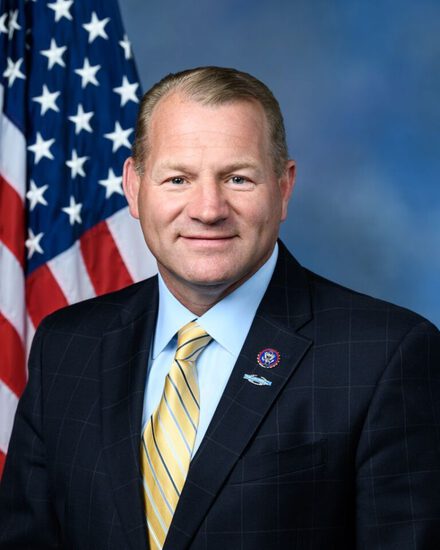
Rep. Troy E. Nehls
Sponsored bills
Maddy summaryHR 6734 prohibits the use of federal funds to finalize, implement, or enforce the Bureau of Alcohol, Tobacco, Firearms, and Explosives' (ATF) proposed rule (2022R-17) defining "engaged in the business as a dealer in firearms." This bill directly affects the ATF by blocking funding for this specific regulatory rule, which was proposed in August 2023. The legislation does not create new requirements but prevents federal resources from being used to advance this particular ATF regulation.
Maddy summaryHR 4468, the Choice in Automobile Retail Sales Act of 2023, blocks the Environmental Protection Agency (EPA) from finalizing or enforcing a specific proposed rule setting emissions standards for 2027+ light-duty vehicles. It amends the Clean Air Act to prevent future EPA regulations from mandating specific vehicle technologies or limiting the availability of new vehicles based on engine type (e.g., gasoline vs. electric). The bill directly affects EPA rulemaking authority and automakers' compliance with emissions standards, ensuring new vehicle options remain diverse without technology mandates. This is a procedural change to federal emissions regulations, not a direct consumer or industry mandate.
Maddy summaryThis bill would amend the census law to exclude non-citizen residents from the population count used to determine congressional representation. It directly affects states with significant non-citizen populations, as their number of House seats could decrease in future apportionments. The key provision changes the statutory language to explicitly exclude "individuals who are not citizens of the United States" from the population figure. This change would apply starting with the 2030 census and all subsequent decennial counts.
Maddy summaryThis bill formally designates specific highway segments as Interstate Routes I-27, I-27E, I-27W, and I-27N under existing federal law. It amends the 1991 Intermodal Surface Transportation Efficiency Act to clarify the numbering for routes previously referenced in the law, including segments near Lamesa, Texas, and routes along U.S. Route 287 and U.S. Route 87. The bill makes no new policy or funding changes - it only updates official route designations. This is a technical administrative adjustment affecting highway numbering, not a substantive legislative change.
Maddy summaryHRES 683 is a non-binding resolution expressing the House's support for diplomatic efforts to encourage Mexico to fulfill annual water delivery commitments under the 1944 U.S.-Mexico treaty. The treaty requires Mexico to deliver an average of 350,000 acre-feet of water annually (over a 5-year cycle) to the U.S., but Mexico has historically delayed deliveries until the cycle ends. The resolution specifically acknowledges water shortages faced by South Texas farmers and urges Mexico to meet its annual obligations, while supporting negotiations for more reliable water agreements. It does not create new legal requirements but formally encourages diplomatic action to address the delivery delays.
Maddy summaryHR 6454, the Chemical Tax Repeal Act, repeals excise taxes on specific chemicals and substances by removing Subchapters B and C from Chapter 38 of the Internal Revenue Code. This directly affects chemical manufacturers and distributors who previously paid these taxes. The repeal takes effect on January 1, 2023, eliminating the tax obligation for covered chemicals without creating new provisions.
Maddy summaryHR 6419 requires colleges and universities receiving federal funding to report on campus policies addressing anti-Semitism and preventing support for foreign terrorist organizations. Institutions must detail anti-Semitism response plans, incident reporting procedures, and screening processes for applicants with ties to terrorist groups. Students convicted of terrorism-related offenses, such as providing material support to terrorist organizations, would lose eligibility for federal financial aid. Additionally, schools must report foreign student violations of these policies to immigration authorities through the Student and Exchange Visitor System.
Maddy summaryThe Veteran Improvement Commercial Driver License Act of 2023 modifies rules for veterans' educational benefits to streamline approval of commercial driver education programs at branch locations. It allows a branch of an educational institution to be exempt from full approval requirements if it is appropriately licensed and uses the same curriculum as an approved main location. Schools must submit an annual report to the Department of Veterans Affairs verifying curriculum consistency, and the VA may withhold this exemption if needed. The changes will take effect 180 days after the VA establishes reporting rules, which must be finalized within 180 days of the bill's enactment.
This resolution honors the service, sacrifice, and contributions of Texas veterans and their families. The resolution also expresses that the House of Representatives commits to working with the Department of Veterans Affairs to ensure that veterans are provided timely care and applicable benefits and compensation as a result of their service.