

Maddy summaryHR 6383 prohibits the Department of Homeland Security (DHS) from using federal funds to implement or enforce a "remain in Texas policy." This policy would require migrants released by DHS or HHS to stay in Texas after entering the U.S. The bill's key mechanism is a funding ban, blocking DHS from enforcing such requirements without congressional approval. It directly affects migrants subject to release by DHS/HHS and DHS operations. The policy change is purely procedural, restricting how federal funds can be used for migration management in Texas.
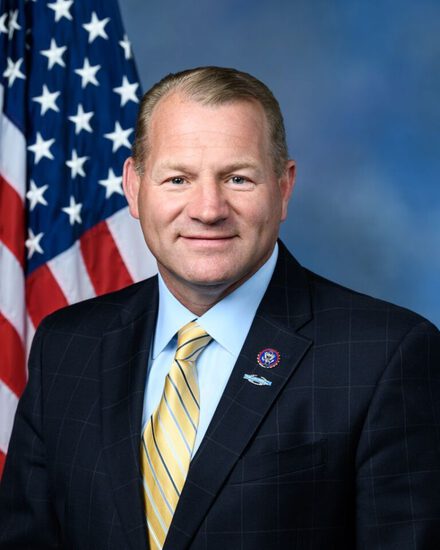
Rep. Troy E. Nehls
Sponsored bills
Maddy summaryThis bill prohibits federal funding for two specific initiatives: the Justice40 Initiative (focused on delivering 40% of climate benefits to disadvantaged communities) and the American Climate Corps (a program announced in a September 2023 White House fact sheet to create climate jobs for young people). It blocks all federal budget allocations for these programs, directly affecting their implementation. The bill does not create new programs or alter existing laws, but prevents the use of taxpayer funds to support these two named initiatives.
Maddy summaryThis bill would amend the Fair Labor Standards Act to remove an exemption (currently found at 29 U.S.C. 213(b)(1)) that prevents certain commercial truck drivers from receiving overtime pay. It directly affects truck drivers who currently fall under this exemption and are not entitled to overtime for hours worked beyond 40 in a workweek. The key mechanism is striking the specific exemption language from the law, requiring covered truck drivers to receive overtime pay at 1.5 times their regular rate for all hours worked over 40. This change would extend standard overtime protections to these workers under federal law.
Maddy summaryHJRES 97 is a resolution seeking to block a specific rule issued by the Department of Justice. It targets a rule published in April 2023 that changed how home confinement is applied for federal prisoners under the CARES Act. The resolution would stop this rule from taking effect by invoking Congress's authority to disapprove federal agency rules under a standard process. This directly affects federal prisoners who might otherwise be eligible for home confinement under the CARES Act provisions.
Maddy summaryThis resolution (HRES 845) formally censures Representative Rashida Tlaib (D-MI) for specific statements she made regarding the October 7, 2023, Hamas attack on Israel. The resolution cites her October 8 comments falsely linking U.S. aid to the attack, her October 18 defense of a false claim about an Israeli hospital bombing, and her November 3 social media post featuring the phrase "from the river to the sea," which the resolution characterizes as a call for Israel's destruction. As a procedural resolution, it does not enact new policy but serves as a formal House condemnation of her conduct. The censure is directed solely at her statements, not at any legislative action or policy change.
Maddy summaryHR 6119, the State Department Security Notification Act, requires the Secretary of State to notify Congress when certain high-level diplomatic officials lose their security clearances. Specifically, it applies to officials at or above Assistant Secretary level, chief of mission roles, or ambassadors/special envoys reporting directly to the Secretary. Within 15 days of a clearance suspension or revocation, the Secretary must submit a written notification to the House Foreign Affairs and Senate Foreign Relations committees, followed by a detailed briefing within 30 days covering the reasons for the action and the official's current employment status. The bill establishes a formal process for congressional oversight of security clearance actions affecting senior diplomatic personnel.
Maddy summaryHRES 831 is a symbolic congressional resolution supporting October as "National Domestic Violence Awareness Month." It does not create new laws or allocate funding, but formally expresses the House of Representatives' support for the goals of raising awareness about domestic violence. The resolution urges Congress to continue highlighting domestic violence's impact and backing programs that prevent and address it. It directly affects public awareness efforts and serves as a non-binding statement of congressional support for victims and advocacy organizations.
Maddy summaryThis bill requires the Department of Homeland Security (DHS) to evaluate its current biometric entry and exit system within 180 days of enactment. DHS must submit detailed reports to Congress on system costs, staffing, travel wait times, privacy impacts, and how the system affects legitimate travel, trade, and counterterrorism efforts - while excluding U.S. citizen data. The evaluation must assess existing infrastructure, training needs, private-sector partnerships, and compliance with procurement rules. This is an oversight measure focused on reviewing DHS’s current implementation, not creating new policy.
Maddy summaryThe BUILD IT Act requires the federal government to transfer unused border barrier materials (like concrete segments or steel) to Arizona, California, New Mexico, and Texas within 90 days of enactment. These materials, currently held by federal agencies or contractors, must be delivered without any fees or charges to the states. The states must then use the materials exclusively for constructing, repairing, or reinforcing border barriers along their sections of the U.S.-Mexico border. The bill does not create new funding or policy but repurposes existing federal assets for state border infrastructure.
Maddy summaryHR 6074, the State Border Defense Act, authorizes state and local law enforcement officers in California, Arizona, New Mexico, and Texas to enforce federal immigration laws prohibiting unlawful entry into the U.S., directly affecting these states' officers and prosecutors. The bill allows state prosecutors to initiate federal immigration prosecutions in U.S. District Court and directly overturns the Supreme Court's 2012 Arizona v. United States ruling. It also permits these states to construct barriers on federal lands or waters to prevent unlawful border crossings, provided the barriers do not hinder border patrol operations or impede lawful travel. The bill explicitly states such barriers cannot be used as a defense against claims of unlawful conduct beyond their stated border security purpose.