

Maddy summaryHR 2553, the "No More Political Prosecutions Act of 2023," amends a specific legal provision (Section 1442(a) of Title 28, U.S. Code) to exclude the President, Vice President, and former officials from being sued under that section. The bill removes existing language allowing civil or criminal cases against these officials and adds a new provision explicitly barring such actions. It applies to all pending cases or new prosecutions filed after the law's enactment. This change directly affects high-level federal officials by limiting legal challenges against them under this particular legal mechanism.
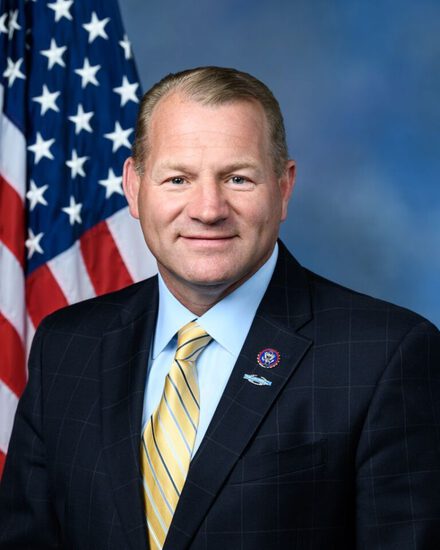
Rep. Troy E. Nehls
Sponsored bills
Maddy summaryHR 7083, the RAZOR Act, prohibits federal agencies from removing or altering barriers (like fences or fences) built by states along the U.S. border to prevent unlawful crossings. It directly affects federal departments and agencies, such as the Department of Homeland Security, by restricting their ability to modify state-constructed border infrastructure. The key provision is a clear ban on any federal action that would change or remove these state-built barriers. This bill makes a specific policy change regarding federal-state border infrastructure authority without altering broader immigration law.
Maddy summaryThe Death Tax Repeal Act would eliminate the federal estate tax and generation-skipping transfer tax for estates of people who die on or after the bill's enactment date, and for generation-skipping transfers made after that date. It would also establish a new $10 million lifetime gift tax exemption (adjusted annually for inflation) and replace the existing gift tax rate schedule with a revised structure. These changes would primarily affect high-net-worth individuals and their heirs, as the estate tax and gift tax typically apply to large estates or gifts exceeding the new exemption threshold. The bill's provisions would take effect on the date of enactment, with transitional rules for the year the bill is signed into law.
Maddy summaryThis bill clarifies that tax-exempt status for charities (under IRS Section 501(c)(3)) does not count as "federal financial assistance" for other federal programs. It directly affects tax-exempt organizations, such as charities and religious groups, by preventing their tax exemption from automatically qualifying them for other federal benefits or programs. The key provision amends the U.S. Code to define "federal financial assistance" as excluding tax exemptions, ensuring these organizations aren't mistakenly included in programs meant for recipients of direct federal funds. This change applies prospectively and does not alter how tax exemptions were treated before the bill's enactment.
Maddy summaryHR 6980, the DOCTORS Act, reallocates unused J-1 visa waivers that states did not use for foreign medical graduates. Each state must report unused waivers by September 30 annually, and the State Department will redistribute them equally over three years for the next fiscal year. Ten percent of redistributed waivers must support doctors working in facilities serving medically underserved communities. This directly affects state agencies managing visa waivers and impacts foreign doctors seeking permanent U.S. residency after training.
Maddy summaryHR 6926, the Safe and Open Streets Act, makes it a federal crime to intentionally block public roads or highways to disrupt the movement of goods or commerce. The bill adds a specific offense under federal law for purposefully obstructing, delaying, or affecting commerce by blocking roads, with penalties including fines or up to five years in prison. It directly affects individuals who block roads to interfere with transportation or delivery of goods, such as during protests or demonstrations. The law updates existing statutes to clarify and strengthen penalties for this specific type of obstruction, without changing broader traffic or protest laws.
Maddy summaryThis bill would amend federal law to require the rejection of a state's electoral votes for president if a candidate nominated by a major political party did not appear on that state's ballot. It defines "major political party" using the IRS's criteria for "major party" status under the Internal Revenue Code. The change directly affects states' ability to certify presidential election results, as electoral votes from any state failing to include a major party candidate would be disqualified from counting. The bill does not alter voting procedures or ballot access but modifies the federal process for certifying electoral votes.
This bill allows creditors to consider an applicant’s immigration status for certain purposes when assessing an application for an extension of credit. In particular, considering an applicant’s U.S. immigration status for the purpose of determining the creditor's rights and remedies applicable to the particular extension of credit does not constitute discrimination.
Maddy summaryHR 1147, the Whole Milk for Healthy Kids Act of 2023, allows schools participating in the National School Lunch Program to offer whole milk as an option during lunch. It amends the school lunch law to explicitly permit schools to serve flavored and unflavored whole milk alongside reduced-fat, low-fat, and fat-free milk choices for students. The bill also requires the Secretary of Agriculture to adjust meal regulations to account for saturated fat from whole milk, ensuring it doesn't count against meal fat limits. This change directly affects participating schools and the students who receive school lunches, expanding their milk beverage options.
Bettering Employee Skills and Talents Act or the BEST Act This bill allows a new tax credit against employment taxes for 30% of qualified workforce training expenses paid by an employer. The bill defines qualified workforce training expenses as amounts paid by an employer to provide entry-level employees without a bachelor's degree with skills training recognized by governmental and private organizations.