

Maddy summaryThis bill redirects existing federal funds that were previously allocated for the United Nations Relief and Works Agency for Palestine Refugees (UNRWA) to construct a permanent barrier along the U.S. southwest border. It directly affects UNRWA, which provides aid to Palestinian refugees, by halting its current funding stream for border construction. The bill mandates that all unspent funds designated for UNRWA be repurposed for border wall construction and prohibits all future federal funding for UNRWA starting upon enactment. These are concrete policy changes: redirecting specific existing funds and banning all future support.
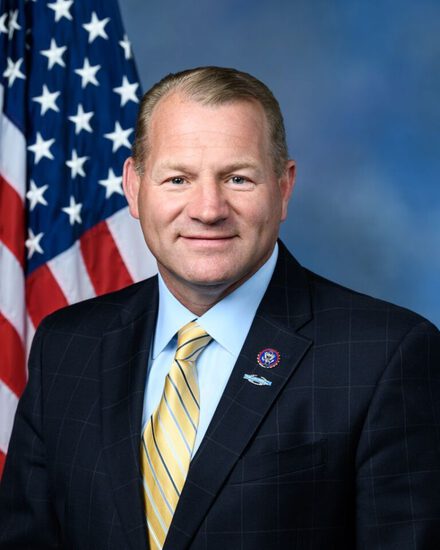
Rep. Troy E. Nehls
Sponsored bills
Maddy summaryHR 7349, the Safe Passage on Interstates Act of 2024, makes it a federal crime to intentionally obstruct interstate highways. The bill prohibits deliberately slowing traffic, standing near vehicles, or endangering vehicle movement on interstate highways with the intent to block normal use. Violators face fines up to $15,000 and prison sentences up to 20 years, with harsher penalties for obstructing emergency vehicles or causing death. This law directly affects individuals who intentionally disrupt interstate traffic flow, aiming to protect the free movement of vehicles on the national highway system. The bill adds this new criminal provision to federal law without changing existing state traffic regulations.
Maddy summaryHR 7273 cancels unspent funds from two federal programs supporting electric vehicle charging infrastructure. It rescinds unused balances from the National Electric Vehicle Infrastructure Formula Program (under the Infrastructure Investment and Jobs Act) and another highway grant program, redirecting them to the U.S. Treasury for deficit reduction. This bill does not affect current grants or future funding for EV projects; it only redirects unobligated money already allocated but not yet spent. The policy change is purely financial, with no new requirements or impacts on states, businesses, or consumers.
Maddy summaryHR 7248, the FDA Modernization Act 3.0, creates a new FDA process to qualify alternative nonclinical testing methods that can replace or reduce animal testing in drug development. Drug developers can request qualification for methods that improve safety/efficacy predictivity or shorten development time, with the FDA required to review requests within 180 days. If qualified, these methods allow expedited FDA review of drug applications and enable referencing the qualified method in submissions. The bill mandates annual reports tracking qualified methods, animal use reduction, and application approvals, with transparency requirements for Congress. This directly affects pharmaceutical companies and biotech firms developing new drugs.
Maddy summaryHJRES 114 is a joint resolution seeking congressional disapproval of a Federal Highway Administration (FHWA) rule that would have required tracking greenhouse gas emissions as part of assessing performance for the National Highway System. The rule, published in the Federal Register in December 2023, aimed to establish specific metrics for evaluating highway system performance, including emissions data. If approved, this resolution would nullify the rule, preventing the FHWA from implementing the emissions tracking requirement. This action directly affects how the FHWA measures highway system performance, specifically regarding environmental metrics.
This resolution expresses the sense of the House of Representatives that former President Trump did not engage in insurrection or rebellion against, nor give aid or comfort to the enemies of, the United States.
Maddy summaryHJRES 107 is a congressional resolution seeking to block a Federal Communications Commission (FCC) rule published on January 22, 2024 (89 Fed. Reg. 4128). The resolution aims to disapprove the FCC's rule implementing digital discrimination protections under the Infrastructure Investment and Jobs Act, which would have required internet providers to prevent discriminatory practices. If passed, this resolution would nullify the FCC rule, preventing it from taking effect under the Congressional Review Act (Chapter 8 of Title 5, U.S. Code). The bill directly affects the FCC's regulatory authority over digital discrimination enforcement in broadband services.
Maddy summaryHR 7183, the PROTECTS Act of 2024, prohibits federal funding from being used to provide or refer for specific gender transition procedures to individuals under 18. The bill defines prohibited procedures broadly to include surgeries (like hysterectomy, mastectomy, or genital reconstruction), puberty-blocking medications, and hormone treatments administered at supraphysiologic doses. It includes limited exceptions for medically necessary care, such as treating precocious puberty or correcting genetic disorders of sex development. The law directly affects minors seeking gender-affirming medical care covered by federal programs, restricting federal financial support for these services.
Maddy summaryThis bill reclassifies illicit fentanyl as a weapon of mass destruction (WMD) under federal law. It directs the Department of Homeland Security's Countering Weapons of Mass Destruction Office to treat illicit fentanyl as a WMD for purposes of the Homeland Security Act. This change would apply existing WMD response protocols and authorities to fentanyl trafficking and distribution cases. The policy shift affects how DHS handles fentanyl-related threats, potentially enabling faster federal responses under WMD frameworks.
Maddy summaryHR 7202 requires the U.S. Secretary of State to report to Congress within 90 days on all U.S. funding provided to UNRWA (the UN agency supporting Palestinian refugees) from fiscal years 2020 through 2024, including monthly spending details. The bill also prohibits U.S. federal funds from being used to support UNRWA, either directly or indirectly, starting upon its enactment. This bill affects U.S. government funding decisions for UNRWA and mandates transparency about past financial support. The legislation focuses on requiring a spending report and blocking future U.S. financial assistance to the agency.