

Maddy summaryThe VENUE Act changes where federal criminal cases are filed for offenses committed on federal property within the National Capital Region (NCR), which includes Washington, D.C., parts of Maryland and Virginia. It allows charges to be filed in the defendant's last legal residence district (or Washington, D.C.) instead of the location of the crime, and permits defendants to request a transfer to their home district court. However, defendants not domiciled in the U.S. cannot request this transfer, and the first defendant to file such a motion gets priority if multiple defendants do so. This applies to all pending cases not yet scheduled for trial where the crime occurred on federal property in the NCR.
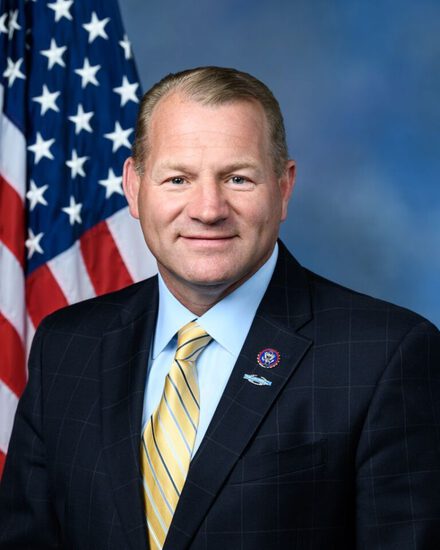
Rep. Troy E. Nehls
Sponsored bills
Maddy summaryThis symbolic resolution expresses congressional support for designating September 29, 2024, as "Veterans of Foreign Wars of the United States Day" to honor the organization's 125th anniversary. It requests the President issue a proclamation encouraging government agencies and the public to observe the day with ceremonies, though it creates no new laws or policy changes. The resolution recognizes the VFW's historical service to veterans but does not directly affect any individuals or programs.
Maddy summaryHR 9526, the "No Amnesty for Hamas Sympathizers Act," blocks immigration protections for Palestinians from specific territories. It nullifies a 2024 policy granting deferred enforced departure and prohibits Temporary Protected Status (TPS), asylum, refugee status, parole, and other pathways for individuals who habitually resided in Palestinian-administered areas of Judea/Samaria or Gaza, or hold Palestinian Authority passports. The bill adds these individuals to lists of those who are automatically inadmissible and deportable under immigration law. It directly affects Palestinians meeting these geographic or document criteria seeking U.S. immigration benefits. The bill makes no reference to Hamas in its provisions, focusing solely on geographic residence and travel documents.
Maddy summaryHR 9523, the Renewed Hope Act of 2024, directs the Department of Homeland Security to hire 200 additional personnel (including 40 forensics analysts and 30 child exploitation investigators for the Victim Identification Laboratory, plus 130 more staff) to support identifying and rescuing victims of child sexual exploitation. It also authorizes temporary hiring of experts for image/audio forensic analysis at specified rates and requires DHS to establish joint procedures for coordinating child exploitation investigations across agencies. The bill mandates a new Victim Identification Training Program at the Cyber Crimes Center, providing annual training on advanced victim identification technology to DHS personnel and external law enforcement agencies (federal, state, local, tribal, military, and foreign) upon request. These provisions directly affect DHS investigative units and law enforcement agencies actively working on child exploitation cases nationwide.
Maddy summaryThis bill increases the tax credit for railroad track maintenance from $3,500 to $6,100 per mile of track. It adds an inflation adjustment starting in 2026, linking future credit amounts to the cost-of-living index. The bill also extends the qualifying period for maintenance expenditures from January 1, 2015, to January 1, 2024. These changes apply to tax years beginning after December 31, 2024, directly affecting railroad companies that maintain tracks.
Maddy summaryHRES 1425 is a non-binding resolution (not a law) passed by the House of Representatives. It states that requiring valid photo identification for voting is a "fundamental component of secure elections," citing examples where photo ID is already required for other government services (like Social Security or banking) and private activities (like buying a car or boarding a plane). The resolution does not create new voting requirements or change election laws - it only expresses the House's position. It directly affects the legislative record but has no legal impact on voter eligibility or election procedures.
Maddy summaryThe CORE Act establishes a program for the Secretaries of Energy, Interior, and Defense to conduct offshore geophysical and geological resource mapping and analysis of oil, gas, and critical minerals. It requires a one-time report assessing undiscovered resources in offshore areas, how land withdrawals affect exploration and production, and impacts on national security, revenue, and the Strategic Petroleum Reserve. The bill streamlines geological and geophysical survey licensing by requiring permits within 30 days of application and reduces regulatory burdens by eliminating the need for certain letters of authorization. It also standardizes existing reporting requirements and limits judicial review of survey projects by setting strict deadlines for challenges and restricting courts from requiring new environmental reviews. The law directly affects federal agencies, offshore energy companies, coastal states, and the National Marine Fisheries Service.
Maddy summaryThis bill authorizes border states (adjacent to the U.S. northern or southern border) to place movable, temporary structures on federal land near the border for security purposes without needing a special use permit. States must notify the relevant federal agency (e.g., Bureau of Land Management or Forest Service) at least 45 days before placement, and structures can remain for up to one year, with possible 90-day extensions if U.S. Customs and Border Protection determines "operational control" hasn't been achieved. The bill directly affects border states and federal land management agencies by streamlining temporary border security measures on public lands.
Maddy summaryThis bill adds "galactose-alpha-1,3-galactose" (alpha-gal) to the list of major food allergens under federal law. It requires food manufacturers to clearly label products containing alpha-gal, which is found in red meat and some other animal-derived foods, directly affecting consumers with alpha-gal syndrome (a meat allergy often triggered by tick bites). The law excludes certain mammal-derived ingredients (like those from alpha-gal-knockout animals) if they fall below a detectable limit. The new labeling requirement will take effect on January 1, 2026, giving manufacturers time to adjust. This change ensures clearer allergen information for people with this specific allergy.
Maddy summaryHR 8757, the REAL Meat Act of 2024, prohibits federal funding for cell-cultured meat production, research, promotion, or related facilities. It directly affects federal programs, agencies, and recipients of agricultural funding by banning the use of taxpayer money for any activity involving lab-produced meat. The bill defines cell-cultured meat as meat grown from animal cells in a lab and exempts NASA funding intended for space consumption. This policy change restricts federal support for the emerging cell-cultured meat industry while allowing specific space-related research.