

Maddy summaryHRES 1473 is a non-binding resolution passed by the U.S. House of Representatives that condemns racism, bigotry, and misinformation targeting Haitian people and their descendants. It celebrates the historical contributions of Haitian Americans to U.S. society, including founding cities (like Chicago via Jean Baptiste Point du Sable), advancing civil rights (W.E.B. Du Bois), and enriching healthcare, education, and culture. The resolution specifically calls on all Americans to reject racist tropes and misinformation, and urges elected officials to promote inclusivity and responsible communication. It was introduced in response to recent false claims that fueled threats against Haitian communities, such as the bomb threats in Springfield, Ohio.
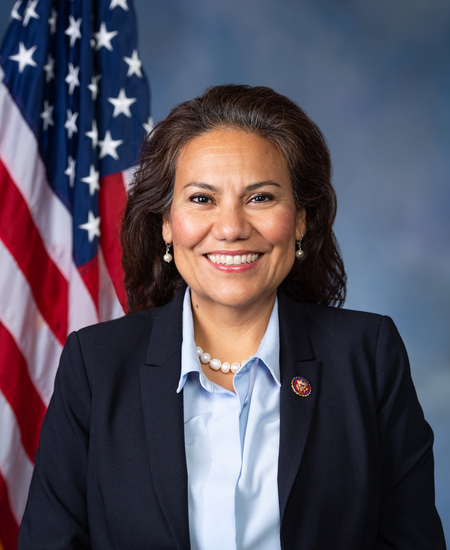
Rep. Veronica Escobar
Sponsored bills
Maddy summaryHRES 1468 is a non-binding resolution recognizing the significant pay disparity faced by disabled women in the U.S. workforce. It cites data showing disabled women earn, on average, 50 cents for every dollar earned by nondisabled men, with even starker gaps for disabled women of color (e.g., 44 cents for disabled Latinas). The resolution highlights systemic barriers like occupational segregation, the subminimum wage, and lack of support services contributing to these inequities. It does not create new laws or affect any group directly, but formally acknowledges these disparities and reaffirms the House’s commitment to addressing wage gaps. This is a symbolic recognition, not a policy change.
Maddy summaryHRES 1464 is a symbolic House resolution recognizing the Latino community's engagement in outdoor recreation and conservation efforts. It expresses support for designating the third week of September as "Latino Conservation Week" to highlight community involvement in protecting natural resources. The resolution does not create new laws or allocate funds; it is purely a statement of recognition. It aims to acknowledge existing community activities like park cleanups and educational events focused on environmental stewardship.
Maddy summaryThis bill directs the U.S. government to immediately restore funding to the United Nations Relief and Works Agency for Palestine Refugees (UNRWA), reversing a temporary funding pause. It repeals two appropriations acts that halted payments and requires the Secretary of State to resume UNRWA funding under existing authorities. The legislation specifically aims to support UNRWA’s critical humanitarian work - providing shelter, education, healthcare, and aid to Palestinian refugees across Gaza, the West Bank, Syria, Lebanon, and Jordan - during an acute famine risk in Gaza. It also mandates quarterly reports to Congress on UNRWA’s implementation of reforms from an independent review, ensuring accountability for its humanitarian mission.
Maddy summaryThe BASIC Act (HR 9669) creates a system to help college students access federal assistance programs that address basic needs like food, housing, and healthcare. It requires federal agencies to share data to identify students who might qualify for programs like SNAP, Medicaid, or housing assistance, and mandates that colleges provide students with information about these programs. The bill authorizes $1 billion in funding for planning grants (up to $75,000 per institution for 2 years) and implementation grants (up to $1 million per institution for 5 years) to help colleges develop and carry out strategies to address student food insecurity, housing insecurity, and other basic needs. Community colleges, historically Black colleges, and other minority-serving institutions receive priority for funding, with at least 25% of funds reserved for each category.
Maddy summaryThis bill directs the Joint Committee on the Library to procure a statue of Benjamin Franklin and place it in the U.S. Capitol. The committee must secure the statue within two years of the bill's enactment and install it in a public-accessible location by January 1, 2026, for viewing during Capitol Visitor Center guided tours. It is a procedural measure with no policy changes or direct impact on constituents or legislation.
Maddy summaryHRES 1448 is a non-binding House resolution stating that the House believes every person has the right to emergency health care, including abortion care, during medical emergencies. It specifically addresses concerns that abortion restrictions force medical providers to choose between treating patients in life-threatening situations or risking criminal charges. The resolution highlights that such restrictions disproportionately harm Black, Indigenous, people of color, immigrants, low-income individuals, and LGBTQI+ patients. It does not change existing laws but expresses congressional support for ensuring access to emergency care without legal barriers. The resolution was introduced by multiple House members and referred to the Energy and Commerce Committee.
Maddy summaryThe American Energy Worker Opportunity Act of 2024 creates a new Office of American Energy Workers within the Treasury Department to support workers displaced by coal mine or fossil fuel plant closures. It provides eligible workers (those with 12+ months of near-full-time employment at a closing facility) with 60 months of wage replacement payments (adjusted for inflation), health insurance premium assistance, retirement savings contributions, and educational benefits for them and their children. The bill requires facility operators to notify the Treasury 90 days before closure and prioritizes hiring these workers for new clean energy projects funded by federal grants. This law directly affects workers in coal and fossil fuel industries facing permanent layoffs, offering concrete financial and career transition support.
Maddy summaryHRES 1437 is a ceremonial resolution designating the week beginning September 9, 2024, as "National Hispanic-Serving Institutions Week." It recognizes Hispanic-serving institutions (HSIs) - colleges and universities with at least 25% Hispanic enrollment - and their role in educating low-income students, advancing economic mobility, and serving 31.7% of all undergraduate students. The resolution calls for the public and organizations to observe this week with ceremonies and activities during Hispanic Heritage Month. It does not create new laws, allocate funding, or change existing policies - it is purely a symbolic gesture of recognition.
Maddy summaryThe Pigs and Public Health Act prohibits growth-promoting drugs like ractopamine that cause pigs to become nonambulatory (unable to stand or walk), sets new transportation standards for pig welfare including proper bedding, water, and temperature controls, and requires humane euthanasia of nonambulatory pigs rather than processing them for food. It creates an online portal for workers to confidentially report violations of these standards and provides whistleblower protections against retaliation for reporting safety or health concerns. The bill also mandates a study on public health risks from nonambulatory pigs entering the food supply, including pathogens like swine influenza, Salmonella, and antibiotic-resistant bacteria. These requirements apply to slaughter facilities, meat processing plants, and transportation providers that handle pigs. The act aims to improve animal welfare, worker safety, and reduce public health risks associated with diseased pigs entering the food system.