

Maddy summaryThis bill names the Department of Veterans Affairs community-based outpatient clinic in Plano, Texas, as the "U.S. Congressman Sam Johnson Memorial VA Clinic." It changes the facility's official designation in all government documents, maps, and references, honoring the late Congressman Sam Johnson. The bill does not alter the clinic's services, funding, or operations - only its name. This is a ceremonial designation with no policy or programmatic impact.
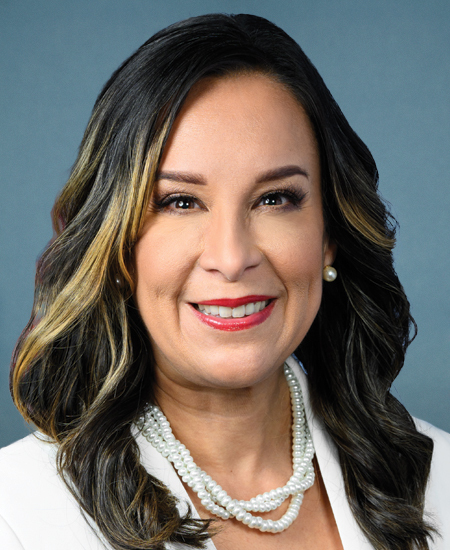
Rep. Monica De La Cruz
Sponsored bills
Maddy summaryThe Treat and Reduce Obesity Act of 2023 expands Medicare coverage for obesity treatment by allowing a wider range of healthcare providers - including nurse practitioners, dietitians, psychologists, and community-based counseling programs - to deliver intensive behavioral therapy for obesity, provided they coordinate with primary care providers. It also adds Medicare Part D coverage for medications used to treat obesity or for weight loss management in overweight individuals with related health conditions like diabetes or high blood pressure. These changes directly affect Medicare beneficiaries, particularly older adults (65+), who face higher obesity rates and associated costs, including $50 billion annually in Medicare spending for obesity-related care. The bill requires annual reports to Congress on implementation to improve coordination of obesity care across federal health programs.
Maddy summaryThis bill requires federal financial regulators to coordinate with state insurance regulators before collecting data from insurance companies, ensuring they first check if the data is already available through state agencies or public sources. It strengthens confidentiality protections by preventing the sharing of nonpublic data with federal regulators from waiving existing privacy rights under federal or state law. Insurance companies and state regulators are directly affected, as the law governs how data is shared between federal financial regulators and state agencies. The bill modifies existing rules to streamline data collection while maintaining privacy safeguards.
Maddy summaryHR 3556, the "Increasing Financial Regulatory Accountability and Transparency Act," requires major financial regulatory agencies (FDIC, Federal Reserve, Comptroller of the Currency, and National Credit Union Administration) to provide more detailed transparency about their regulatory activities. The bill mandates semi-annual reports to Congress containing specific data about financial institutions' conditions, supervisory actions, and enforcement measures, with additional confidential reports identifying institutions with less than satisfactory ratings. It also requires agencies to notify Congress before making certain regulatory decisions and establishes new experience requirements for the Federal Reserve's Vice Chairman for Supervision. The bill aims to enhance congressional oversight of financial regulation through increased transparency and more detailed reporting requirements.
Maddy summaryThis bill directs the GAO to study whether designating Mexican drug cartels as Foreign Terrorist Organizations would help combat fentanyl trafficking (Section 2). It authorizes the Treasury Secretary to require U.S. financial institutions to implement specific anti-money laundering measures against entities or transactions linked to illicit fentanyl and narcotics financing (Section 3). These measures could include enhanced reporting or transaction restrictions for financial institutions operating outside the U.S. that facilitate fentanyl-related money laundering. The bill also mandates updated guidance for financial institutions on identifying Chinese money laundering schemes tied to fentanyl trafficking (Sections 4-5).
Maddy summaryHR 5401, the 9/11 Memorial and Museum Act, provides a one-time federal grant of $5 million to $10 million to the National September 11 Memorial & Museum (operated by the World Trade Center Foundation). The grant funds the museum's operations, security, and maintenance, with specific requirements including free admission for veterans, first responders, and victims' families, dedicated weekly free public hours, and annual financial audits. The museum must also report annually to Congress on how the funds were used. This bill directly affects the museum's financial operations and access policies, not broader legislative changes.
Maddy summaryThe FOCA Act of 2023 requires federal agencies to stop mandating or banning contractor agreements with labor organizations (like union contracts) in construction project bids and contracts. It directly affects federal contractors, subcontractors, and agencies managing construction projects funded by the government. The bill prohibits favoring or penalizing contractors based on their labor affiliation status, aiming to promote fair competition and reduce costs. It also mandates updates to federal contracting rules within 60 days of enactment to implement these changes.
Maddy summaryThis bill directs the Comptroller General to study the 1-800-MEDICARE call center within one year of enactment. It requires a report analyzing customer wait times, satisfaction, staffing levels, contractor performance, and previous recommendations. The study will assess service quality and evaluate actions taken by the Health and Human Services Secretary or contractors in response to past findings. The report aims to inform potential future improvements for Medicare beneficiaries who rely on this service.
Maddy summaryHR 8150 streamlines maintenance for U.S. Customs and Border Protection (CBP) at federal ports of entry by allowing small repair projects (up to $300,000) without lengthy approval processes. It requires CBP to establish and publish clear procedures for these projects, including project types and tenant impact plans, with annual adjustments tied to inflation. The bill directly affects CBP operations at ports where they conduct field activities, enabling faster upkeep of existing infrastructure. Annual reports to Congress must detail all projects, their costs, funding sources, and any budget transfers related to these maintenance efforts.
Maddy summaryThis bill expands eligibility for certain tax-advantaged health accounts to cover medical expenses for parents. It amends the tax code to allow individuals to use funds from Health Savings Accounts (HSAs), Flexible Spending Accounts (FSAs), and Health Reimbursement Arrangements (HRAs) for qualified medical care of their parents or their spouse's parents - previously limited to immediate family members. The changes apply to expenses incurred after December 31, 2023, directly benefiting adult caregivers (like children supporting elderly parents) who use these accounts for parental healthcare costs. The bill makes no new funding commitments but adjusts existing account rules to reduce out-of-pocket costs for caregivers.