

Maddy summaryHR 335, titled "Repeal the NFA Act," seeks to eliminate the National Firearms Act (NFA) of 1934, a federal law regulating certain firearms like machine guns, short-barreled rifles, and suppressors. If enacted, the bill would remove the NFA from the Internal Revenue Code by repealing Chapter 53, which currently governs the taxation and registration of these firearms. This repeal would directly affect firearm owners and manufacturers subject to NFA regulations, removing federal requirements for registration and tax payments on specified weapons. The bill focuses solely on repealing existing law without introducing new provisions or exceptions.
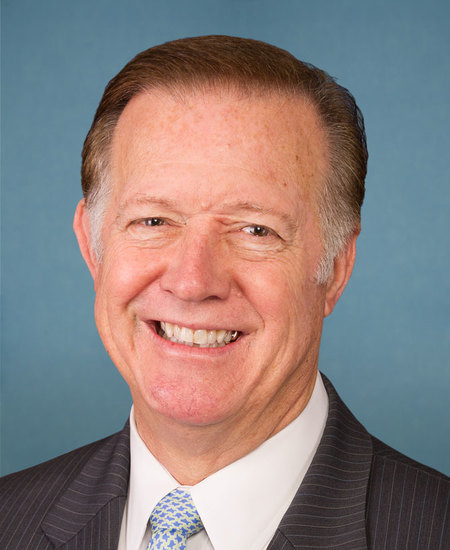
Rep. Randy K. Weber, Sr.
Sponsored bills
Maddy summaryHR 342, the Honor Inauguration Day Act, requires the U.S. flag to be flown at its highest peak on every presidential Inauguration Day, overriding any conflicting laws. This procedural bill directly affects all federal buildings and properties where the flag is displayed on that specific day. It mandates a ceremonial flag display to "commemorate and celebrate" the presidential election process, as stated in the congressional findings. The bill makes no substantive policy changes but establishes a specific flag protocol for Inauguration Day.
Maddy summaryHR 361, the "Make Greenland Great Again Act," authorizes the President to begin negotiations with Denmark for the U.S. acquisition of Greenland starting January 20, 2025. It requires the President to submit any resulting agreement to specific congressional committees (Foreign Affairs and Foreign Relations) within five days, followed by a 60-day congressional review period. If Congress takes no action during that period, the agreement would automatically take effect. The bill does not change Greenland’s current status as part of Denmark’s Kingdom but proposes a diplomatic process for potential transfer. Note: This appears to be a symbolic or satirical proposal, as Greenland is an autonomous territory within Denmark’s Kingdom and not subject to unilateral acquisition.
Maddy summaryHR 350, the "Prosecutors Need to Prosecute Act," requires district attorneys in jurisdictions with 380,000 or more residents that receive federal Byrne grant funds to submit annual reports to the Attorney General. The reports must detail how many cases involving serious crimes - like murder, robbery, aggravated assault, and gun offenses - they referred for prosecution, declined, or resolved via plea deals, including data on repeat offenders and bail decisions. The Attorney General will establish uniform reporting standards and share the collected data with Congress and the public via a website. This bill directly affects large prosecutor offices receiving federal crime-fighting funds, aiming to increase transparency in prosecution practices for specific violent and property crimes.
Maddy summaryHRES 25 is a resolution to erase the January 13, 2021, impeachment of President Donald Trump from the U.S. House of Representatives' official records, as if it never occurred. It argues the impeachment process was flawed due to lack of due process, omission of context about the 2020 election, and constitutional concerns like ignoring the Senate trial timeline. The resolution does not change the Senate's prior acquittal of Trump but seeks to remove the House's vote from its internal documentation. As a procedural resolution, it would only affect the House's records and has no legal impact on the impeachment's outcome.
Maddy summaryHRES 24 is a resolution seeking to remove the December 18, 2019, impeachment of President Donald Trump from the House of Representatives' official records. It claims the impeachment was based on insufficient evidence that did not meet the constitutional standard for impeachment under Article II, Section 4. If passed, the resolution would treat the impeachment as if it never occurred, erasing it from the House's historical record. This is a procedural measure affecting only the House's internal documentation, not legal outcomes or the Senate trial.
Maddy summaryHR 283 authorizes the President, with coordination from the Secretary of State, to negotiate with Panama to reacquire the Panama Canal. The bill requires the President to submit a report to Congress within 180 days of enactment, detailing negotiation progress, challenges, and expected outcomes. This procedural bill focuses solely on initiating talks and reporting requirements, without specifying repurchase terms or funding. It directly affects U.S. executive branch actions and congressional oversight, not the canal’s current operations or Panama’s government.
Maddy summaryHR 272, the Protecting Life and Taxpayers Act of 2025, prohibits federal funding (directly or indirectly) to any organization that performs or funds abortions, requiring certification from all recipients. This applies to entities receiving federal funds, including contractors and subsidiaries, with limited exceptions for pregnancies resulting from rape or incest, or when a physician certifies a life-threatening condition. The bill directly affects healthcare providers, clinics, and organizations that rely on federal grants or contracts. It changes existing funding rules by banning federal money from supporting abortion services, except in the specified medical or criminal exceptions.
Maddy summaryThis bill grants the Secretary of Homeland Security authority to temporarily suspend entry of certain individuals at U.S. borders to achieve "operational control" (defined as effective border management). It specifically applies to people seeking entry without proper documentation who would be denied entry under current law (e.g., lacking visas or asylum eligibility). The Secretary must block entry if they cannot detain or process these individuals as required by existing immigration law. States may also sue the government if they believe border security rules are violated.
Maddy summaryThis bill directs the Department of Homeland Security to implement the Migrant Protection Protocols (MPP) as outlined in a 2019 policy memo. It requires migrants seeking asylum at the U.S. border to remain in Mexico while their cases are processed, rather than being allowed to stay in the U.S. pending a hearing. The bill does not create new rules but mandates the reinstatement of a policy that was previously in effect from 2019 to 2021. This would directly affect asylum seekers arriving at the U.S.-Mexico border. The policy change would apply to all migrants covered by the existing MPP framework.