

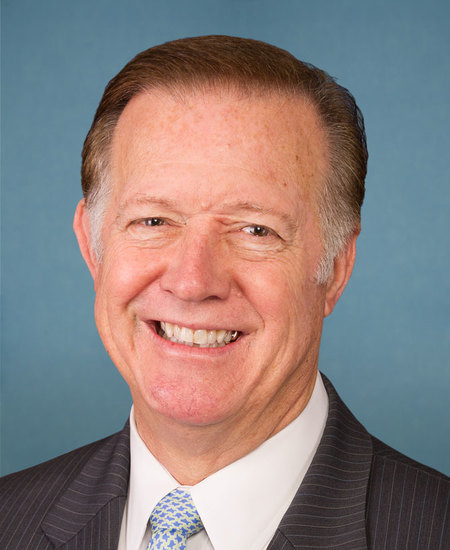
Photo of Randy K. Weber, Sr.
R United States House · District 14 · Texas On the 2026 ballot

Rep. Randy K. Weber, Sr.

Compare
Total votes
2,837
all sessions
Attendance
98%
68 missed
Near the chamber average
With party
92%
of cast votes
Near the chamber average
Bipartisan score
4%
crosses aisle rarely
Near the chamber average
Sponsored
1,848
bills & resolutions
Higher than 84% of chamber peers
Committees
6
assignments
1,848 bills and resolutions

Sponsored bills

Total
1,848
Primary
60
Co-sponsor
1,788
This page
1,848
matching current filters
Co-sponsor HR 451
In committee · Indiana House · Co-sponsor
FAIR PREP Act of 2025

Maddy summaryThe FAIR PREP Act of 2025 prohibits the IRS from preparing individual tax returns or refund claims, except for the existing IRS Free File Program and certain qualified return preparation services. It clarifies that the IRS may still provide fillable tax forms with automated calculations and correct mathematical or clerical errors without violating the prohibition. The bill also bans the IRS from developing or operating new electronic tax preparation services after enactment without explicit new congressional authorization. This directly affects how the IRS delivers tax filing assistance, preserving current free options while restricting new government-run tools.

In committee Jan 15, 2025 1 co-sponsor
Co-sponsor HR 445
In committee · Indiana House · Co-sponsor
Border Security Investment Act

Maddy summaryHR 445, the Border Security Investment Act, creates two new trust funds to fund border security by imposing a 37% fee on money transfers sent to the top 5 countries with the most unlawful border entries in the previous year. Money transfer companies pay this fee, with half the collected funds going to a Reimbursement Fund to reimburse border states for their security costs and the other half to a Security Fund for federal border technology, barriers, and Border Patrol staffing. The bill requires the Treasury to transfer these funds annually, sets a $50 billion cap on total fund balances (with excess funds directed to deficit reduction), and takes effect 30 days after enactment. It directly affects money transfer providers, border states, and federal border security operations.

In committee Jan 15, 2025 1 co-sponsor
Co-sponsor HR 424
In committee · Indiana House · Co-sponsor
State Border Security Reimbursement Act of 2025

Maddy summaryHR 424, the State Border Security Reimbursement Act of 2025, requires the federal government to reimburse states that spent over $2.5 billion on border security since 2014. It directly affects states like Texas, which has allocated over $3.2 billion for border security since 2008-2009 due to federal inaction. States meeting the spending threshold must submit expense reports within 180 days of the bill's enactment, and the federal government must reimburse these costs within one year of submission. The bill aims to address the financial burden on states that have funded border security efforts primarily the federal government's responsibility.

In committee Jan 15, 2025 1 co-sponsor
Co-sponsor HR 28
Passed · Indiana House · Co-sponsor
Protection of Women and Girls in Sports Act of 2025

Maddy summaryHR 28, the *Protection of Women and Girls in Sports Act of 2025*, amends Title IX to prohibit federally funded schools from allowing male-identified individuals (based on biological sex at birth) to compete on women’s or girls’ sports teams. It explicitly states that such participation would violate federal civil rights law, with exceptions only for training/practice that doesn’t displace female athletes from roster spots, competitions, scholarships, or other benefits. The bill mandates a Comptroller General study to define "other benefits" lost by girls when males compete in single-sex sports, including impacts on psychological well-being, scholarship access, and safe participation environments. This bill directly affects all athletic programs receiving federal funding, requiring compliance with its biological-sex-based eligibility rules.

Passed Jan 15, 2025 1 co-sponsor
Co-sponsor HR 377
In committee · Indiana House · Co-sponsor
Regulation Reduction Act of 2025

Maddy summaryHR 377, the Regulation Reduction Act of 2025, requires federal agencies to repeal three existing rules before issuing new ones that impose costs or responsibilities on businesses, state/local governments, or individuals. For major new rules, agencies must also certify that the new rule’s cost does not exceed the cost of the repealed rules. Agencies must publish all repealed rules in the Federal Register and submit a 90-day review to Congress identifying costly, ineffective, duplicative, or outdated regulations. This bill directly affects how federal agencies develop new rules, aiming to reduce regulatory burden by mandating rule removal before new rule creation.

In committee Jan 14, 2025 1 co-sponsor
Co-sponsor HR 378
In committee · Indiana House · Co-sponsor
Thin Blue Line Act

Maddy summaryHR 378, the Thin Blue Line Act, adds a new aggravating factor for the death penalty in federal cases where a defendant kills or targets a law enforcement officer, firefighter, or other first responder. It specifically applies when the victim was killed or targeted while performing official duties, because of those duties, or due to their status as a public official. This amendment to federal death penalty law would make the death penalty a potential sentencing option for such crimes, as the killing would be considered an aggravating factor. The bill directly affects defendants convicted of homicides meeting these specific circumstances involving public safety personnel.

In committee Jan 14, 2025 1 co-sponsor
Co-sponsor HR 400
In committee · Indiana House · Co-sponsor
No taxpayer funding for United Nations Human Rights Council Act

Maddy summaryHR 400 prohibits U.S. taxpayer funding for the United Nations Human Rights Council. It requires the Secretary of State to withhold from annual U.S. UN budget contributions any amount allocated to the Human Rights Council, and bans voluntary U.S. contributions to the Council. Funds withheld under this law are canceled immediately and do not count as unpaid dues to the UN. The bill specifically targets the Human Rights Council, leaving other UN activities unaffected.

In committee Jan 14, 2025 1 co-sponsor
Co-sponsor HCONRES 3
In committee · Indiana House · Co-sponsor
Expressing support for the Geneva Consensus Declaration on Promoting Women's Health and Strengthening the Family and urging that the United States rejoin this historic declaration.

Maddy summaryHCONRES 3 is a symbolic congressional resolution expressing support for the Geneva Consensus Declaration, an international agreement signed by 39 countries that affirms women’s health, family protection, and opposes international abortion rights. It urges the U.S. to rejoin the declaration, which emphasizes that no country has an obligation to fund or facilitate abortion and that families are foundational to society. The resolution does not create new laws but reaffirms existing U.S. policies prohibiting federal funding for abortions or coercive family planning abroad. It directly affects U.S. foreign policy direction but has no binding effect on government actions.

In committee Jan 13, 2025 1 co-sponsor
Co-sponsor HJRES 17
In committee · Indiana House · Co-sponsor
Proposing a balanced budget amendment to the Constitution of the United States.

This joint resolution proposes a constitutional amendment prohibiting total outlays for a fiscal year from exceeding total receipts for that fiscal year unless Congress authorizes the excess by a two-thirds roll call vote of each chamber. The prohibition excludes outlays for repayment of debt principal and receipts derived from borrowing. The amendment also requires the President to submit an annual budget in which total outlays do not exceed total receipts.

In committee Jan 13, 2025 1 co-sponsor
Co-sponsor HRES 36
In committee · Indiana House · Co-sponsor
Finding Federal Savings Committee Resolution

Maddy summaryHRES 36 creates a new House committee, the Committee on the Elimination of Nonessential Federal Programs, to review and recommend cutting underperforming or unnecessary federal programs. The committee, composed of 14 members (including four from key committees and a bipartisan chair/vice chair), must annually report findings and propose specific legislation to eliminate targeted programs. It establishes expedited rules for such legislation, including a 10-hour debate limit and no amendments, while dissolving after the 120th Congress. This resolution directly affects House procedures and future budget decisions by streamlining program-cutting efforts.

In committee Jan 13, 2025 1 co-sponsor
Showing 491 to 500 of 1,848 bills
Previous 1 … 49 50 51 … 185 Next