Maddy summaryThe Healthcare Freedom Act of 2025 would rename health savings accounts as "health freedom accounts" and make them available to all individuals, removing the previous requirement of having a high-deductible health plan. It increases the annual contribution limit to $12,000 (or $24,000 for joint returns) and expands eligible expenses to include direct primary care and health care sharing ministries. Employers could contribute to these accounts for new hires starting five years after enactment, with a transition rule for existing accounts. The bill would directly affect individuals using these accounts and employers who choose to participate in the new system.
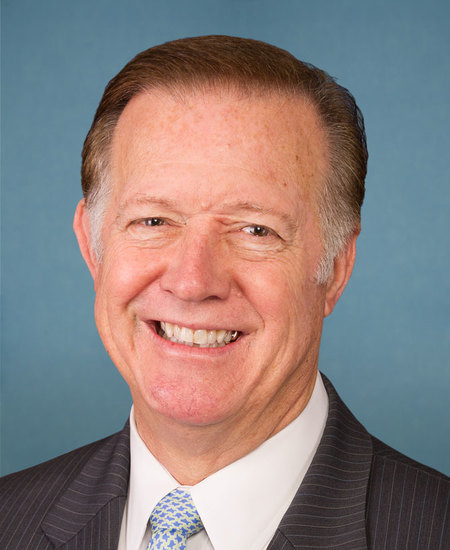
Rep. Randy K. Weber, Sr.
Sponsored bills
Maddy summaryThis bill renames a U.S. Postal Service facility in Fritch, Texas, to the "Chief Zeb Smith Post Office." It designates the specific location at 107 North Hoyne Avenue as the official name for all federal references, including documents, maps, and records. The bill makes no policy changes - it solely updates the facility's name for administrative purposes.
Maddy summaryThis bill blocks federal funding for Planned Parenthood Federation of America and its clinics for one year unless they certify they won't perform abortions. Exceptions apply for pregnancies resulting from rape or incest, or when a woman's life is in danger due to a medical condition. The bill redirects the redirected funds to community health centers and other providers serving women's health needs, authorizing $235 million for this purpose. It explicitly states this will not reduce overall federal funding for women's health services. The policy change directly affects Planned Parenthood clinics receiving federal funds, requiring them to certify abortion restrictions or lose funding.
Maddy summaryHR 254, the American Science First Act, prohibits the National Science Foundation (NSF) from providing grants or funding to any entity affiliated with Chinese military-linked companies listed in U.S. government sanctions. It directly affects Chinese entities on specific federal lists, including those tied to military ownership or control, as defined by Export Administration Regulations and prior defense authorization acts. The bill’s key mechanism blocks NSF funding for research partnerships, joint ventures, or contracts involving these listed companies or their affiliates. This policy change restricts federal science funding access for targeted Chinese military-connected entities without altering broader NSF grant eligibility.
Maddy summaryThis bill requires federal employees who telework at least one day weekly (or 20% of their time under alternative schedules) to be paid at the "Rest of U.S." locality pay rate without future adjustments. It excludes employees who telework daily, those with disabilities receiving accommodations, Foreign Service members, law enforcement officers, and military personnel on active duty. Covered employees will no longer receive annual pay adjustments under standard federal pay schedules. The policy takes effect at the start of the first full fiscal year after the bill becomes law. It directly affects federal workers meeting the telework threshold, altering their pay structure based on location.
Maddy summaryThis bill, HR 221 (Abolish the ATF Act), would eliminate the Bureau of Alcohol, Tobacco, Firearms and Explosives (ATF) as a federal agency. It directly affects the ATF itself, removing its existence within the U.S. Department of Justice. The bill contains no policy provisions or new mechanisms - it solely directs the abolition of the agency through a single legislative action. As a procedural measure, it does not alter gun laws, enforcement responsibilities, or affect the public.
Maddy summaryHRES 15 rescinds three subpoenas issued by the January 6th Select Committee to Stephen Bannon, Mark Meadows, Daniel Scavino Jr., and Peter Navarro, and withdraws the House's prior recommendations that they be found in contempt of Congress. The bill directly affects these four individuals by removing the legal force of the subpoenas and the contempt findings. It accomplishes this by formally withdrawing specific House resolutions (H.Res. 730, H.Res. 1037, and H.Res. 851) that had been adopted. The resolution also directs the Speaker to notify the Department of Justice that the subpoenas are void.
Maddy summaryThis bill renames a U.S. Postal Service facility in Corpus Christi, Texas (located at 802 North Tancahua Street) as the "Captain Robert E. 'Bob' Batterson Post Office." It affects only the official naming of this specific post office and all related federal references. The bill requires that any future federal document, map, or record referencing the location must use the new name. It does not create new policies, allocate funding, or impact postal services. This is a purely commemorative measure with no substantive policy changes.
Maddy summaryThe FISHES Act (HR 5103) streamlines access to emergency disaster funds for fisheries by setting strict deadlines for federal review. It requires the Secretary of Commerce to review and provide notice on spend plans within 10 days of submission and mandates that funds be made available to grantees no later than 90 days after a complete spend plan is received. This directly affects fisheries that have received a formal "fishery resource disaster" determination, ensuring faster disbursement of funds for recovery efforts. The bill also prohibits the Office of Management and Budget from delaying these timelines during concurrent review. The law aims to reduce bureaucratic delays in post-disaster funding without altering the underlying disaster assistance program.
Maddy summary# Summary of Proposed Legislation This comprehensive legislative proposal contains multiple sections addressing election integrity, campaign finance reform, cybersecurity, census operations, and related government functions. Key provisions include: 1. **Campaign Finance Reforms**: - Increased thresholds for political committee reporting requirements - Repeal of requirements for political committees to report donor identification - Exemption of uncompensated internet communications from contribution/expenditure treatment - Protection of donor privacy for tax-exempt organizations through the "Speech Privacy Act of 2023" 2. **Election Security**: - Establishment of a process for testing and monitoring cybersecurity vulnerabilities in election equipment - Requirements for the Secretary of Homeland Security to notify state officials about election cybersecurity incidents - Exclusive authority for the Election Assistance Commission regarding guidelines for voting system certification 3. **Census and Redistricting**: - Establishment of a permanent Census Monitoring Board with bipartisan composition to review census operations - Clarification of state authority over congressional redistricting maps - Provisions regarding the Speaker of the House's authority to join civil actions related to apportionment 4. **Other Key Provisions**: - Termination of the Disinformation Governance Board and prohibition on funding similar entities - Amendments to the Federal Election Campaign Act to increase reporting thresholds and exempt certain communications - Various technical corrections to existing campaign finance law The legislation appears to focus on enhancing election security, reducing regulatory burdens on political organizations, protecting donor privacy, and strengthening oversight of census operations while maintaining constitutional boundaries between federal and state authority.