

Maddy summaryHR 21, the Born-Alive Abortion Survivors Protection Act, requires medical staff at abortion facilities to provide the same immediate care and hospital admission to any infant born alive during an abortion as they would for any newborn. It mandates reporting failures to provide this care to law enforcement and imposes penalties of up to 5 years in prison for violations, with harsher penalties for intentional killing. The bill also allows women who undergo abortions to sue for civil damages, including triple the abortion cost, and provides for attorney fees. It defines "abortion" to exclude procedures performed after viability to preserve a live birth. This law directly affects healthcare providers at abortion facilities and creates new federal legal obligations for them.
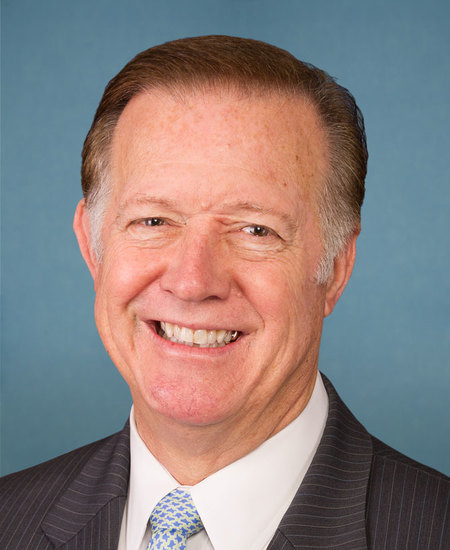
Rep. Randy K. Weber, Sr.
Sponsored bills
Maddy summaryHRES 63 is a symbolic resolution designating the week of January 26-February 1, 2025, as "National School Choice Week." It expresses the House's support for raising public awareness about educational options - including public schools, charter schools, private schools, online academies, and homeschooling - and encourages parents to explore these choices. The resolution also urges the public to host events during this week to celebrate parental choice in education. As a non-binding resolution, it does not create new policies or alter existing laws.
Maddy summaryHRES 57 is a symbolic resolution recognizing natural gas as an affordable and "green" energy source. It states that U.S. natural gas production benefits the economy and environment, citing reduced emissions data and LNG export statistics. The resolution does not change laws or funding but formally declares support for expanding domestic natural gas production and infrastructure. It specifically references opposing methane emission fees and aligns with EU energy policies that classify natural gas as "green." This resolution has no binding effect on policy or regulation.
Maddy summaryThe MERIT Act of 2025 makes significant changes to federal personnel management by repealing Chapter 43 performance-based actions and modifying procedures for disciplinary actions, furloughs, and bonus recoupment. It extends probationary periods for senior executives (to 2 years) and competitive service employees (to 2 years), establishes new rules for reducing retirement benefits of employees convicted of felonies related to their federal service, and creates standardized procedures for adverse actions including written notice requirements and response periods. The bill also allows agencies to recoup bonuses for misconduct and modifies procedures for handling furloughs of more than 14 days. These changes apply to all federal employees across government agencies and aim to clarify and streamline personnel management processes.
Maddy summaryHR 643, the Federal Insurance Office Elimination Act, eliminates the Federal Insurance Office within the Treasury Department and removes the position of its Director. The bill updates federal law by deleting references to the office from the Dodd-Frank Act and other legislation, while clarifying that Treasury retains all existing authority over insurance matters. This change directly affects the structure of federal financial regulation by removing a specific oversight role and modifying related statutory language. The bill does not alter insurance policy or create new regulatory requirements, only removing an existing office and its associated references.
Maddy summaryHR 679 nullifies specific changes the Food and Drug Administration (FDA) made in January 2023 to the safety rules (REMS) for the abortion pill mifepristone. The bill prohibits the FDA from implementing any future safety rules for mifepristone that are substantially similar to the nullified changes. This directly affects the FDA's regulatory authority over mifepristone, which could impact how healthcare providers prescribe the medication and how patients access it. The bill focuses solely on reversing the FDA's 2023 modifications without altering the drug's broader approval status.
Maddy summaryHR 697 (the "End the Deep State Act") creates a new "Schedule Policy/Career" for federal positions involving confidential, policy-making, or policy-advocating work that are not typically replaced during presidential transitions. Agencies must review their roles by 2025 to identify such positions for this streamlined hiring process, which bypasses standard competitive exams and reduces civil service protections for these roles. The bill revokes a 2021 executive order protecting federal workforce hiring practices and requires agencies to adjust appointment rules accordingly. This affects thousands of federal employees in policy-focused roles across executive agencies, shifting their classification from competitive hiring to a non-competitive, politically aligned appointment system.
Maddy summaryThe Regulation Decimation Act requires federal agencies to repeal at least ten existing regulations before issuing a new rule that affects businesses, states, or local governments. For major rules (those with significant economic impact), agencies must repeal ten related rules and ensure the new rule's cost does not exceed the cost of the repealed rules, with Office of Management and Budget certification. The law excludes internal agency policies and rules revised to reduce burdens, and mandates agencies to review all costly or outdated rules within 90 days of enactment, reporting on rule reductions to Congress every five years. This bill directly affects federal agencies creating new regulations, aiming to reduce regulatory burden through mandatory rule repeal.
Maddy summaryHR 685, the SAVE Moms and Babies Act of 2025, prohibits the FDA from approving new abortion drugs or allowing investigational use of existing ones. It restricts existing abortion drugs to in-person administration by certified healthcare providers in clinics or hospitals (not pharmacies), limits use to pregnancies under 70 days gestation, and requires providers to certify they can handle complications like severe bleeding or ectopic pregnancies. The bill mandates reporting of adverse events (such as hospitalizations or infections) to the FDA without patient identifiers and defines "abortion drug" broadly as any drug intended to terminate pregnancy, excluding specific medical exceptions. This directly affects FDA approval processes, healthcare providers prescribing these drugs, and drug manufacturers.
Maddy summaryHR 645, the National Constitutional Carry Act, would prevent all U.S. states and localities from requiring permits or imposing penalties for carrying firearms in public. It directly affects eligible U.S. citizens (including non-residents) who legally possess firearms under state and federal law, removing current permit requirements for public carry. The bill’s key provision amends federal law to invalidate any state or local law that criminalizes or discourages public firearm carry, except where private property owners clearly prohibit firearms or security screening occurs. This would override existing state permit laws, making permitless carry legal across all states and territories for qualified individuals.