

Maddy summaryThis bill requires abortion providers to give patients a consent form outlining disposal options for fetal remains (taking the remains or transferring them to interment/cremation services). Providers must arrange interment or cremation within 7 days if patients release remains, and face civil penalties up to $50,000 or criminal charges for noncompliance. It mandates annual reporting by providers on abortion procedures, gestational age, and disposal methods, with the Secretary submitting a separate report to Congress. The bill directly affects abortion providers and patients receiving abortion care, adding handling and reporting requirements for fetal remains without changing abortion access or medical procedures.
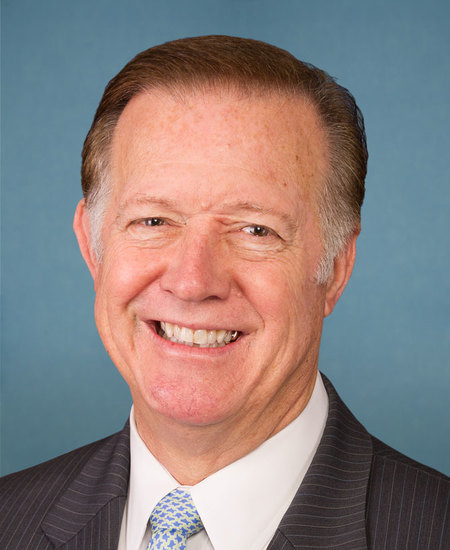
Rep. Randy K. Weber, Sr.
Sponsored bills
Maddy summaryHR 778, the Safeguarding American Workers’ Benefits Act, modifies Social Security Number (SSN) requirements for claiming the Child Tax Credit (CTC) and Earned Income Tax Credit (EITC). It requires taxpayers to provide SSNs issued to U.S. citizens or under specific legal provisions (as defined in the bill) before the tax return deadline, replacing previous allowances for certain alternative numbers. This directly affects individuals filing taxes who seek these credits, as they must now use only eligible SSNs to qualify. The changes apply to taxable years beginning after December 31, 2025. The bill does not alter the credit amounts but tightens verification rules for eligibility.
Maddy summaryHR 799, the Parental Notification and Intervention Act of 2025, requires healthcare providers to notify a minor's parents (or legal guardian) in writing before performing an abortion on an unemancipated minor under 18, with a 96-hour waiting period after notification. Parents may then seek a federal court injunction to halt the procedure, which would remain in effect until the court rules. The bill includes a medical emergency exception allowing abortions without notification if a physician certifies a life-threatening condition for the minor. This law directly affects minors under 18 seeking abortions, their parents/guardians, and healthcare providers performing such procedures in facilities receiving federal funds or operating across state lines.
Maddy summaryHR 756, the 287(g) Program Protection Act, makes it easier for state and local law enforcement agencies to partner with federal immigration authorities under the 287(g) program. It requires the Secretary of Homeland Security to enter written agreements with any state or local agency that requests participation within 90 days, prohibits arbitrary denials without 180 days' notice to Congress, and bans termination of existing agreements without compelling reasons and 180 days' notice. The bill also mandates uniform federal training standards for participating officers, requires annual reports on program performance (including apprehensions, removals, and compliance), and establishes dedicated funding for the program. This directly affects state and local police departments seeking to enforce federal immigration laws within their jurisdictions.
Illegitimate Court Counteraction Act This bill imposes sanctions against foreign persons (individuals and entities) who assist the International Criminal Court (ICC) in investigating, arresting, detaining, or prosecuting certain individuals. The bill categorizes as protected persons (1) any U.S. individual, U.S. entity, or person in the United States, unless the United States is a state party to the Rome Statute of the ICC and provides formal consent to ICC jurisdiction; and (2) any foreign person that is a citizen or lawful resident of a U.S. ally that is not a state party to the Rome Statute or has not consented to ICC jurisdiction. If the ICC attempts to investigate, arrest, detain or prosecute a protected person, the President must impose visa- and property-blocking sanctions against the foreign persons that engaged in or materially assisted in such actions, as well as against foreign persons owned by, controlled by, or acting on behalf of such foreign persons. The President must also apply visa-blocking sanctions to the immediate family members of those sanctioned. Upon enactment, the bill rescinds all funds appropriated for the ICC and prohibits the subsequent use of appropriated funds for the ICC.
Maddy summaryHR 719, the "No Abortion Coverage for Medicaid Act," would prohibit federal Medicaid funds from covering abortions under any Medicaid demonstration projects or waivers, with limited exceptions. It specifically blocks federal financial assistance for abortion services or related expenses (like travel) in Medicaid programs, except in cases of rape or incest, life-threatening pregnancy conditions, or treatment for miscarriage or ectopic pregnancy. This bill directly affects Medicaid recipients in states participating in federal demonstration projects, preventing them from using Medicaid funds for abortion services except under the narrow exceptions listed. The bill aims to permanently align Medicaid funding with the longstanding Hyde Amendment restrictions.
Maddy summaryHR 727 amends federal law to expand the definition of "valuable consideration" in transactions involving human fetal tissue. The bill specifically adds provisions to prohibit payments, waived fees, canceled debts, or free/discounted services related to tissue transportation, processing, storage, or implantation. This directly affects medical providers, laboratories, and facilities handling fetal tissue by restricting how they can receive compensation for these services. The key change clarifies that even indirect financial benefits, like reduced charges or waived costs, would be considered prohibited "valuable consideration."
Maddy summaryThis bill requires the Congressional Budget Office (CBO) to publicly publish the models, data, and detailed methodology it uses to estimate the costs and effects of legislation. Specifically, it mandates that the CBO make available all fiscal models, data routines, and the underlying assumptions behind its cost estimates, allowing independent verification. This applies to all CBO analyses of proposed bills, including the specific data and computational details needed for others to replicate the results. The requirement applies to all users of CBO reports - lawmakers, researchers, and the public - except for data legally restricted from disclosure, which would still require a public list of variables and descriptive statistics.
Maddy summaryHR 729, the Teleabortion Prevention Act of 2025, prohibits healthcare providers from administering chemical abortions (using drugs to terminate pregnancy) via telehealth or remote means without being physically present during the procedure. It requires providers to physically examine the patient, be present at the location of the abortion, and schedule a follow-up visit within 14 days. The bill directly affects healthcare providers offering telemedicine abortion services, imposing fines up to $1,000 or up to 2 years in prison for violations. Exceptions apply for life-threatening medical emergencies, and the law explicitly excludes treatment for verified ectopic pregnancies. This bill targets the remote provision of abortion drugs, making in-person provider presence mandatory for such procedures.
Life at Conception Act This bill declares that the right to life guaranteed by the Constitution is vested in each human being at all stages of life, including the moment of fertilization, cloning, or other moment at which an individual comes into being. Nothing in this bill shall be construed to authorize the prosecution of any woman for the death of her unborn child.