

Maddy summaryHR 703, the Main Street Tax Certainty Act, makes a key tax deduction permanent for small business owners. It removes the temporary sunset provision (subsection (i)) from Section 199A of the tax code, ensuring the qualified business income deduction remains available for eligible small businesses. This change directly affects pass-through business owners (like S-corps, partnerships, and sole proprietorships) who currently qualify for this deduction. The permanent change takes effect for tax years starting after December 31, 2025.
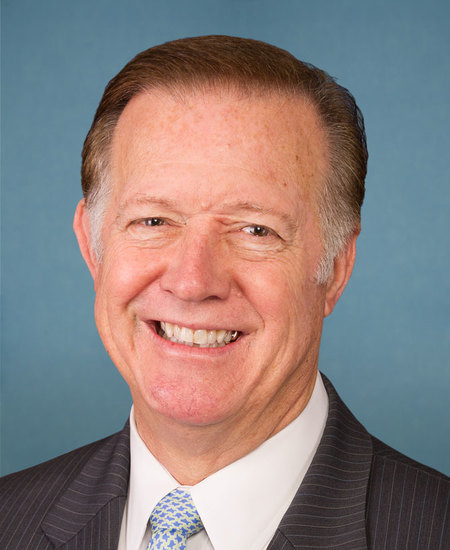
Rep. Randy K. Weber, Sr.
Sponsored bills
Maddy summaryHR 682, the Heartbeat Protection Act of 2025, prohibits physicians from performing abortions without first checking for a detectable fetal heartbeat according to standard medical practice and informing the patient of the results. It directly affects physicians and clinics performing abortions, requiring them to document heartbeat checks and comply with strict exceptions for life-threatening conditions, rape (with 48-hour documentation of counseling/treatment), or incest involving minors (with proof of prior report to authorities). Violations could result in fines or up to five years in prison, though the bill explicitly states it does not create or recognize a right to abortion. The law adds detailed documentation requirements for exceptions and mandates retention of medical records per federal health privacy rules.
Maddy summaryThis bill makes it a federal crime to recklessly dispose of fetal remains (deceased fetal tissue from abortion) in landfills or navigable waters, punishable by up to 3 years in prison or fines. It directly affects medical facilities, clinics, or individuals handling such remains, but explicitly states it does not apply to women disposing of their own fetal remains. Key provisions define "fetal remains" (excluding cremated tissue), "landfill," and "navigable waters" to clarify the scope. The law aims to prevent improper disposal while protecting women from prosecution for their own actions. It creates a new federal offense under Title 18 with specific geographic and procedural boundaries.
Maddy summaryHR 650, the Families’ Rights and Responsibilities Act, protects parents’ fundamental right to direct their child’s education, moral or religious upbringing, and health care decisions. It prohibits government (including agencies and officials) from substantially interfering with these parental choices without proving a "compelling governmental interest" using strict scrutiny. The bill applies to all federal laws and programs, allowing parents to challenge government actions in court and seek remedies if their rights are violated. It specifically exempts cases involving serious child safety risks but aims to prevent government overreach in parenting decisions based on disagreement with parental choices. This bill directly affects parents of children under 18 and sets a legal standard for how government can interact with family decisions.
Maddy summaryHR 662 amends the tax code to change how oil and gas companies calculate taxable income related to intangible drilling and development costs. It allows companies to disregard certain depreciation and depletion expenses recorded on their financial statements when computing taxable income, effectively reducing their tax burden on these specific costs. The bill directly affects oil and gas producers who use intangible drilling costs in their operations. The changes apply to taxable years beginning after December 31, 2025. This is a tax code adjustment, not a direct policy change for energy production.
Maddy summaryHR 711 (FAIR Act of 2025) prohibits federal agencies, contractors, and entities receiving federal funds from discriminating based on race, color, or national origin in federal contracts, employment, or federally funded programs. It specifically bans policies like racial quotas, set-asides, or numerical goals that grant preferences to any group. The law applies to all federal departments, contractors, and state/private recipients of federal aid, requiring them to eliminate such practices within six months of enactment. It does not affect immigration laws or existing contracts or ongoing legal cases.
Maddy summaryThis bill prohibits U.S. federal funds from being used to support the United Nations Population Fund (UNFPA). It bans all contributions - direct or indirect - from any department or agency, including the State Department, that might reach the UNFPA. The law directly affects how federal agencies manage international aid budgets and prevents taxpayer money from flowing to the UNFPA. It does not alter existing funding for other UN programs or create new requirements.
Maddy summaryHJRES 28 proposes a constitutional amendment to permanently fix the number of justices on the U.S. Supreme Court at nine. This would require ratification by 38 state legislatures (three-fourths of states) within seven years to become part of the Constitution. The amendment directly affects the structure of the Supreme Court, which has had nine justices since 1869 but could otherwise be altered by future congressional action. It does not change current court operations or create new laws, but instead seeks to make the nine-justice composition a permanent constitutional requirement.
Maddy summaryHRES 56 is a non-binding resolution proposing to memorialize unborn children by encouraging the public to lower the U.S. flag to half-staff on January 22 each year. It cites the anniversary of Roe v. Wade's 1973 ruling and the 2022 overturning of that decision, referencing the claim that over 62 million unborn children have "perished" since 1973. The resolution specifically urges the public to observe this day as the "Day of Tears," encourages flag lowering to "mourn and honor" those affected, and promotes legislative efforts to "affirm the sanctity of life" regarding abortion. As a symbolic gesture, it does not create new law but seeks to influence public observance. The resolution was introduced by multiple House members and referred to the Oversight Committee.
Maddy summaryHR 632 prohibits federal funding (directly or indirectly) for colleges and universities that host or are affiliated with campus health clinics providing abortion drugs or abortions to students or employees. Institutions must annually certify to federal education and health agencies that no such services are offered at their campus sites. The bill defines "abortion drugs" broadly as any medication intended to terminate pregnancy (excluding cases for live birth, miscarriage management, or ectopic pregnancy treatment). This policy directly affects institutions receiving federal funds, requiring them to ensure campus health services comply with the prohibition to maintain eligibility.