

Maddy summaryThis bill suspends the production of new one-cent coins (pennies) for 10 years to save taxpayer money, as Congress determined sufficient pennies exist and ongoing production costs exceed benefits. It allows the Treasury to continue making pennies *only* for numismatic collectors, selling them at cost to cover production expenses. The bill explicitly states pennies remain legal tender for all debts and transactions regardless of when they were minted. This directly affects the U.S. Mint, taxpayers, and collectors, but does not change the legal status or everyday use of pennies.
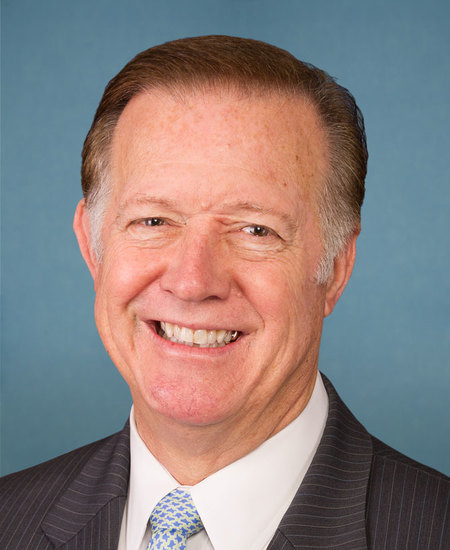
Rep. Randy K. Weber, Sr.
Sponsored bills
Maddy summaryThe No IRIS Act of 2025 (HR 1415) prohibits the Environmental Protection Agency (EPA) from using scientific assessments generated by its Integrated Risk Information System (IRIS) program to develop environmental regulations, enforce laws, issue permits, or inform air toxics mapping tools. This bill directly restricts the EPA’s regulatory process by banning IRIS data from key decision-making steps in environmental rulemaking. The law requires the EPA to rely on alternative scientific data for these purposes, without altering the IRIS program itself. It does not change existing EPA authority but limits how specific assessments may be applied in regulatory actions.
Maddy summaryHR 1421, the "Make American Flags in America Act of 2025," requires all flags of the United States displayed on federal property or procured by federal agencies to be 100% manufactured in the United States. This directly affects federal agencies (including executive departments, military branches, and legislative/judicial offices) by banning the use of foreign-made flags for official displays or purchases. The bill sets a 90-day deadline for procurement changes and a two-year timeline for display requirements, while excluding private entities from these rules. It also mandates a Federal Trade Commission study on enforcing country-of-origin labeling for flags, with a report due within one year of enactment.
Maddy summaryThis resolution urges the UK, France, and Germany (the E3) to trigger the UN Security Council's "snapback" mechanism under Resolution 2231 to reimpose nuclear-related sanctions on Iran before the mechanism expires on October 18, 2025. It cites Iran's violations of the 2015 nuclear deal (JCPOA), including enriching uranium to 60% purity, expanding nuclear facilities, and blocking IAEA inspections. The E3 would need to formally request the UN Security Council to restore sanctions lifted under the JCPOA. The resolution does not impose sanctions itself but calls for diplomatic action to prevent Iran from advancing its nuclear program.
Maddy summaryHR 1388 requires the Congressional Budget Office (CBO) and Office of Management and Budget (OMB) to use "fair-value" accounting for federal loan and loan guarantee programs, replacing traditional budget estimates with market-based cost calculations. This means the CBO must provide fair-value cost estimates for new or modified loan programs, and the OMB must annually report these estimates starting in 2026. The bill directs Congress to use these fair-value estimates when enforcing budget rules, ensuring budgetary decisions reflect the true economic cost of credit programs. It directly affects the CBO, OMB, and Congress in how they measure and manage federal credit program costs.
Maddy summaryHR 1387, the COST Act, requires federal agencies and recipients of federal funds (including states, local governments, and research grantees) to publicly disclose the percentage and dollar amount of federal funding versus non-federal funding for any program, project, or activity. This disclosure must appear in all public communications describing the initiative (except short social media posts), detailing both the federal share and the non-federal share of costs. Recipients must also certify compliance in progress reports, and the Office of Management and Budget must annually review a sample of communications for adherence and publish findings. The bill establishes a public system for anonymously reporting non-compliant communications, with reports requiring specific details about the program and the noncompliant material.
Maddy summaryThe ELITE Vehicles Act repeals federal tax credits for purchasing new electric vehicles, used clean vehicles, and commercial clean vehicles. It also eliminates the tax credit for installing electric vehicle charging infrastructure. These changes apply to vehicles purchased or with a binding contract entered into 30 days after the bill's enactment. The bill directly affects consumers and businesses that previously used these credits to offset the cost of electric vehicles and charging stations.
This concurrent resolution declares that Congress should not impose any new performance fee, tax, royalty, or other charge relating to the public performance of sound recordings on a local radio station for broadcasting sound recordings over the air, or on any business for such public performance of sound recordings.
Maddy summaryHRES 133 is a symbolic House resolution supporting the designation of February 15-22, 2025, as "National FFA Week." It recognizes the National FFA Organization’s role in developing student leadership through agricultural education and celebrates two milestones: the 90th anniversary of the New Farmers of America (which served Black students until merging with FFA in 1965) and the 75th anniversary of FFA’s federal charter (granted by Congress in 1950). The resolution has no policy impact or funding provisions - it simply expresses congressional support for these observances. It directly affects no individuals or entities, as it is a non-binding gesture honoring an educational organization.
Maddy summaryHR 1301, the Death Tax Repeal Act, would eliminate the federal estate tax and generation-skipping transfer tax for estates of individuals dying on or after its enactment date. It directly affects individuals inheriting significant assets, as it removes taxes on estates exceeding $10 million (adjusted for inflation) and repeals taxes on large transfers between generations. The bill modifies the gift tax by establishing a $10 million lifetime exemption with annual inflation adjustments, replacing previous tax brackets. It applies to estates, gifts, and transfers occurring on or after the bill's effective date.