

Maddy summaryHR 620, the FARM Act, expands the Committee on Foreign Investment in the United States (CFIUS) to review foreign investments in U.S. agriculture. It requires CFIUS to assess transactions where foreign entities gain control of U.S. agricultural businesses (including those using agricultural products defined under 7 U.S.C. 451) and adds agricultural supply chains to the list of critical infrastructure and critical technologies. The bill mandates annual reports from the Secretary of Agriculture and the Comptroller General to Congress, detailing foreign investments in U.S. agriculture, potential threats to supply chains, and espionage risks targeting agricultural research or data. This directly affects foreign investors seeking to acquire U.S. agricultural assets and reshapes CFIUS review processes for the sector.
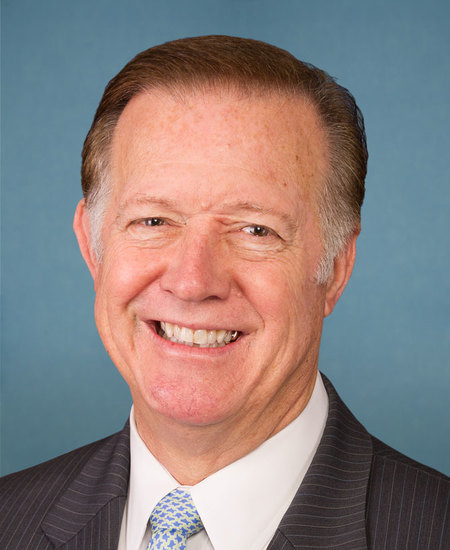
Rep. Randy K. Weber, Sr.
Sponsored bills
Maddy summaryThis bill amends federal law to require that individuals purchasing handguns from licensed dealers be at least 21 years old, removing previous exceptions that allowed sales to those under 21 for certain firearms. It directly affects anyone seeking to buy handguns from federally licensed gun sellers, raising the minimum age from 18 to 21 for these transactions. The bill also removes an existing age verification statement (requiring buyers to confirm they are 21 or older) for handgun purchases, aligning the requirement with the new age standard. Rifles and shotguns remain unaffected by this provision, as the amendment specifically targets handguns only. The bill's title referencing "voter" is unrelated to its actual provisions on firearm sales.
Maddy summaryThis bill protects firearm trace data maintained by the ATF's National Trace Center and related licensee information from public disclosure under FOIA. It directly affects licensed firearms dealers, state/local governments, and other entities that handle this data. Key provisions include adding a new FOIA exemption for this data, imposing fines of $10,000-$25,000 for unauthorized disclosures, and allowing licensed dealers to sue for triple damages or $25,000 per disclosure. The law also prevents sovereign immunity from blocking such lawsuits and specifies that fines apply per individual disclosure.
Maddy summaryThis bill extends the exclusivity period for certain advanced drugs from 7 to 11 years. It defines "advanced drug product" as a drug using genetically targeted technology to modulate gene function (e.g., suppress or activate genes). This change directly affects pharmaceutical companies developing these specific advanced therapies by granting them longer market exclusivity. The policy change modifies the Social Security Act to provide extended protection for these innovative drugs, allowing companies more time to recoup research and development costs.
Maddy summaryHR 1748, the "FEMA for America First Act of 2025," would amend the federal disaster relief law to restrict FEMA assistance to "qualified aliens" only. This means non-citizens seeking disaster aid would need to meet specific immigration status criteria defined in existing law, excluding certain groups like asylum seekers who haven’t applied for permanent residency, refugees without adjustment applications, and certain parolees. The bill directly affects non-citizen individuals applying for FEMA disaster assistance under the Robert T. Stafford Act. It changes eligibility rules by requiring applicants to hold a "qualified alien" status as defined by the 1996 welfare law, without altering the core disaster relief program structure.
Maddy summaryHR 1760, the USPS Act, requires the U.S. Comptroller General to conduct annual investigations into mail theft, delays, postal employee violations, and property damage by the U.S. Postal Service. These investigations must be reported yearly for five years to the House Oversight Committee and Senate Homeland Security Committee, detailing current safeguards and suggesting improvements. The bill mandates that these reports include specific recommendations for both the Postal Service and Congress to address security issues, focusing on concrete data rather than policy advocacy. This procedural bill directly affects federal oversight bodies and the Postal Service’s operational accountability, without altering postal services or funding.
Maddy summaryHR 1651 would nullify a specific Environmental Protection Agency (EPA) rule finalized on May 9, 2024. This rule established emissions standards for greenhouse gases from new, modified, and reconstructed fossil fuel power plants, set guidelines for existing plants, and repealed the previous "Affordable Clean Energy Rule." The bill would make this EPA rule unenforceable, directly affecting fossil fuel power plants by removing these federal emissions requirements. It does not create new regulations but cancels an existing EPA rule.
Maddy summaryHRES 166 is a non-binding House resolution expressing U.S. support for the Iranian people's desire for a democratic, secular, and nonnuclear republic. It condemns the Iranian regime's terrorism, regional proxy wars, internal suppression of ethnic and religious minorities, and human rights abuses - including executions and repression of women-led protests. The resolution calls for holding the regime accountable through sanctions, supports the Ten-Point Plan for Iran’s democratic transition, and urges protection for Iranian political refugees in Albania. It does not create new laws but affirms U.S. policy alignment with Iranian protesters' demands.
Maddy summaryThis bill awards a Congressional Gold Medal to the 761st Tank Battalion (known as the "Black Panthers"), the first predominantly Black armored unit in World War II's European Theater. It recognizes their combat service from 1944-1946, including key roles in the Battle of the Bulge and breaking the Siegfried Line, despite facing racial prejudice during and after the war. The medal will be displayed at the National Museum of African American History and Culture, with bronze duplicates available for sale to cover costs. The bill commemorates the battalion's 130,000 enemy casualties inflicted, 50% casualty rate, and their 1978 Presidential Unit Citation. It does not create new laws or affect current policies.
Maddy summaryHR 1639, the BOAT Act, makes it a federal crime to perform an abortion resulting in fetal death on U.S. ships or in U.S. waters (admiralty jurisdiction), punishable by up to 5 years in prison. The law includes exceptions for abortions necessary to save a pregnant woman's life (including pregnancy-related conditions), abortions following adult rape (requiring 48-hour counseling or medical treatment), or abortions following rape/incest involving minors (requiring prior reporting to authorities). It also creates civil lawsuits allowing women who had abortions in violation of the law to seek triple the abortion cost, medical damages, and attorney fees. The bill directly affects healthcare providers performing abortions on U.S. vessels or in U.S. waters and the women receiving such care.