

Maddy summarySammy's Law of 2023 requires large social media platforms (defined as those with over 100 million monthly users or $1 billion in annual revenue) to create and maintain application programming interfaces that allow parents or legal guardians to delegate account management for children aged 13 or older to third-party safety software providers. These providers must register with the Federal Trade Commission, agree to use data solely for child safety, and follow strict rules about data disclosure. The law establishes a national standard that prevents states from creating their own requirements for this feature while including FTC enforcement mechanisms and data security provisions. The legislation aims to give parents more tools to monitor and protect children from specific online harms like cyberbullying, trafficking, and violence on major social media platforms.
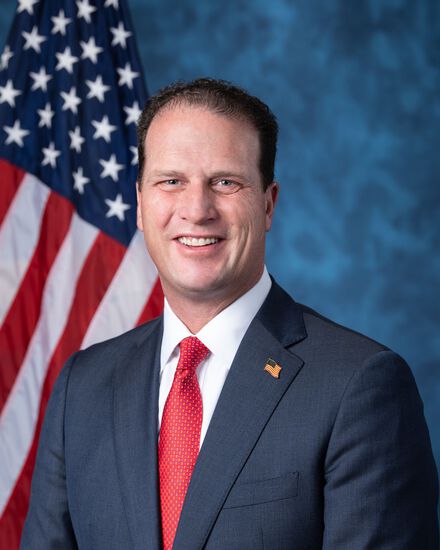
Rep. August Pfluger
Sponsored bills
Maddy summaryHRES 739 is a House resolution disapproving of a September 11, 2023, sanctions waiver that would release $6 billion in Iranian assets held in South Korea. The resolution states this waiver weakens U.S. policy by allowing Iran access to funds that could support its nuclear program and terrorism, and criticizes the delayed notification to Congress. It specifically condemns the administration's nonenforcement of mandatory sanctions and the release of assets without proper congressional review. The resolution demands the administration submit any Iran nuclear agreement to Congress before further sanctions relief. This is a procedural disapproval, not a law altering sanctions.
Maddy summaryHR 5641, the Pay Our Troops Act, ensures military personnel and their support staff continue receiving pay during fiscal year 2024 if Congress fails to pass regular budget appropriations. It appropriates existing Treasury funds to cover pay and allowances for active-duty troops, reserve components, and civilian employees or contractors supporting military operations. The bill automatically terminates on January 1, 2025, or earlier if Congress enacts a regular budget or continuing resolution. This provision directly affects service members, Department of Defense staff, and Coast Guard personnel (when not under the Navy) during budget implementation gaps.
Maddy summaryThis bill denies pension payments to current or former congressional members convicted of certain crimes. Specifically, it removes eligibility for retirement benefits based on their service as a Member of Congress if convicted of a qualifying offense after the bill's enactment. If a conviction is later overturned, the individual would receive retroactive pension payments. The law only applies to pensions tied to congressional service, not other government employment, and excludes convictions occurring before the bill's effective date.
Pay Our Border Patrol and Customs Agents Act This bill provides FY2024 appropriations for the salaries and expenses of certain U.S. Customs and Border Protection (CBP) employees who are required to work during a lapse in appropriations (i.e., government shutdown) in FY2024. Specifically, the bill provides appropriations to CBP for the salaries and expenses of agents of the U.S. Border Patrol and officers of the Office of Field Operations who are excepted from furlough (i.e., required to work) during a lapse in discretionary appropriations in FY2024.
Maddy summaryThis bill requires the Director of Homeland Security Investigations to produce annual, publicly accessible reports assessing threats from transnational criminal organizations (TCOs) to the U.S. Within 180 days of enactment and each year after, the report must detail TCO structures, drug smuggling trends (including seizures and drug types like opioids), gang-TCO collaborations, money laundering, and predictive trends for drug trafficking. The reports must be submitted to the House and Senate Homeland Security and Judiciary committees, with unclassified summaries posted online. The bill directly affects DHS, CBP, Coast Guard, and other federal agencies responsible for compiling the assessments, and informs congressional oversight of TCO threats.
Maddy summaryHRES 720 designates the week of September 24-30, 2023 (and annually thereafter) as "Gold Star Families Remembrance Week" to honor families who have lost loved ones in military service. It specifically recognizes the sacrifices of families of fallen service members and veterans, and encourages Americans to observe the week through community service and celebrating the lives of those who died protecting the nation. This resolution is procedural and symbolic, with no new funding, regulations, or policy changes - only a formal designation to honor these families. It directly affects Gold Star families (those with members who died in military service) and the broader public through its call for observance.
Maddy summaryHRES 684 is a symbolic congressional resolution passed by the U.S. House of Representatives on September 14, 2023, condemning New Mexico Governor Michelle Lujan Grisham's emergency order that temporarily suspended open and concealed carry firearm rights for 30 days. The resolution asserts the order violated the Second Amendment, citing Supreme Court precedents (Heller, McDonald, Bruen) and noting a federal judge had already blocked the order's firearm restrictions. It does not change any laws or impose legal consequences - it is solely a formal expression of disapproval from Congress. The resolution directly addresses the Governor's actions but has no effect on New Mexico's laws or citizens' rights.
Maddy summaryThis bill prohibits federal funding for colleges and universities that require students or staff to get a COVID-19 vaccine to enroll, work, or access services. It directly affects institutions of higher education receiving federal funds, such as those participating in student aid programs. The key provision blocks all federal financial support if an institution enforces such vaccine requirements as a condition of enrollment, employment, or benefits. The law does not ban vaccine mandates outright but ties federal funding to compliance with this prohibition.
Maddy summaryHR 5596 (Put Our Neighbors to Work Act of 2023) requires military construction contractors to prioritize hiring local workers by giving preference to entities hiring at least 51% of employees who live near the project site (within a state or 60-mile radius). It also creates a small business incentive: subcontract value is doubled for contracts awarded to small businesses located near the work site, improving their compliance with federal procurement goals. The bill mandates public transparency by requiring contractors to publish subcontract details online and report monthly to Congress on covered military construction contracts. These provisions apply to military construction, family housing, and facilities projects across all U.S. states, territories, and the District of Columbia.