

Maddy summaryHR 6383 prohibits the Department of Homeland Security (DHS) from using federal funds to implement or enforce a "remain in Texas policy." This policy would require migrants released by DHS or HHS to stay in Texas after entering the U.S. The bill's key mechanism is a funding ban, blocking DHS from enforcing such requirements without congressional approval. It directly affects migrants subject to release by DHS/HHS and DHS operations. The policy change is purely procedural, restricting how federal funds can be used for migration management in Texas.
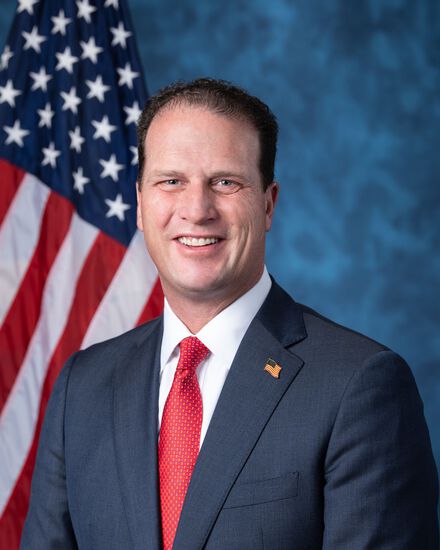
Rep. August Pfluger
Sponsored bills
Maddy summaryHR 6252 directs the Nuclear Regulatory Commission (NRC) to streamline environmental reviews for new nuclear reactors by submitting a report within 90 days on strategies like using existing environmental documents from other agencies, reducing redundant reviews, and adopting digital tools for better coordination. The bill requires the NRC to implement these changes through a final rule within two years, aiming to speed up approvals for nuclear reactor applications while maintaining public transparency and compliance with environmental laws. This directly affects the NRC, nuclear energy applicants seeking permits, and state/local agencies involved in the review process. The key change is shifting from lengthy, separate reviews to leveraging existing analyses and improving efficiency in the environmental assessment process.
Adding Coccidioidomycosis to the FDA Priority Review Voucher Program Act of 2023 This bill expands the priority-review voucher program for tropical diseases to include coccidioidomycosis (also known as Valley fever). A voucher entitles the holder to have a future new drug or biological product application acted upon by the Food and Drug Administration within six months.
Maddy summaryThis bill prohibits federal funding for two specific initiatives: the Justice40 Initiative (focused on delivering 40% of climate benefits to disadvantaged communities) and the American Climate Corps (a program announced in a September 2023 White House fact sheet to create climate jobs for young people). It blocks all federal budget allocations for these programs, directly affecting their implementation. The bill does not create new programs or alter existing laws, but prevents the use of taxpayer funds to support these two named initiatives.
Maddy summaryThe SHIP Act imposes sanctions on foreign entities that knowingly handle Iranian petroleum, targeting those involved in port operations, transportation, refining, or ship-to-ship transfers of Iranian oil. Starting 90 days after enactment, the President must block assets, deny visas, and impose penalties on individuals or companies engaging in these activities, including family members or owners of sanctioned entities. It requires annual reports tracking Iran's oil exports, revenues, and key players like shipping companies and ports. The sanctions terminate if the President certifies Iran has stopped supporting terrorism and dismantled weapons programs.
Maddy summaryHRES 798 is a House resolution condemning support for Hamas, Hezbollah, and other terrorist organizations at colleges and universities. It states such support may create a hostile environment for Jewish students, faculty, and staff, citing incidents like blaming Israel for the October 7 Hamas attack. The resolution urges the Secretary of Education to direct the Office for Civil Rights to investigate and take action where appropriate. This non-binding resolution expresses the House's position but does not create new law or policy changes.
Maddy summaryHR 6201, the Iranian Sanctions Enforcement Act of 2023, creates the Iran Sanctions Enforcement Fund to cover costs related to seizing and forfeiting property from Iran or its designated proxies (like Hezbollah or the Revolutionary Guard Corps) that violate U.S. sanctions. The fund, initially $150 million, pays for investigative costs, property management, informant rewards, and equipment for federal, state, and local agencies involved in enforcement. It also establishes an Export Enforcement Coordination Center within Homeland Security to improve interagency cooperation on enforcing export controls targeting Iran. The bill requires annual reports on fund usage and mandates repayment of the initial $150 million by 2034, unless waived for national security reasons.
Maddy summaryHR 6200, the Terrorist Inadmissibility Codification Act, amends U.S. immigration law to expand the list of groups whose members are considered "engaged in terrorist activity." The bill specifically adds Hamas, Hezbollah, Al-Qaeda, ISIS, and Palestine Islamic Jihad to the existing list, along with their spokespersons or members who endorse these groups' activities. This change directly affects foreign nationals who are members of, support, or endorse these designated groups, making them inadmissible to the United States. The key mechanism is updating the legal definition within the Immigration and Nationality Act to explicitly include these organizations in the criteria for denying visas or entry.
Maddy summaryHR 3816, the Veterans’ Entry to Apprenticeship Act, allows veterans using GI Bill benefits (under chapters 30, 32, 33, 34, or 35) to enroll in approved pre-apprenticeship programs and receive the same educational assistance and housing allowances as if they were in a registered apprenticeship program. The bill requires pre-apprenticeship programs to have sponsor certification (e.g., from a community college, employer, or government agency) confirming they prepare veterans for registered apprenticeships and meet industry skill standards. It treats these programs as equivalent to apprenticeships for benefit purposes, including charging entitlement at the same rate and providing housing allowances based on the location of the program. This directly affects veterans seeking career training through pre-apprenticeship pathways.
Maddy summaryHRES 796 is a non-binding House resolution condemning foreign nationals in the U.S. who have endorsed or supported Hamas, Palestinian Islamic Jihad, or other designated foreign terrorist organizations (FTOs) responsible for the October 7, 2023, attacks on Israel. It calls on the President to enforce existing immigration law (8 U.S.C. 1182(a)(3)(B)(i)(VII)) to revoke visas and initiate deportation for such individuals. The resolution affirms that terrorism by these groups cannot be equated with Israel’s self-defense actions and rejects all forms of anti-Semitism. It does not create new laws but urges enforcement of current visa restrictions for those endorsing FTOs. The resolution references the Oct. 7 attacks that killed 1,300 Israelis and 30 U.S. citizens, as cited in the resolution’s preamble.