

Maddy summaryHR 5577, the FACE Act Repeal Act of 2023, would repeal a federal law (Section 248 of Title 18, U.S. Code) that made it a crime to block access to abortion clinics or threaten clinic staff. This repeal would remove criminal penalties for obstructing access to clinics, affecting abortion providers, clinic staff, and individuals attempting to access or block clinic entrances. The bill specifically targets the repeal of this prohibition, applying to prosecutions pending or initiated after the law's enactment. It does not change other abortion-related laws or create new policies.
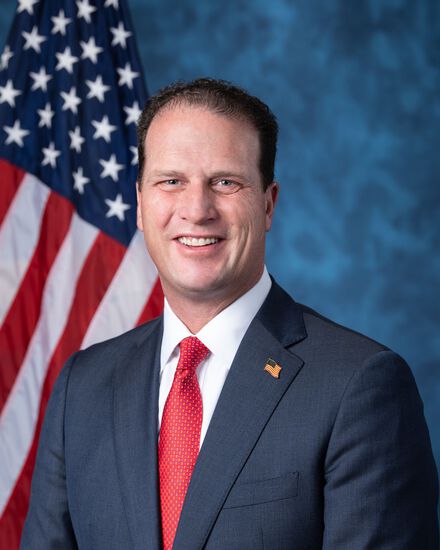
Rep. August Pfluger
Sponsored bills
Maddy summaryHR 1435, the Preserving Choice in Vehicle Purchases Act, amends the Clean Air Act to restrict states from implementing vehicle emissions rules that limit the sale or use of new gasoline-powered cars. It directly affects states with stricter emissions standards (like California) by adding a new definition that blocks state rules "directly or indirectly" limiting internal combustion engine vehicles as defined in federal regulations as of January 1, 2023. The bill requires the EPA to revoke existing state emissions waivers granted between January 2022 and the bill’s enactment if they don’t comply with this new definition. This creates a concrete federal standard preventing states from advancing policies that could reduce demand for conventional vehicles.
Maddy summaryHR 5495, the Political BIAS Emails Act of 2023, prohibits email providers from automatically labeling political campaign emails as spam without a user’s explicit action. It requires email providers to publish quarterly transparency reports showing spam rates for Republican and Democratic campaign emails separately, including how often algorithms flagged them without user input. Political campaigns can request detailed reports about their own email delivery rates and best practices for reaching inboxes, with limits on how frequently they can request this data. The Federal Trade Commission will enforce these rules as unfair or deceptive practices under existing law. The bill directly affects major email services and political campaigns, aiming to increase transparency in how political communications are filtered.
Maddy summaryHR 5507 prohibits the use of federal funds to establish a Disinformation Governance Board within the Department of Homeland Security. The bill directly affects the Secretary of Homeland Security by blocking any funding from being used for this specific board's creation. It is a straightforward funding restriction with no additional policy mechanisms or provisions beyond preventing the board's establishment.
Maddy summaryHR 5508, the "Respect for the Second Amendment Act," prohibits state and local governments from enforcing laws that restrict firearm ownership or use unless those laws align with the U.S. historical tradition of firearm regulation. The bill directly affects state and local laws governing gun possession, carrying, and ownership, requiring courts to block any regulation that fails this historical test. Key mechanisms include allowing the Attorney General or individuals harmed by such laws to sue for injunctions, with prevailing plaintiffs entitled to legal fees. The bill does not preempt stronger state gun rights protections but focuses on challenging state laws deemed inconsistent with the Second Amendment as interpreted by Supreme Court rulings like *Heller* and *Bruen*.
Maddy summaryHR 3152, the "Fight CRIME Act," aims to maintain international restrictions on Iran's missile-related activities by requiring diplomatic efforts to extend these restrictions before they expire in October 2023. The bill mandates annual reports detailing U.S. diplomatic strategies, potential impacts of expiration, and measures to deter missile technology transfers to Iran. It establishes sanctions against foreign individuals or entities that knowingly support Iran's missile or drone programs, including asset freezes and visa restrictions. These sanctions apply regardless of whether UN restrictions remain in effect after their expiration, directly affecting foreign entities involved in these activities.
Maddy summaryHR 1501, the UAS Act, bans the Department of Homeland Security (DHS) from operating, procuring, or renewing contracts for unmanned aircraft systems (UAS/drones) or related components (like flight controllers, software, or detection systems) manufactured in or using technology from "covered foreign countries" (nations identified as foreign adversaries by U.S. intelligence). DHS can request a waiver for national security reasons, but must notify Congress within 14 days. The bill requires DHS to submit a security report to Congress within 180 days detailing existing UAS systems, threat assessments, and potential security risks from foreign-made UAS. This applies solely to DHS operations, not general public drone use.
Maddy summaryHR 5319, the Ban Offshore Abortion Tourism Act, prohibits performing abortions that result in fetal death within U.S. maritime jurisdiction (e.g., international waters under U.S. authority). It targets abortion providers in these zones, with exceptions for life-threatening medical conditions, pregnancies from rape (requiring 48 hours of counseling or treatment first), or pregnancies from rape/incest involving minors (requiring prior reporting to authorities). The bill allows civil lawsuits against providers for violations, awarding triple damages, medical costs, and attorney fees, but explicitly protects women from prosecution or financial liability. It does not restrict abortion access in foreign countries or U.S. territorial waters.
Rural Hospital Technical Assistance Program Act This bill provides statutory authority for the Rural Hospital Technical Assistance Program within the Department of Agriculture (USDA). Under the bill, USDA must establish and maintain (directly or by grant, contract, or cooperative agreement) a program to help eligible hospital facilities in rural areas with a population of 50,000 inhabitants or less. The program must provide tailored technical assistance and training to hospital facilities to identify development needs for maintaining essential health care services and support action plans for financial, operational, and quality improvement projects to meet these needs. Development needs include (1) constructing, expanding, and modernizing health care facilities; (2) increasing telehealth capabilities; and (3) acquiring or upgrading health care information systems (e.g., electronic health records). The program must also provide technical assistance and training to help hospital facilities to better manage their financial and business strategies and identify, and apply for assistance from, USDA loan and grant programs. In selecting eligible hospital facilities to participate in the program, USDA must give priority to borrowers and grantees of certain USDA rural assistance programs. USDA must also submit an annual report to Congress on the progress and results of the program.
Maddy summaryThe ACES Act directs the Department of Veterans Affairs to fund a National Academies study examining cancer rates among active-duty military aircrew members (including pilots and navigators in fixed-wing aircraft). The study will identify potential military-related exposures linked to specific cancers - such as lung, prostate, melanoma, and others - and analyze existing VA, Defense, and CDC health data. It requires the National Academies to report findings to Congress on cancer prevalence and mortality among these service members. This bill focuses on gathering scientific data to inform future policy, not on immediate benefits or changes.