

Maddy summaryHJRES 127 is a congressional disapproval resolution targeting a Securities and Exchange Commission (SEC) rule requiring public companies to standardize climate-related financial disclosures. It seeks to block the SEC’s March 2024 rule (89 Fed. Reg. 21668), which would mandate consistent reporting on climate risks for investors. If passed, this resolution would prevent the SEC rule from taking effect, directly affecting publicly traded companies required to comply with the proposed disclosure standards. The bill uses a specific congressional process under Title 5, U.S. Code, to nullify the rule without creating new regulations.
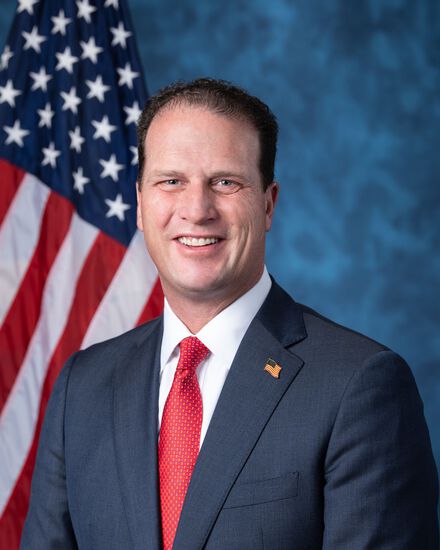
Rep. August Pfluger
Sponsored bills
Maddy summaryHR 9202, the Nuclear Waste Reprocessing Act, directs the U.S. Department of Energy to create policies supporting the commercial recycling of spent nuclear fuel. It requires the Energy Secretary to work with private industry to advance reprocessing technologies, establish partnerships for research and commercialization, and collaborate with the Nuclear Regulatory Commission to align procedures. The bill mandates annual progress reports to Congress on efforts to develop this technology, aiming to address nuclear waste challenges and position the U.S. as a leader in international reprocessing. It directly affects federal agencies, nuclear energy companies, and the management of nuclear waste materials. The key change is shifting focus toward recycling nuclear fuel components rather than solely storing spent fuel as waste.
Maddy summaryHRES 1371 is a House resolution condemning the Biden Administration and Vice President Kamala Harris for failing to secure the U.S. border. It cites statistics including over 9.7 million illegal immigration encounters since 2021 and the end of the Remain in Mexico program as evidence. As a symbolic resolution with no policy changes, it publicly expresses the House's disapproval of current border policies without altering any laws or enforcement actions.
Maddy summaryHR 9109, the IRS Overreach Prevention Act, prohibits the IRS from continuing its Direct File program or developing any successor program that offers free, public electronic tax filing. This bill directly affects taxpayers who might have used the free service, as it prevents the IRS from providing this specific option. The key provision explicitly bans the Secretary of the Treasury from maintaining or creating any free, public electronic return-filing service. The bill does not change tax laws or filing requirements but restricts the IRS’s ability to offer this particular service. It is a procedural measure focused solely on prohibiting the specific program described in the bill text.
Maddy summaryThe SAVE Act (HR 8281) requires U.S. citizens to provide documentary proof of citizenship when registering to vote in federal elections. It defines acceptable proof as documents like passports, REAL ID-compliant IDs, military IDs, or birth certificates, and mandates that states verify citizenship using information from government agencies like DHS and Social Security. States must establish processes for voters without required documentation to provide an attestation under penalty of perjury. The law also requires states to remove noncitizens from voter rolls when verified evidence shows they're not citizens. This bill directly affects all applicants registering to vote in federal elections and state election officials who must implement these requirements.
Maddy summaryHR 2971, the Veterans Claims Education Act of 2023, requires the Department of Veterans Affairs (VA) to provide veterans filing claims with clear information about free or low-cost assistance. Specifically, it mandates that veterans not represented by an accredited person receive notice about free help from veterans service organizations, an online directory of trained representatives, and how to report unaccredited representatives charging fees. The VA must also include fee warnings and links to these resources on its claim-filing websites. Additionally, the bill requires the VA to review and report on its processes for recognizing accredited representatives within 180 days of enactment.
Maddy summaryHRES 1365 is a non-binding House resolution calling for the immediate termination of Kimberly Cheatle as U.S. Secret Service Director. It directly addresses the Secret Service Director and the executive branch, though it has no legal force to remove her from office. The resolution’s sole provision is a formal request for her termination, reflecting the sponsors' position on her leadership. As a symbolic gesture, it does not change her employment status or require any action from the President or Secret Service.
Maddy summaryThis is a commemorative resolution (HRES 1369) honoring Corey Comperatore, a volunteer firefighter, U.S. Army Reserves veteran, and community leader from Sarver, Pennsylvania, who died on July 13, 2024. The resolution formally mourns his passing and celebrates his life, noting he left behind his wife, Helen, and two daughters, Allyson and Kaylee. It recognizes his service to the Buffalo Township Volunteer Fire Department, his military service, and his role as a devoted member of Cabot Methodist Church. As a ceremonial resolution, it has no policy impact or direct effect on legislation or constituents beyond this formal acknowledgment.
Maddy summaryThis bill creates a new Public Participation Division within the Federal Energy Regulatory Commission to better coordinate assistance for the public during regulatory proceedings. The Division would be led by a Director who provides technical and logistical support to individuals and groups participating in Commission processes, but cannot offer financial compensation for legal or expert witness fees. The legislation also requires the new Director to submit a report to Congress within one year detailing how the Division operates and how its functions overlap with existing Commission authorities. This structure aims to streamline public engagement in energy regulation while maintaining clear boundaries on the type of assistance provided.
Maddy summaryThis bill requires the Secretary of Homeland Security to provide written notice within 14 days if denying a presidential candidate's request for protective detail or increased resources, explaining the specific criteria not met. It allows candidates to submit written reconsideration requests with supporting facts, and mandates a final written decision within 14 days of that request. The bill directly affects presidential candidates seeking security details by establishing clear procedural steps for denials and reconsideration, without changing eligibility criteria. It focuses solely on process, not policy outcomes.