

Maddy summaryThis bill establishes a new DHS Intelligence Rotational Assignment Program for intelligence analysts within the Department of Homeland Security. It allows analysts working in DHS intelligence units or the Secret Service's Office of Strategic Intelligence to rotate between positions within the Department, as determined by the Secretary. The program must be created within one year of the bill's enactment, aiming to enhance analyst experience and flexibility across DHS intelligence roles. (Procedural bill; summary limited to 1-2 sentences as required.)
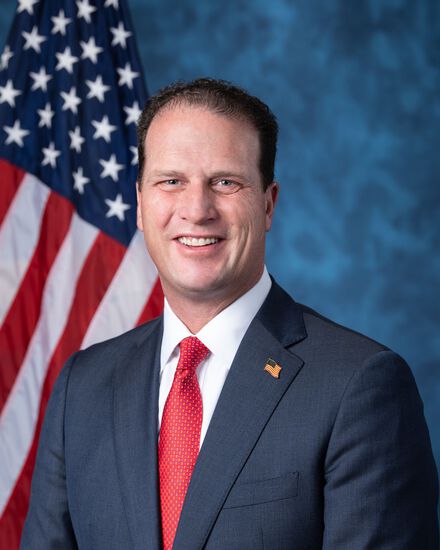
Rep. August Pfluger
Sponsored bills
Maddy summaryThis bill requires the Comptroller General to produce a report assessing the Homeland Security Information Network (HSIN), a system used by federal, state, local, tribal, and territorial law enforcement agencies to share information. The report must examine how HSIN is used across different platforms (desktops and mobile apps), compare it to other tools like FBI's JusticeConnect, and evaluate its costs, effectiveness, and how well it protects civil rights and privacy. The findings will be submitted to key congressional committees within one year of the bill's enactment. This is a procedural measure focused on reviewing an existing information-sharing system, not creating new laws or funding.
Maddy summaryThis bill authorizes border states (adjacent to the U.S. northern or southern border) to place movable, temporary structures on federal land near the border for security purposes without needing a special use permit. States must notify the relevant federal agency (e.g., Bureau of Land Management or Forest Service) at least 45 days before placement, and structures can remain for up to one year, with possible 90-day extensions if U.S. Customs and Border Protection determines "operational control" hasn't been achieved. The bill directly affects border states and federal land management agencies by streamlining temporary border security measures on public lands.
Maddy summaryThis bill increases funding for replacing potentially insecure telecommunications equipment from $1.9 billion to $4.98 billion under the Secure and Trusted Communications Networks Act. It appropriates $3.08 billion specifically for the Federal Communications Commission (FCC) to implement this program in fiscal year 2024. The bill mandates the FCC to conduct a spectrum auction for certain frequencies within one year of enactment, regardless of prior expiration deadlines for such auctions. This directly affects the FCC, telecom companies bidding on spectrum licenses, and national security networks requiring secure communications infrastructure.
Maddy summaryThe Counter Terrorgram Act of 2024 requires the Department of Homeland Security (DHS) and the Director of National Intelligence to produce annual assessments of terrorism threats posed by terrorist organizations using foreign messaging apps like Telegram, TikTok, and WeChat. The first assessment must be submitted within 180 days of enactment, followed by five annual reports analyzing past radicalization efforts, financial support through app features, and recommendations for addressing threats. These reports must be coordinated with privacy and civil liberties offices to ensure legal compliance and will be posted publicly online, with classified details limited to intelligence sources. DHS must also share threat information with state and local fusion centers and incorporate their input into national security efforts.
Maddy summaryThis bill establishes a new review process for proposed listings of species under the Endangered Species Act. It requires the Fish and Wildlife Service to pause proposed listings when an "established consortium" (state or multi-state conservation group) objects, then refer the case to an independent third-party evaluator team. These teams - composed of experts in science, economic impacts on landowners/businesses, and conservation partnerships - must review the case within 180 days and issue a binding decision to proceed, terminate, or remand the listing. The bill also mandates greater transparency in Species Status Assessments by requiring public disclosure of peer reviewers' credentials and the rationale for including/excluding scientific data. It formalizes existing voluntary conservation agreements between the Service and private landowners (like Candidate Conservation Agreements) to remain legally binding.
Maddy summaryHR 9249, the "Show Me the Science Act," requires federal agencies to publicly include the scientific data they rely on when publishing new regulations, unless the agency head determines disclosure would threaten public safety or security. This affects all agencies creating rules (like the EPA or FDA) by mandating transparency in the data supporting their decisions. Agencies must provide this data in rule publications, with exceptions only after specific justification to the Office of Information and Regulatory Affairs and Federal Register publication. The bill defines "scientific data" as factual material accepted by the scientific community and of sufficient quality for validation. This is a procedural transparency measure, not a policy change to regulations themselves.
Maddy summaryThe Counter SNIPER Act (HR 9282) establishes a formal process for presidential and vice-presidential candidates seeking protective details from the U.S. Secret Service. If the Secretary of Homeland Security denies a request, they must provide a written explanation within 14 days, detailing the criteria not met, and allow candidates to request reconsideration with supporting evidence. The Secretary must then issue a final written decision within 14 days of the reconsideration request. Additionally, the bill requires the Director of the U.S. Secret Service to be appointed by the President with Senate confirmation.
Maddy summaryHR 9274, the SHAWL Act, establishes two new Smithsonian museums: the National Museum of the American Latino and the American Women’s History Museum. It authorizes both museums to be located within the National Mall’s "Reserve" area, overriding prior restrictions, and requires federal agencies managing potential sites to transfer jurisdiction to the Smithsonian after notifying congressional committees. The bill mandates that both museums accurately represent diverse cultures, histories, and viewpoints within Latino and women’s communities through exhibits and programs, requiring input from a broad range of community experts. It also requires the Smithsonian to submit biennial reports to Congress detailing compliance with these representation requirements.
Freedom from Unfair Gun Taxes Act of 2024 This bill prohibits states or localities from imposing a levy or collecting an excise tax on the sale of a firearm, ammunition, or any part or component thereof, by a manufacture or retailer.