

Maddy summaryHR 8411, the Defending American Property Abroad Act, blocks U.S. government funding for activities involving foreign ports or terminals where a U.S. entity owns the land needed for access, and a foreign government has taken actions like nationalizing that land or nullifying a related contract. It requires the Homeland Security Secretary to designate such "prohibited property" within 60 days, then prohibits funding for vessels using these locations to import goods, dock, or receive maintenance. The bill mandates annual reports to Congress tracking designated properties, affected vessels, and the foreign actions triggering designations, along with assessments of economic and national security impacts. This directly affects U.S. businesses with foreign port access and U.S. agencies managing maritime activities.
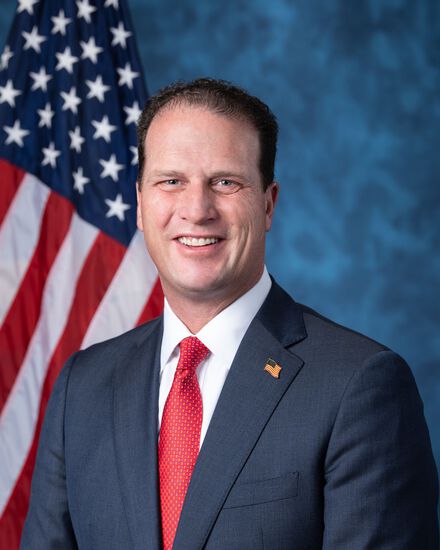
Rep. August Pfluger
Sponsored bills
Maddy summaryHR 8267, the "Old Drugs, New Cures Act," creates a process for drug manufacturers to request "priority research drug" status for existing medications (approved over 10 years ago) being studied for new medical uses that address significant unmet needs. To qualify, the new use must target diseases affecting at least 33% of Medicare/Medicaid beneficiaries, as defined by claims data. If designated, these drugs are excluded from specific Medicaid and Medicare pricing rules that typically apply to "line extensions" or "best price" calculations. This change directly affects drug manufacturers seeking to study older drugs for new indications and impacts how Medicare/Medicaid programs calculate drug pricing for these medications.
Maddy summaryHR 8018, the ABC Act, requires Medicare, Medicaid, CHIP, and Social Security Administration to review their eligibility processes, forms, and communications to simplify interactions for family caregivers. It targets reducing duplicate paperwork, improving website accessibility (including ADA compliance), and enhancing staff communication - such as shorter call waits and multilingual support - to better serve caregivers supporting individuals enrolled in these programs. The review must include input from caregivers and organizations, with results reported to Congress within one year. This procedural bill does not change program benefits but mandates systemic improvements to reduce administrative burdens.
Maddy summaryThe Telehealth Modernization Act of 2024 extends Medicare's temporary telehealth coverage rules permanently, removing the previous 2024 expiration date. It expands who can provide telehealth services by allowing more healthcare professionals (like certain nurse practitioners) to bill Medicare for these services, and ensures Federally Qualified Health Centers and Rural Health Clinics can continue billing for telehealth under existing payment rules after 2024. The bill also explicitly permits audio-only telehealth calls for Medicare coverage and allows telehealth for hospice face-to-face visits and home dialysis assessments as clinically appropriate, without time limits. These changes directly affect Medicare beneficiaries, healthcare providers, and community health centers offering telehealth services.
Maddy summary# Summary of Proposed Legislation This document outlines a comprehensive U.S. legislative proposal with several key components: 1. **Research Restrictions**: - Requires certification from Federal research grant recipients that they are not Chinese citizens or participants in Chinese talent programs - Prohibits employment of Chinese nationals in federally funded research - Requires institutions receiving Federal assistance to agree not to knowingly employ individuals participating in Chinese talent programs 2. **Foreign Gifts and Contracts Disclosure**: - Mandates disclosure of foreign gifts/contracts over $50,000 to universities - Requires public reporting of restricted/conditional gifts/contracts - Creates a searchable public database of foreign gifts to universities - Requires institutions to maintain policies regarding foreign gifts to faculty and staff 3. **Investment Restrictions**: - Restricts tax-exempt organizations from holding investments in "disqualified Chinese companies" (defined as corporations incorporated in China or with significant Chinese government ownership) - Requires annual reporting on such investments - Allows limited waivers with public disclosure 4. **Taiwan Policy**: - Prohibits U.S. government from recognizing PRC claims to sovereignty over Taiwan without Taiwan's consent - Requires U.S. government to treat Taiwan's democratically elected government as the legitimate representative of the people of Taiwan - Requires a strategy to protect U.S. businesses from Chinese coercion efforts 5. **Additional Provisions**: - Requires participants in Chinese talent programs to register as agents of the Chinese government - Amends economic espionage laws to include education and research - Mandates disclosure of certain funds received by visa holders The legislation represents a significant effort to limit Chinese influence in U.S. academic institutions, research, and business sectors while establishing a more robust policy framework regarding Taiwan.
Maddy summaryThis bill requires Medicare to provide clear outreach and education so Medicare beneficiaries (enrolled in Part A, Part B, or Medicare Advantage plans) can authorize family caregivers to access their health information via 1-800-MEDICARE. It mandates the inclusion of a specific authorization form (CMS-10106) in Medicare notices and on Medicare.gov, along with training for call center staff. The Secretary must also share best practices to prevent fraud related to caregiver access and make materials available in non-English languages. It directly affects beneficiaries, their family caregivers, healthcare providers, and Medicare call center operators.
Maddy summaryThis bill expands eligibility for certain tax-advantaged health accounts to cover medical expenses for parents. It amends the tax code to allow individuals to use funds from Health Savings Accounts (HSAs), Flexible Spending Accounts (FSAs), and Health Reimbursement Arrangements (HRAs) for qualified medical care of their parents or their spouse's parents - previously limited to immediate family members. The changes apply to expenses incurred after December 31, 2023, directly benefiting adult caregivers (like children supporting elderly parents) who use these accounts for parental healthcare costs. The bill makes no new funding commitments but adjusts existing account rules to reduce out-of-pocket costs for caregivers.
Maddy summaryHR 7142 (Alternatives to PAIN Act) requires Medicare Part D plans to cover non-opioid pain management drugs with no deductible and at the lowest copay level starting in 2025. It defines "qualifying non-opioid drugs" as FDA-approved medications that don’t act on opioid receptors (like certain NSAIDs or nerve pain treatments), excluding opioids and schedule I-III drugs. The bill prohibits Medicare plans from forcing patients to try opioids first (step therapy) or requiring prior approval for these non-opioid options. It directly affects Medicare beneficiaries needing pain management, especially those seeking alternatives to opioids for post-surgical or acute pain. The policy change aims to improve access to non-addictive pain treatments while preserving doctors' authority to prescribe medically appropriate care.
Maddy summaryThe EASE Act of 2024 requires the Centers for Medicare & Medicaid Services (CMS) to test a new model improving access to specialty health care for Medicare and Medicaid beneficiaries in rural or underserved areas. It mandates CMS to partner with selected provider networks - comprising at least 50 community health clinics, nonprofits with proven community health work, and commitment to research - to deliver specialty care via telehealth and remote technology, coordinated with patients’ primary care providers. This model directly affects Medicare Part A/B beneficiaries and Medicaid enrollees living in designated underserved regions. The bill establishes specific criteria for network selection and defines "eligible individuals" based on coverage type and geographic location.
Maddy summaryThis bill, HR 6860, protects patients with end-stage kidney disease (ESRD) who require dialysis by preventing health insurance plans from discriminating against them. It amends Medicare rules to prohibit plans from treating dialysis coverage differently than other medical services based on a patient’s ESRD diagnosis, need for dialysis, or any other factor. The bill clarifies that plans can still choose which dialysis providers to include in their networks but cannot deny or limit coverage for dialysis services solely because of the patient’s condition. It ensures Medicare remains the secondary payer for these services as intended, without forcing plans to cover specific providers.