

Maddy summaryHR 8784, the FREE Act, requires federal agencies to replace slow, discretionary permitting systems with a streamlined "permit by rule" process. Applicants would certify compliance with written requirements, and permits would automatically be approved within 30 days unless the agency proves non-compliance. Agencies must first report on all current permits and identify which could switch to this system, with a deadline of 240 days after enactment. This directly affects federal agencies managing permits and applicants seeking permits, aiming to reduce delays while maintaining enforcement for violations through audits and appeals.
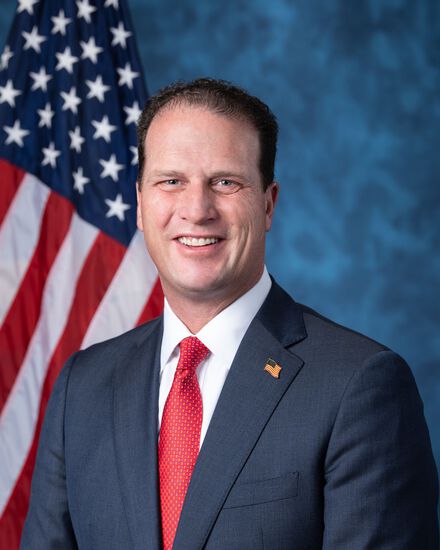
Rep. August Pfluger
Sponsored bills
Maddy summaryThis bill requires the Department of Homeland Security's (DHS) Under Secretary for Intelligence and Analysis to conduct an annual audit of the Office of Intelligence and Analysis' information systems and large data collections (bulk data). The audit must follow existing intelligence oversight guidelines, and the Under Secretary must submit the findings to specific congressional committees within 30 days of completing the audit. The required committees are the House Homeland Security and Intelligence committees, and the Senate Homeland Security and Intelligence committees. This bill establishes a routine transparency measure for DHS intelligence operations, directly affecting DHS's internal oversight process.
Maddy summaryHR 5401, the 9/11 Memorial and Museum Act, provides a one-time federal grant of $5 million to $10 million to the National September 11 Memorial & Museum (operated by the World Trade Center Foundation). The grant funds the museum's operations, security, and maintenance, with specific requirements including free admission for veterans, first responders, and victims' families, dedicated weekly free public hours, and annual financial audits. The museum must also report annually to Congress on how the funds were used. This bill directly affects the museum's financial operations and access policies, not broader legislative changes.
Maddy summaryHJRES 228 is a congressional disapproval resolution targeting an Environmental Protection Agency (EPA) rule published on November 18, 2024 (89 Fed. Reg. 91094). The resolution seeks to block the EPA rule titled "Waste Emissions Charge for Petroleum and Natural Gas Systems: Procedures for Facilitating Compliance, Including Netting and Exemptions," which would have established specific procedures for emissions charges in the oil and gas sector. If passed, this resolution would prevent the EPA rule from taking effect, effectively nullifying its requirements for petroleum and natural gas companies. This is a procedural measure under federal law, not a new policy.
Maddy summaryHR 9125, the Patient Access to LTCH Care Act, adjusts Medicare payments for long-term care hospitals (LTCHs) treating patients with complex medical conditions. It increases payment rates by 5% or 10% for LTCHs based on the number of major complications or comorbidities a patient has, with specific thresholds tied to Medicare coding. The bill also sets annual caps on payment increases ($50,000 for 2025-2026, 110% of prior year for later years) and creates exceptions to ensure patients with severe wounds, specific diagnoses (like septicemia or pulmonary issues), or post-COVID care receive appropriate coverage. This directly affects LTCHs and Medicare beneficiaries with high-acuity conditions requiring specialized care.
Maddy summaryThis bill creates an exemption from certain physician self-referral rules for specific rural hospitals. It defines a "covered rural hospital" as one located more than 35 miles (or 15 miles in mountainous terrain) from another hospital or critical access hospital, primarily affecting rural facilities in remote areas. The bill also removes restrictions preventing physician-owned hospitals from expanding their services. These changes directly impact rural hospitals meeting the new distance criteria and physicians owning hospitals in those areas, while leaving most existing Medicare self-referral rules unchanged.
Maddy summaryThis bill requires Medicare Advantage plans to implement electronic prior authorization systems by 2027 and publish detailed data on their approval and denial rates for medical services by 2026. It directly affects Medicare Advantage plans (private insurers offering Medicare coverage) and their enrollees (seniors 65+), mandating transparency about prior authorization decisions, processing times, and appeal outcomes. Key provisions include requiring plans to report annual statistics on request approvals/denials, average processing times, and use of technology, with this data published publicly by the Centers for Medicare & Medicaid Services. The bill also sets timelines for plan responses to prior authorization requests and mandates reports to Congress on implementation and impacts.
Maddy summaryThis bill prohibits the Department of Homeland Security (DHS) from using federal funds to purchase batteries produced by specific Chinese companies starting October 1, 2027. It directly affects DHS procurement by banning purchases from entities like CATL, BYD, and Envision Energy, and any successors to these companies. The law defines "produced by" to include both final assembly and majority component sourcing, ensuring the restriction covers broader supply chains. Waivers are possible only if DHS certifies no national security risks, no alternatives exist, or purchases are for research - requiring congressional notification. The policy aims to reduce reliance on batteries from entities linked to national security concerns.
Maddy summaryThe Increasing Mental Health Options Act of 2024 would expand access to mental health care in rural and underserved areas by providing a 10% financial incentive to clinical psychologists who serve Medicare patients in designated health professional shortage areas starting in 2025. It also removes requirements for clinical psychologists to have physician supervision in specific Medicare-covered settings - such as outpatient rehabilitation centers, skilled nursing facilities, and home health services - when state law permits. These changes aim to encourage more clinical psychologists to work in areas with mental health provider shortages. The bill directly affects clinical psychologists and Medicare beneficiaries in underserved communities by streamlining access to mental health services.
Maddy summaryThe ROCR Value Based Program Act establishes a new Medicare payment system for radiation oncology services, replacing the current fee-for-service model with a per-episode payment structure. This program affects radiation therapy providers (hospital outpatient departments) and suppliers (physician practices or freestanding centers) treating Medicare beneficiaries with specific cancer types (including breast, prostate, lung, and brain metastases). Key provisions include 80% of the payment being paid upfront within 30 days of treatment start, with the remaining 20% paid later; a health equity add-on payment of $500 per patient for transportation services to patients reporting transportation insecurity (using ICD-10 code Z59.82); and quality incentives for accredited providers through a 0.5% payment increase for meeting accreditation requirements. The program aims to stabilize payments, improve access to radiation therapy, enhance quality, leverage technology, and contain costs while maintaining Medicare savings.