

Recovering America’s Wildlife Act of 2022 This bill provides funding for the conservation or restoration of wildlife and plant species of greatest conservation need, including endangered or threatened species, and establishes related requirements. TITLE I--WILDLIFE CONSERVATION AND RESTORATION (Sec. 101) This title establishes and funds a subaccount of the Wildlife Conservation and Restoration Account, which was established under the Pittman-Robertson Wildlife Restoration Act. The subaccount must be used to support efforts of states, territories, or the District of Columbia to recover and manage wildlife and plant species of greatest conservation need. The Department of the Interior must use a portion of the funding from the subaccount for grants to state fish and wildlife departments, the District of Columbia fish and wildlife department, fish and wildlife departments of territories, nonprofit organizations, or regional associations of fish and wildlife departments. The grants must be used for innovative recovery efforts for species of greatest conservation need, species listed as endangered or threatened species, or the habitats of such species. Funding for the subaccount must supplement existing funds available to the states from funds distributed under the Dingell-Johnson Sport Fish Restoration Act and the Wildlife Conservation and Restoration Account. Recipients of the funding from the subaccount must match federal funds as specified by the title. The Government Accountability Office must study and report on the progress of states, territories, the District of Columbia, and Indian tribes in protecting species of greatest conservation need, endangered species, and threatened species. TITLE II--TRIBAL WILDLIFE CONSERVATION AND RESTORATION (Sec. 201) This title establishes and funds a Tribal Wildlife Conservation and Restoration Account to support Indian tribes' efforts to recover and manage wildlife and plant species of greatest conservation need. Indian tribes are not required to provide matching funds. TITLE III--ENDANGERED SPECIES RECOVERY AND HABITAT CONSERVATION LEGACY FUND (Sec. 301) This title establishes and funds through FY2026 the Endangered Species Recovery and Habitat Conservation Legacy Fund. The U.S. Fish and Wildlife Service must use the fund to (1) implement an Endangered Species Recovery Grant Program; (2) address its interagency consultation responsibilities under the Endangered Species Act of 1973; (3) work with nonfederal entities to conserve wildlife habitat and at-risk species, threatened or endangered species, or species proposed to be listed as threatened or endangered species; or (4) address the development and permitting of voluntary conservation agreements under such act. Amounts made available under the fund must supplement other federal amounts made available to carry out such activities. The President must annually submit to Congress, together with the annual budget of the United States, a list of threatened species and endangered species for which recovery plans will be developed or implemented with amounts from the Endangered Species Recovery and Habitat Conservation Legacy Fund. TITLE IV--REPORT (Sec. 401) Interior must also report on information concerning the amount of grants and contracts that were awarded or are allocated under this bill to Historically Black Colleges and Universities, Hispanic-serving educational institutions, tribally controlled colleges and universities, minority-serving educational institutions, minority-owned business enterprises, women-owned business enterprises, and community-based organizations that are principally administered by, operated by, or serving minority communities.
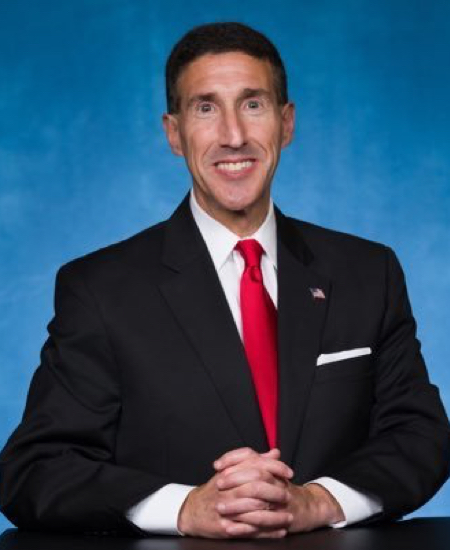
Rep. David Kustoff
Sponsored bills
Chase COVID Unemployment Fraud Act of 2022 This bill addresses fraud and overpayments of pandemic unemployment assistance, including by allowing states to retain a specified percentage of recovered funds and prohibiting the Department of Labor from allowing blanket waivers of overpayments.
Student Loan Accountability Act This bill generally prohibits the Departments of Education, Justice, or the Treasury from taking any action to cancel or forgive the outstanding balances, or portion of balances, of covered loans. Covered loans refer to Federal Family Education Loans, Federal Direct Loans, Federal Perkins Loans, and loans under the Health Education Assistance Loan Program. The prohibition does not apply to targeted federal student loan forgiveness, cancellation, or repayment programs carried out under the Higher Education Act of 1965. Additionally, the bill repeals the temporary tax-free treatment of discharged student loan debt. It also prohibits tax return information from being shared for the purpose of administering a student loan cancellation plan.
Benton MacKaye National Scenic Trail Act This bill designates the Benton MacKaye Trail as the Benton MacKaye National Scenic Trail and adds the trail to the National Trails System. This trail extends approximately 287 miles across Georgia, Tennessee, and North Carolina.
CDBG Modernization Act of 2022 This bill sets out a process to revise the formulas used to allocate certain funding through the Community Development Block Grant, which supports states and local governments with neighborhood revitalization, housing rehabilitation, and community economic development efforts.
Taylor Force Martyr Payment Prevention Act of 2022 This bill expands the institutional factors the Department of the Treasury must consider when making a finding that a foreign financial institution is of primary money laundering concern and is therefore subject to special measures, including the prohibition of opening or maintaining correspondent accounts in U.S financial institutions. Specifically, Treasury must consider (1) the extent to which an institution knowingly provides financial services to Hamas, or to an agent of Hamas; and (2) the extent to which an institution, transaction, or type of account is used to facilitate or promote payments for certain acts of terrorism against U.S. and Israeli citizens.
Payment Choice Act of 2021 This bill requires retail businesses to accept cash as a form of payment for sales in amounts less than $2,000, and it prohibits them from charging cash-paying customers a higher price compared to customers not paying with cash. Such businesses are those engaged in the business of selling or offering goods or services at retail to the public that accept in-person payments at a physical location. The bill provides for enforcement through preventative relief and civil penalties.
Isolate Russian Government Officials Act of 2022 This bill requires the Department of the Treasury, the Securities and Exchange Commission, and the Board of Governors of the Federal Reserve System to take all necessary steps to exclude Russian government officials, to the maximum extent practicable, from certain international meetings, including the activities of the Group of 20, the Basel Committee for Banking Standards, and the Bank for International Settlements. This requirement shall be in effect until the earlier of five years after the bill's enactment or 30 days after the President reports to Congress that Russia's government has ceased activities to destabilize Ukraine's sovereignty and territorial integrity. The President may also waive this requirement upon reporting to Congress that doing so is in the national interest of the United States.
Formula Act of 2022 This bill requires the Food and Drug Administration to work through established processes to review and update internationally recognized standards for infant formula to ensure that such standards are consistent with standards applied to importing infant formula into the United States.
Benjamin Berell Ferencz Congressional Gold Medal Act This bill provides for the award of a Congressional Gold Medal to Benjamin Berell Ferencz in recognition of his service to the United States and the international community during the post-World War II Nuremberg trials and his lifelong advocacy for international criminal justice and the rule of law.