

No Timber From Tyrants Act This bill prohibits the importation of wood and related articles from Russia and Belarus. It also directs the Department of the Interior and the Department of Agriculture (USDA) to replace these prohibited imports with timber production on certain lands. Specifically, the bill directs the President to prohibit the importation of all wood and related articles from Russia and Belarus. The President may terminate this prohibition upon certification to Congress that certain conditions have been met, including that Russia or Belarus (or both, as applicable) reached an agreement to withdraw forces in Ukraine. Additionally, the bill directs Interior and USDA to authorize timber harvest in an amount sufficient to equal the volume, with respect to calendar year 2021, of imports of wood and related articles from Russia and Belarus. Interior may authorize timber harvest only on public lands and USDA may authorize timber harvest only on National Forest System lands. The bill generally prohibits Interior and USDA from approving a plan that reduces the allowable sale quantity of timber.
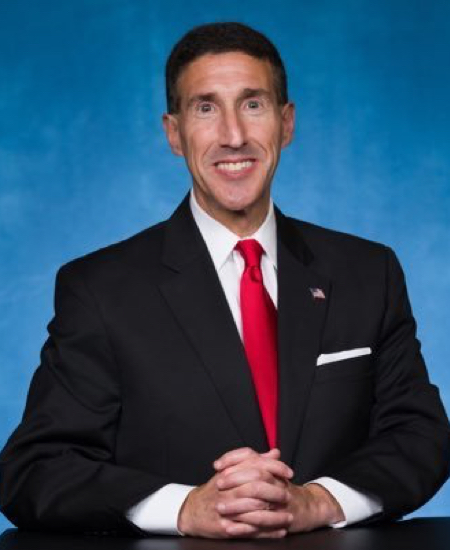
Rep. David Kustoff
Sponsored bills
Manufactured Housing Affordability and Energy Efficiency Act of 2022 This bill provides that certain requirements must be met in order for energy conservation standards for manufactured housing (promulgated by the Department of Energy) to become effective.
Emergency Rental Assistance Accountability and Transparency Act of 2022 This bill requires the Office of Inspector General of the Department of the Treasury to conduct monitoring and oversight of the receipt, disbursement, and use of funds made available under the emergency rental assistance program pursuant to the American Rescue Plan Act of 2021 and recoup misused funds. The bill provides funding for these activities.
This joint resolution nullifies the rule issued by the Centers for Disease Control and Prevention on February 3, 2021, that requires the use of face masks on planes, trains, buses, and other public conveyances and at transportation hubs to prevent the transmission of COVID-19.
Protection of Women and Girls in Sports Act of 2021 This bill makes it a violation of federal law for a recipient of federal funds who operates, sponsors, or facilitates athletic programs or activities to permit a person whose sex is male to participate in an athletic program or activity that is designated for women or girls. The bill specifies that sex shall be recognized based solely on a person's reproductive biology and genetics at birth.
American Innovation Act of 2022 This bill revises the tax treatment of business start-up or organizational expenditures. Specifically, it allows an election to deduct such expenditures in an amount equal to the lesser of the aggregate amount of such expenditures incurred by an active trade of business, or $20,000, reduced by the amount by which such aggregate amount exceeds $120,000. The remaining amount of such expenditures shall be amortized over the 180 month period after the trade or business begins. The bill also revises the tax treatment of partnership syndication fees and start-up net operating losses and tax credits after an ownership change.
Transparency in CFPB Cost-Benefit Analysis Act This bill sets forth information required to be included in a rulemaking made by the Consumer Financial Protection Bureau (CFPB). Specifically, the CFPB must publish a justification of the proposed rulemaking; a quantitative and qualitative assessment of all anticipated direct and indirect costs and benefits; alternatives to the proposed rulemaking; impacts on small businesses; and any assumptions, data, or studies used in preparing this information.
Ensuring Lasting Smiles Act This bill requires private health insurance plans to cover diagnosis and treatment of congenital anomalies and birth defects, such as reconstructive services and items. Coverage must include services and items that functionally improve, repair, or restore any body part that is medically necessary for normal bodily functions or appearance, as determined by the treating physician. Coverage limits and cost-sharing requirements for such services and items may not be more restrictive than those applicable to all medical and surgical benefits under the plan.
Supply Chain Disruptions Relief Act This bill modifies the treatment of liquidations of new motor vehicle inventory as qualified LIFO (last in first out accounting method) inventory. It allows new motor vehicle dealers to elect to wait until the end of 2025 to replace their inventory for purposes of determining income attributable to the sale of such inventory during 2020 and 2021.
Protecting Rural Renters Act of 2022 This bill prevents the reallocation of unspent funding that states and territories received through the Emergency Rental Assistance program. This program provides funding to assist low-income households affected by the COVID-19 pandemic with covering unmet rent and utility expenses. Cities and counties with populations over 200,000 may elect to receive funding directly, while states and territories receive the funding to administer assistance in all other areas. Under current law, if a jurisdiction fails to spend a minimum portion of its funds by a statutory deadline, the Department of the Treasury must reallocate those funds among jurisdictions that spent more than a specified portion of their initial allocation. The bill prohibits Treasury from reallocating unspent funds received by states and territories and requires Treasury to return to a state or territory any funds previously reallocated.