

Maddy summaryHR 2743 prohibits large financial institutions (over $100 billion in assets) from denying banking services to lawful businesses based on subjective political reasons, industry type, or reputational concerns. It requires these institutions to use objective, risk-based assessments for service decisions and provide written justifications for denials. The law applies to banks, credit unions, and payment networks, with civil penalties for violations including fines up to $10,000 per incident. It specifically ensures businesses operating legally under federal law receive fair access to financial services without discrimination. The bill mandates that denials be based on documented risk factors, not political bias or category-based exclusion.
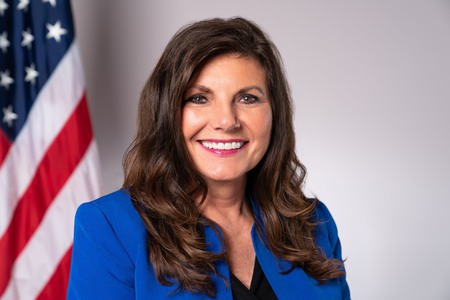
Rep. Diana Harshbarger
Sponsored bills
American Innovation and R&D Competitiveness Act of 2023 This bill eliminates the five-year amortization requirement for research and experimental expenditures, thus allowing continued expensing of such expenditures in the taxable years in which they are incurred.
Maddy summaryHR 2712, the Work Not Woke Act, prohibits federal agencies, contractors, and grant recipients from using workplace training that promotes specific "divisive concepts," such as claiming inherent superiority of a race or sex, blaming individuals for historical actions, or suggesting meritocracy is racist. It directly affects federal contractors (requiring contract clauses banning such training), federal agencies (mandating review of diversity training), and grant recipients (requiring certification against using federal funds for prohibited training). Key mechanisms include a Department of Labor hotline for complaints, mandatory contract provisions for contractors, and a ban on using federal funds for three executive orders focused on racial equity. The law permits diversity efforts that do not promote the banned concepts and requires agencies to certify compliance with its provisions.
Maddy summaryHR 2709 (BBB Act) requires the Comptroller General to study whether abandoning U.S. military equipment in Afghanistan during the 2021 withdrawal contributed to U.S. inflation, and to submit a report to Congress within 90 days. It also requests the President to provide a written statement on the same question within the same timeframe. The bill mandates a factual inquiry into this specific economic link without proposing any policy changes or affecting citizens. It is purely procedural, directing government agencies to conduct a study and provide reports.
Maddy summaryThe Panama Canal Zone Veterans Act of 2023 creates a presumption that veterans who served in the Panama Canal Zone between 1958 and 1999 (or until the last military member left) and developed specific illnesses are automatically eligible for VA benefits without needing to prove a direct link between their service and the condition. It lists 16 illnesses, including prostate cancer, lung cancer, diabetes, Parkinson's disease, and several other cancers, as qualifying for this presumption due to presumed exposure to herbicides like Agent Orange during service. The VA will use regulations based on medical evidence to determine which illnesses qualify under this provision. This change directly affects veterans who served in the Panama Canal Zone during the covered period and later developed one of the listed conditions.
Maddy summaryHR 2630, the Safe Step Act, requires group health plans and health insurance issuers to establish a clear, transparent process for patients or their doctors to request exceptions to medication step therapy protocols. These protocols typically force patients to try cheaper drugs first before covering more expensive alternatives. The bill mandates that plans must approve exceptions when prior treatments failed, delay would cause serious harm, a treatment is unsafe, or a patient is stable on a previously approved drug, with strict 72-hour (or 24-hour in emergencies) decision timelines. It also requires plans to publish the exception process online and limit documentation requests to only necessary medical information. This law directly affects health insurers, employers offering health plans, and patients using step therapy for prescription drugs.
Maddy summaryThis bill terminates the national emergency declared by the President on March 13, 2020, under the National Emergencies Act. It ends the executive branch's authority to use emergency powers related to that specific declaration. The resolution passed both chambers in early 2023 and took effect April 10, 2023, without creating new policies or affecting specific groups.
Maddy summaryThe "Simplify, Don't Amplify the IRS Act" makes several key changes to tax administration. It raises the gross receipts threshold for organizations required to file annual returns from $5,000 to $50,000, increases penalties for unauthorized disclosure of taxpayer information from $5,000 to $250,000, and requires the IRS to submit annual tax gap projections to Congress detailing nonfiling, underreporting, and underpayment. The bill also restricts increased enforcement funding until updated tax gap reports are published and establishes a fellowship program to recruit private sector tax experts for an IRS audit task force. These provisions aim to streamline IRS operations, protect taxpayer privacy, and focus enforcement efforts on high-compliance areas, directly affecting tax-exempt organizations, IRS employees, and taxpayers interacting with the IRS.
Maddy summaryHR 1839, the Combating Illicit Xylazine Act, makes the illicit use and distribution of xylazine a federal crime by adding it to the Controlled Substances Act. The bill broadly defines xylazine to cover numerous chemical variants and prohibits human use or non-licit distribution, while preserving legitimate veterinary and pharmaceutical uses. It requires tracking xylazine in drug supply chains and mandates two reports to Congress within 1 and 4 years on its prevalence, sources, and whether it should be rescheduled. The bill directly affects individuals distributing or using xylazine illicitly, including as an additive to drugs like fentanyl, and aims to address its public health risks. Congress declared illicit xylazine an "emerging drug threat" under existing law.
Maddy summaryHR 2491, the SAFE School Act, creates a $900 million federal grant program to improve school security in elementary and secondary schools across all 50 states, the District of Columbia, and Puerto Rico. The bill funds states and local schools to hire veterans or former law enforcement officers as school safety officers (after state training) and to install security infrastructure like metal detectors, access control systems, bulletproof glass, and emergency alert systems. It prohibits federal interference in how states implement security measures or design training programs, ensuring states maintain flexibility in using the funds. The program explicitly allows funding for both public and private schools, including religiously affiliated institutions, regardless of existing resource officer funding.