

Maddy summaryHR 8005, the Child Exploitation and Artificial Intelligence Expert Commission Act of 2024, establishes a 13-member commission to investigate how artificial intelligence is used in child exploitation crimes and recommend solutions to improve law enforcement's ability to prevent, detect, and prosecute such crimes. The commission, appointed by congressional leaders with expertise in law enforcement, AI, or child welfare, must submit a final report to Congress within two years detailing findings and recommendations for legal or technical improvements. This bill does not create new laws but focuses on identifying legal barriers and developing actionable solutions for law enforcement agencies. The commission will operate independently without federal government employees serving as members.
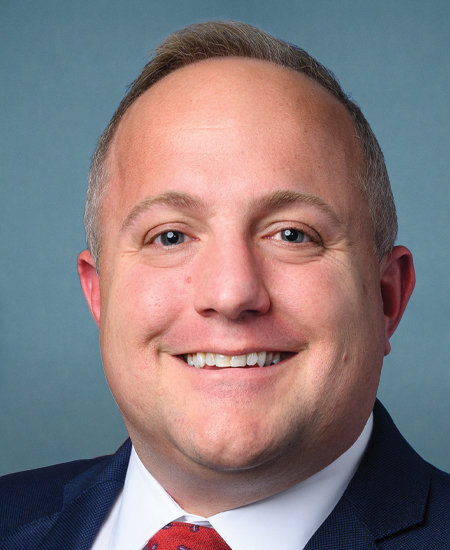
Rep. Russell Fry
Sponsored bills
Maddy summaryHR 8011, the Iranian Terror Prevention Act, requires the U.S. Secretary of State to designate 12 Iranian-affiliated military groups and any entity controlled by Iran's Revolutionary Guard Corps as Foreign Terrorist Organizations within 90 days. It mandates the President to decide within 60 days whether to impose sanctions under existing law (Executive Order 13224) on these groups, which would block their U.S. assets and restrict transactions. The bill also requires the Secretary of State to submit regular reports to Congress on new entities meeting designation criteria and the President to explain any decisions not to impose sanctions. This law directly affects the listed Iranian military groups and any new entities linked to Iran's Revolutionary Guard Corps.
Maddy summaryHR 2560 establishes a federal grant program to fund sea turtle rescue and rehabilitation efforts. The program, administered by the Commerce Secretary, provides grants to organizations in designated coastal "stranding regions" for activities like rescuing stranded turtles, providing medical care, collecting research data, and covering related facility costs. Grants are capped at $150,000 per year per recipient, require a 50% non-federal cost match, and must be distributed equitably based on past stranding events and species conservation needs. The bill authorizes $5 million annually (2024-2029) for this program, directly supporting coastal rescue groups, research institutions, and conservation organizations working with stranded marine turtles.
Maddy summaryHJRES 123 is a resolution seeking congressional disapproval of an Environmental Protection Agency (EPA) rule published on March 11, 2024, which would have required chemical facilities to implement new safety measures under the Clean Air Act to prevent accidental releases. The rule, titled "Accidental Release Prevention Requirements: Risk Management Programs Under the Clean Air Act; Safer Communities by Chemical Accident Prevention," aimed to strengthen existing risk management programs at chemical plants. If passed, this resolution would block the rule from taking effect by invoking a federal process for disapproving agency regulations. It directly affects the EPA's regulatory authority and the chemical industry's compliance obligations under the Clean Air Act.
Maddy summaryThis resolution (HRES 1117) is a formal statement by the U.S. House of Representatives opposing efforts to pressure Israel regarding Gaza. It specifically criticizes calls for an immediate ceasefire, including President Biden's April 4, 2024, statement and UN Security Council Resolution 2728, which the resolution claims was adopted due to the U.S. not vetoing it. The resolution affirms Israel’s right to self-defense following the October 7 Hamas attacks and emphasizes the U.S.-Israel relationship as a major strategic partnership. As a non-binding resolution, it does not change laws or policies but expresses the House’s position on diplomatic pressure related to Gaza.
Maddy summaryThis bill would terminate 39 federal diversity, equity, and inclusion offices across multiple departments, including the State Department, Treasury, Health and Human Services, and Agriculture. It specifically prohibits cabinet-level agencies from developing or maintaining any diversity-related initiatives or plans. The law would take effect immediately upon enactment, eliminating these offices without requiring new funding or implementation steps. This is a structural change to federal agency operations, directly affecting how government departments manage workforce diversity programs.
Maddy summaryHR 7959, the SHIELD Act, adds trespass convictions to grounds for denying immigration entry or ordering deportation. It directly affects immigrants convicted of trespass under any state, local, tribal, or federal law, regardless of whether the trespass is classified as a misdemeanor or felony. The bill amends existing immigration law to make anyone convicted of trespass (or who admits to acts constituting trespass) inadmissible upon entry or deportable after entry. These provisions apply based on the jurisdiction where the trespass occurred, without considering the offense's classification under local law.
Maddy summaryThis bill prohibits U.S. federal funds from being provided to international financial institutions (like the World Bank) if those funds could finance foreign shrimp farming, processing, or shrimp exports. It directly affects international financial institutions receiving U.S. funding, requiring them to avoid supporting foreign shrimp operations. The bill also mandates an annual report from the Government Accountability Office (GAO) to Congress on whether U.S. representatives at these institutions are following this restriction. The key mechanism is conditioning U.S. financial support on the institutions' adherence to this prohibition.
Maddy summaryHR 661, "Sarah’s Law," requires U.S. immigration authorities to detain certain immigrants charged with crimes causing death or serious injury. It applies to immigrants who entered without proper inspection, held revoked temporary visas, or fall under specific deportation categories, and who face charges for violent crimes. The bill mandates that immigration officials notify victims or their families (like parents or spouses) about the immigrant’s identity, immigration status, custody details, and removal efforts. This law does not change existing victim rights but adds specific notification requirements for these cases.
Maddy summaryHR 5082, the REPORT Act, creates limited liability protections for vendors working with the National Center for Missing & Exploited Children (NCMEC) on child sexual exploitation cases and for minors reporting their own exploitation via NCMEC's CyberTipline. The bill prohibits legal claims against NCMEC-contracted vendors for handling child pornography reports, provided they follow strict data security rules (like end-to-end encryption and limited employee access). It also extends the required preservation period for reports to NCMEC from 90 days to one year and mandates secure storage methods aligned with cybersecurity standards. Additionally, the bill increases civil penalties for large online platforms failing to report such content, with fines up to $850,000 for platforms with over 100 million monthly users.