

Maddy summaryThe Laken Riley Act (HR 7511) would require federal authorities to detain non-citizens charged with or convicted of burglary, theft, larceny, or shoplifting offenses. It also creates new legal standing for state attorneys general to sue federal immigration officials in federal court if they believe immigration enforcement decisions (like releasing aliens or granting parole) cause financial harm exceeding $100 to the state or its residents. The bill amends immigration laws to expand detention requirements for certain property crimes and allows states to seek court orders to enforce immigration policies. It does not create new criminal penalties but modifies existing immigration enforcement procedures. The bill’s findings and political language about the Laken Riley case are not part of its policy provisions.
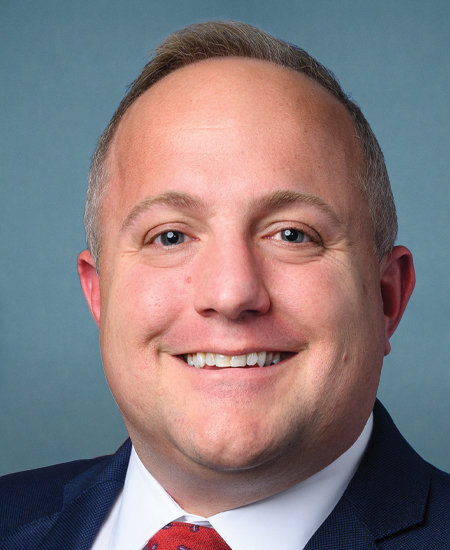
Rep. Russell Fry
Sponsored bills
Maddy summaryHR 7478, the PROTECT Jewish Student and Faculty Act, amends the Higher Education Act to require colleges and universities receiving federal funds to take specific steps against antisemitism. The bill mandates that these institutions include the International Holocaust Remembrance Alliance's definition of antisemitism in all campus conduct documents and explicitly state that antisemitic conduct by students may lead to expulsion, while antisemitic conduct by employees may result in termination. This directly affects all institutions covered under the Higher Education Act by imposing new requirements for policy documentation and disciplinary consequences. The key mechanism is the mandatory inclusion of the IHRA definition and clear statements of penalties, aiming to standardize how institutions address antisemitism on campus.
Maddy summaryHR 7450, the Protecting Privacy in Purchases Act, prohibits payment card networks and covered entities (like payment processors) from requiring or assigning merchant category codes that specifically identify firearms retailers as different from general stores or sporting goods retailers. This directly affects firearms retailers and payment networks by preventing them from using business classification codes that could flag firearm sales. The bill establishes an enforcement process where the Attorney General investigates complaints, issues remediation notices, and can seek court injunctions for non-compliance, while preempting state or local laws on this issue. It does not create private lawsuits for individuals.
Maddy summaryHR 7176, the "Unlocking our Domestic LNG Potential Act of 2024," streamlines approval processes for U.S. liquefied natural gas (LNG) export terminals. It grants the Federal Energy Regulatory Commission (FERC) exclusive authority to approve or deny LNG export facility projects, requiring FERC to deem such exports "consistent with the public interest" unless specific legal exceptions apply. The bill explicitly preserves the President’s authority to block LNG exports under sanctions laws targeting countries designated as state sponsors of terrorism. This directly affects LNG companies seeking export permits and FERC’s regulatory role, without altering existing environmental or safety regulations.
Maddy summaryHRES 966 is a symbolic resolution condemning alleged sexual violence committed by Hamas during its October 7, 2023, attack on Israel. It specifically references eyewitness accounts, forensic evidence, and Hamas fighters' admissions of ordering gang rape, sexual mutilation, and assault against Israeli civilians. The resolution calls for international condemnation of such acts as weapons of war, urges nations to criminalize sexual violence, and supports investigations into Hamas' actions. As a non-binding resolution, it does not create new laws or directly affect any individuals but formally expresses the House's position on the issue.
This resolution expresses the sense of the House of Representatives that former President Trump did not engage in insurrection or rebellion against, nor give aid or comfort to the enemies of, the United States.
Maddy summaryHR 7255, the GRANT Act, requires federal agencies that award discretionary or competitive grants to post specific information on their websites within one year of enactment. Agencies must provide clear details about each grant, including application deadlines, required documents, contact information, and technical assistance resources like webinars. The bill also mandates annual reports to Congress on grant recipients, values, and numbers, with agencies able to request a six-month extension for compliance if unforeseen issues arise. This law directly affects federal agencies managing grant programs and aims to improve transparency and accessibility for applicants seeking federal funding.
Maddy summaryHR 7202 requires the U.S. Secretary of State to report to Congress within 90 days on all U.S. funding provided to UNRWA (the UN agency supporting Palestinian refugees) from fiscal years 2020 through 2024, including monthly spending details. The bill also prohibits U.S. federal funds from being used to support UNRWA, either directly or indirectly, starting upon its enactment. This bill affects U.S. government funding decisions for UNRWA and mandates transparency about past financial support. The legislation focuses on requiring a spending report and blocking future U.S. financial assistance to the agency.
Maddy summaryThis bill repeals a law (18 U.S.C. § 1715) that previously prohibited mailing firearms without a license. It directly affects the U.S. Postal Service, firearm sellers, and individuals mailing firearms by preventing the Postal Service from creating rules that would block firearm mailings or require disclosure of sensitive records like sales receipts or firearm serial numbers. Key provisions include removing the existing ban on mailing firearms and prohibiting the Postal Service from imposing new restrictions on firearm mailings or demanding customer transaction data. The bill ensures that firearm mailings can proceed without these specific federal restrictions, while applying to ongoing legal cases under the repealed law.
Maddy summaryHR 2553, the "No More Political Prosecutions Act of 2023," amends a specific legal provision (Section 1442(a) of Title 28, U.S. Code) to exclude the President, Vice President, and former officials from being sued under that section. The bill removes existing language allowing civil or criminal cases against these officials and adds a new provision explicitly barring such actions. It applies to all pending cases or new prosecutions filed after the law's enactment. This change directly affects high-level federal officials by limiting legal challenges against them under this particular legal mechanism.