

Maddy summaryThis bill directs the Department of Education to use the International Holocaust Remembrance Alliance (IHRA) definition of antisemitism when enforcing Title VI of the Civil Rights Act in federal education programs. It clarifies that discrimination against Jewish individuals based on actual or perceived shared ancestry or ethnic characteristics may violate Title VI protections, requiring agencies to consider antisemitism intent during investigations. The law affects schools and universities receiving federal funds by guiding how they handle discrimination complaints related to antisemitism. It does not create new legal standards or expand the Department of Education's authority, as explicitly stated in the bill.
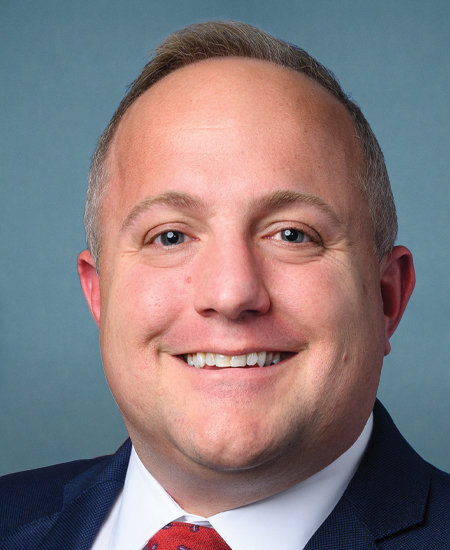
Rep. Russell Fry
Sponsored bills
Maddy summaryThis bill would require U.S. citizenship for voting in Washington, D.C. municipal elections. It mandates that voters present proof of U.S. citizenship to the District's Board of Elections for races including Mayor, Council members, Attorney General, State Board of Education, and Advisory Neighborhood Commissioners, as well as for local ballot initiatives. The bill repeals the 2022 Local Resident Voting Rights Amendment, which had allowed non-citizens to vote in certain D.C. elections. This change directly affects all D.C. residents seeking to vote in these specific local elections, shifting the requirement from residency to citizenship. The policy change would take effect upon the bill's enactment, altering current voting eligibility rules for D.C. local offices.
Maddy summaryThis resolution (HRES 1183) formally commends the University of South Carolina Gamecocks women’s basketball team for winning the 2024 NCAA Women’s Basketball National Championship. It recognizes their undefeated 38-0 season, record-breaking championship game TV ratings, and their second national title in three years. The resolution directs the House Clerk to send a copy to the university president, head coach Dawn Staley, and athletics director. As a ceremonial resolution, it has no policy impact or direct effect on legislation or funding.
Maddy summaryHRES 1170 prohibits U.S. House Members, Delegates, and Resident Commissioners from bringing or displaying any foreign nation's flag on the House floor during sessions, except for lapel pins or flags shown during speeches under House rules. The resolution applies to all flag sizes and is enforced by the House Sergeant-at-Arms. It directly affects House members' conduct during floor proceedings but allows limited exceptions for personal accessories and official speeches. This is a procedural rule change, not a substantive policy.
Maddy summaryHR 8066, the Ammunition Supply Chain Act, requires the Secretary of the Army to submit a report to Congress within 180 days of enactment. The report must assess the U.S. supply chain for ammunition components like nitrocellulose and smokeless gunpowder, focusing on improving sourcing, avoiding single points of failure, managing global demand risks, and leveraging private sector capacity. This bill directly affects the Department of Defense and ammunition manufacturers by mandating a review of supply chain vulnerabilities. It is procedural in nature, establishing a reporting requirement without creating new regulations or funding.
Maddy summaryHR 5947 terminates specific U.S. waivers and licenses related to Iran, ending a 2023 waiver that allowed funds transfer from South Korea to Qatar. It prohibits the Treasury Department from reissuing similar waivers or licenses for the same purpose and blocks the President from granting Iran access to certain designated financial accounts established under prior laws. The bill directly affects U.S. foreign policy implementation by restricting how Treasury handles Iran-related financial transactions. It enacts concrete policy changes by ending existing authorizations and preventing future approvals for Iran to access specific accounts.
Maddy summaryHRES 863 is a formal resolution introduced by Representative Marjorie Taylor Greene impeaching Secretary of Homeland Security Alejandro Mayorkas. It alleges Mayorkas violated his constitutional duty by failing to secure the border, citing specific claims including approximately 10 million border encounters, 400,000 unaccompanied children, and the presence of individuals from nations linked to terrorism. The resolution asserts these failures breached the Secure Fence Act, the Guarantee Clause of the Constitution, and immigration laws, and cites rising fentanyl seizures and border-related deaths as evidence. This resolution, referred to the House Homeland Security Committee, formally charges Mayorkas with "high crimes and misdemeanors" for impeachment proceedings.
Maddy summaryThis bill requires the Department of Veterans Affairs to provide annual preventative health evaluations to veterans with spinal cord injuries or disorders. The evaluations cover health risk assessments, chronic pain management, dietary needs, prosthetic equipment functionality, and assistive technology options (like mobility devices or speech generators). The VA must also report annually to Congress on how many veterans receive these evaluations and assistive technologies, and consider these evaluations when assessing VA network performance. The law directly affects veterans with spinal cord injuries/disorders by mandating proactive health checks focused on preventing complications and improving mobility.
Maddy summaryHR 5921, the "No U.S. Financing for Iran Act of 2023," prohibits U.S. financial institutions from authorizing transactions related to Iran's imports or exports (excluding agricultural goods, food, medicine, and medical devices for civilians). It also requires the U.S. to oppose International Monetary Fund (IMF) financial aid to Iran and block Iran's access to IMF Special Drawing Rights. The bill amends the Export-Import Bank Act to ban U.S. financing for Iran's government or state-controlled entities. The law expires either 30 days after the President certifies Iran has stopped supporting international terrorism and is no longer a major money laundering concern, or 10 years from enactment.
Maddy summaryHRES 1148 is a resolution passed by the U.S. House of Representatives that condemns the Iranian government for supporting terrorism, regional proxy conflicts, and internal suppression of dissent - including its crackdown on protests following Mahsa Amini's death in 2022. It specifically calls for maintaining sanctions against Iran, supporting the Iranian Resistance's Ten-Point Plan (which advocates for a democratic, secular, nonnuclear Iran), and protecting Iranian political refugees in Albania. The resolution also affirms the Iranian people's right to self-determination under international law and urges the U.S. to recognize their struggle for freedom. As a non-binding resolution, it does not create new laws but formally expresses congressional stance.