

Maddy summaryHR 5959, the GAZA Act, would bar individuals holding passports issued by the Palestinian Authority from entering the United States. Specifically, it makes such individuals inadmissible, ineligible for visas or parole, and unable to receive immigration benefits under U.S. law. The bill directly affects Palestinian Authority passport holders seeking U.S. entry or immigration status. It creates a specific visa restriction based solely on the passport authority issuing the document.
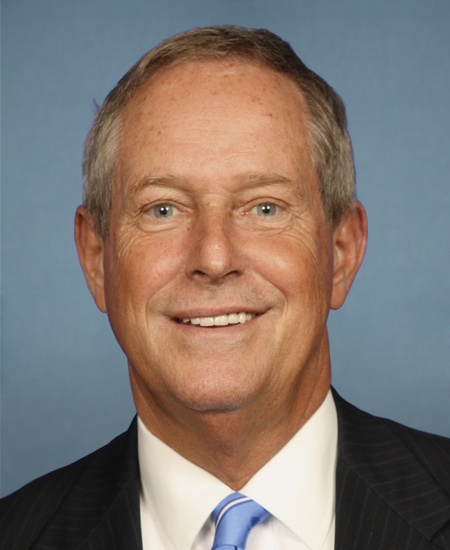
Rep. Joe Wilson
Sponsored bills
Maddy summaryThis bill, HR 5920 (Student Loan Marriage Penalty Elimination Act of 2023), changes how married couples can deduct student loan interest on their federal taxes. It amends the tax code to allow each spouse to claim a separate $2,500 deduction limit for student loan interest, instead of a single combined limit for the couple. This directly affects married couples filing jointly who pay student loan interest and qualify for the deduction. The change applies to tax years beginning after December 31, 2022, and ensures the deduction aligns with the tax treatment for individual filers.
Maddy summaryHR 1809 requires the U.S. Commerce Secretary to develop a strategy preventing U.S. exports of specific microelectronics (like microcontrollers, GPS modules, and circuit boards) to Iran for use in drone production. It also directs the State Department to coordinate with European and Asian allies to block similar technology transfers to Iran. The bill targets dual-use components that have been found in Iranian drones used by Russia in Ukraine, aiming to stop these technologies from supporting Iran's drone industry. This policy directly affects U.S. manufacturers of these components, their distributors, and international partners involved in exporting such technology to Iran.
Maddy summaryHRES 758 is a symbolic resolution designating the first Wednesday in October as National Energy Appreciation Day. It expresses the House's support for recognizing energy workers - across oil, gas, coal, nuclear, hydro, and renewable sectors - who power the U.S. economy and improve quality of life. The resolution cites statistics on energy's role in job creation (7.8 million U.S. jobs), poverty reduction, and national security, but does not create new laws or funding. As a non-binding resolution, it solely aims to raise awareness of the energy industry's contributions. (HRES 758, introduced October 3, 2023)
Maddy summaryHRES 749 is a symbolic resolution expressing the U.S. House of Representatives' support for the 30-year diplomatic relationship between the United States and the Czech Republic and Slovak Republic. It specifically highlights both nations' contributions to Ukraine's defense - including military, humanitarian, and economic aid - and recognizes their democratic transitions following the 1989 Velvet Revolution. The resolution affirms shared values like democracy and security, urging continued cooperation through NATO, defense partnerships, and dialogue on issues like cyber resilience and disinformation. As a non-binding gesture, it does not create new laws or obligations but serves to strengthen diplomatic ties and acknowledge these nations' alignment with U.S. interests.
Maddy summaryThis resolution designates the week of September 25-29, 2023, as "National Clean Energy Week" to recognize the growing role of clean energy in the U.S. economy. It expresses support for clean energy jobs and innovation, noting the sector employed about 8.1 million people in 2022. The resolution encourages federal, state, and local investment in affordable clean energy technologies and promotes "commonsense solutions" for energy needs. As a symbolic gesture, it has no legal force or funding implications - it simply urges recognition of clean energy's economic and environmental contributions.
Maddy summaryHR 5837, the Protecting America's Property Rights Act, requires Fannie Mae and Freddie Mac to only purchase conventional mortgages for one- to four-family homes if the mortgage is secured by real property with title insurance from a licensed company in the property's state. It also mandates that both entities must get prior approval from the Federal Housing Finance Agency Director and Treasury Secretary before launching new programs, with semi-annual congressional reports on these programs. The bill updates the definition of "conforming mortgage" to include this title insurance requirement. These changes directly affect Fannie Mae and Freddie Mac's mortgage operations and indirectly impact homeowners, lenders, and title insurance companies operating in the states where properties are located.
Maddy summaryHJRES 11 proposes a constitutional amendment that would limit Members of Congress to serving a maximum of three terms in the House of Representatives and two terms in the Senate. If passed and ratified, it would prevent any member who has already served the maximum terms from running for re-election, including time spent filling vacancies (for more than one year in the House or three years in the Senate). This amendment directly affects current and future members of Congress by changing eligibility rules for re-election. The proposal is currently a joint resolution in the House, requiring ratification by three-fourths of state legislatures to become part of the Constitution.
Maddy summaryHRES 739 is a House resolution disapproving of a September 11, 2023, sanctions waiver that would release $6 billion in Iranian assets held in South Korea. The resolution states this waiver weakens U.S. policy by allowing Iran access to funds that could support its nuclear program and terrorism, and criticizes the delayed notification to Congress. It specifically condemns the administration's nonenforcement of mandatory sanctions and the release of assets without proper congressional review. The resolution demands the administration submit any Iran nuclear agreement to Congress before further sanctions relief. This is a procedural disapproval, not a law altering sanctions.
Maddy summaryThe Oleksander Ivanov Act of 2023 establishes U.S. sanctions authority targeting individuals and entities responsible for Russia’s forced displacement and illegal adoption of Ukrainian children. It authorizes the President to block property and deny visas to foreign persons involved in forcibly transferring Ukrainian children to Russia, illegally assimilating them, or facilitating trafficking. The bill also directs the U.S. to support Ukraine through programs for trauma care, rebuilding education systems, creating a multilingual registry for missing children, and establishing emergency call centers to combat trafficking. These measures aim to address documented violations of international law, including Russia’s detention of over 6,000 Ukrainian children in occupied territories, with sanctions set to expire after six years.