

Living Organ Donor Tax Credit Act of 2023 This bill establishes a refundable tax credit of up to $5,000 for expenses related to the removal and donation of all or part of a kidney, liver, lung, pancreas, intestine, or bone marrow by a living individual for transplant into another individual. Expenses that may be included in the calculation of this tax credit include travel, lodging, medical expenses related to donation and follow-up care, paperwork and legal costs, lost wages, and any other costs paid by the taxpayer in connection with the transplant. Expenses related to the transplant that are reimbursed by any person or entity (public or private) may not be included in the calculation of the credit amount.
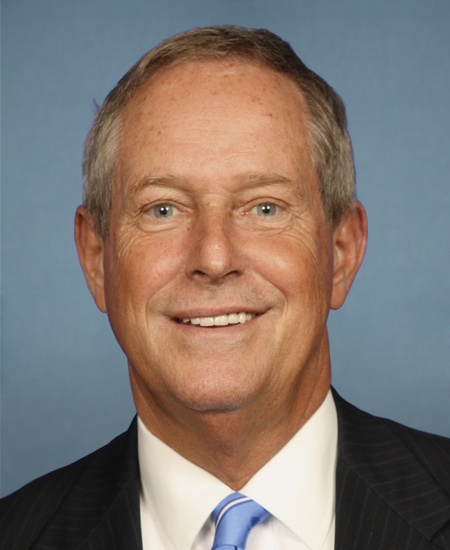
Rep. Joe Wilson
Sponsored bills
Maddy summaryThis resolution (HRES 839) condemns antisemitism at U.S. colleges and universities and urges campus leaders to publicly oppose hate speech targeting Jewish students, faculty, and staff. It encourages university presidents, administrators, and faculty to speak out against speech that promotes violence or discrimination based on religion, national origin, or ancestry. The resolution specifically calls on institutions to support Jewish student organizations and ensure Jewish members can study and work without fear. As a non-binding resolution, it does not create new laws but expresses congressional support for addressing antisemitism on campuses.
Maddy summaryHRES 798 is a House resolution condemning support for Hamas, Hezbollah, and other terrorist organizations at colleges and universities. It states such support may create a hostile environment for Jewish students, faculty, and staff, citing incidents like blaming Israel for the October 7 Hamas attack. The resolution urges the Secretary of Education to direct the Office for Civil Rights to investigate and take action where appropriate. This non-binding resolution expresses the House's position but does not create new law or policy changes.
Maddy summaryHRES 599 is a non-binding resolution urging the European Union to fully designate Hizballah (Hezbollah) as a terrorist organization, rather than just its military wing as the EU did in 2013. It recommends the EU implement sanctions, freeze assets, issue arrest warrants, and prohibit fundraising for Hizballah, aligning with actions taken by the U.S. and other nations. The resolution cites Hizballah’s history of attacks, its criminal activities in Europe (including drug trafficking and money laundering), and its ties to Iran as justification. It directly addresses EU decision-makers, calling for coordinated action to disrupt Hizballah’s operations across the continent. The resolution follows prior House efforts, including H.Res. 359 (2017) and H.Res. 558 (2022), which made similar requests.
Maddy summaryHRES 559 is a non-binding House resolution declaring U.S. policy that a nuclear-armed Iran is unacceptable. It states the U.S. must prevent Iran from obtaining nuclear weapons under any circumstances, use all means necessary to stop this, and support allies like Israel in doing so. The resolution does not create new laws or programs but formally expresses congressional position on Iran's nuclear program. It directly affects U.S. foreign policy direction and diplomatic messaging, not specific individuals or groups.
Maddy summaryThis bill prohibits the use of federal funds to install new permanent fencing around the U.S. Capitol Buildings (as defined in 40 U.S.C. § 5101) or the Capitol Grounds (as defined in 40 U.S.C. § 5102). It directly affects federal agencies responsible for Capitol security and maintenance by restricting their funding options for perimeter fencing. The bill allows repair or replacement of existing fencing in place before the law's enactment but bans all new permanent fencing installations. It is a procedural measure focused solely on funding restrictions, not on altering Capitol security protocols.
Maddy summaryThe SCEE Act (HR 5899) increases annual funding for the Southeastern Crescent Regional Commission from $5 million to $10 million per year (2024-2028) and expands eligible uses for economic development grants. It adds provisions to fund climate-adaptive infrastructure, housing projects meeting workforce needs, and workforce capacity programs. The bill also raises required matching funds for some grants from 80% to 90% and extends commission funding through 2032 with higher annual allocations ($50 million for 2024-2027, $60 million for 2028-2032). This directly affects designated states in the Southeastern Crescent region (as defined in Title 40, U.S. Code) by providing increased resources for local economic development initiatives.
Maddy summaryThis House resolution formally rebukes Representative Rashida Tlaib for specific past remarks and a recent vote. It cites her 2019 podcast comments referencing the Holocaust, 2022 statements opposing Israel's government, and her May 2023 vote against a pro-Israel resolution. The resolution also references her October 2023 statement calling Israel an "apartheid state" following Hamas attacks. The House resolves to censure her, stand with Israel, and reject the "apartheid" characterization.
Maddy summaryHRES 771 is a non-binding resolution expressing the U.S. House of Representatives' support for Israel following Hamas' October 7, 2023, attack. It condemns Hamas' actions, affirms Israel's right to self-defense, and calls for the immediate release of hostages. The resolution also urges enforcement of existing laws restricting aid to terrorists and sanctions against Iran for supporting Hamas. It does not create new policies or allocate funds, as it is a symbolic statement of congressional support.
Maddy summaryHRES 768 is a symbolic House Resolution expressing congressional support for Israel following Hamas' October 7, 2023 attacks. It condemns Hamas' actions, reaffirms Israel's right to self-defense, and calls for the immediate release of hostages. The resolution references the U.S. commitment to Israel's security through existing military aid programs, including the 2016 U.S.-Israel Memorandum of Understanding, and emphasizes enforcement of laws like the Taylor Force Act to prevent U.S. aid from reaching terrorist groups. As a symbolic resolution, it does not create new policy but serves as a statement of congressional support for Israel.