

Maddy summaryHR 45 (FIND Act) requires federal government contractors to certify they do not discriminate against firearm businesses (including manufacturers, dealers, and trade associations) in their policies or practices. The bill mandates that contractors and subcontractors (for contracts over 10% of the prime contract value) certify they have no discriminatory policies and will not adopt them during the contract term. Violations could lead to contract termination and potential debarment. This applies to all federal procurement contracts awarded after the bill's enactment, excluding sole-source contracts. The law aims to ensure firearm businesses are treated equally in government contracting without restricting legitimate business criteria like creditworthiness or legal compliance.
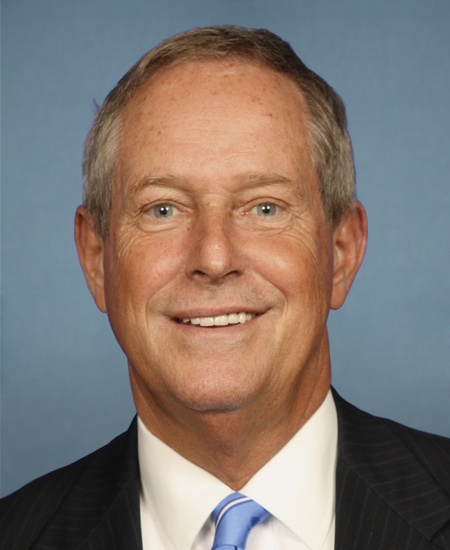
Rep. Joe Wilson
Sponsored bills
Maddy summaryHR 6188, enacted as Public Law 118-219 on January 2, 2025, designates the U.S. Postal Service facility at 420 Highway 17 North in Surfside Beach, South Carolina, as the "Nancy Yount Childs Post Office Building." This bill changes the official name of the building for all federal references, including maps, documents, and records. It does not alter postal services, operations, or funding, as it is a commemorative naming resolution honoring Nancy Yount Childs. The bill was passed by the House on June 3, 2024, and by the Senate on December 19, 2024.
Maddy summaryThe Education and Workforce Freedom Act would expand the use of 529 college savings accounts to cover more education and training costs. It allows these accounts to pay for K-12 tuition at public, private, or religious schools, homeschooling, and related expenses like curriculum materials, tutoring, and educational therapies. The bill also adds coverage for recognized job training programs and professional certifications, including test fees and course costs for credentials listed by states or the Department of Veterans Affairs. These changes would directly affect families using 529 accounts for K-12 education and individuals pursuing career-focused training through approved programs.
Maddy summaryThe Stop Campus Hazing Act requires colleges and universities to publicly report hazing incidents involving student organizations. It defines hazing as intentional acts causing physical or psychological harm during initiation or membership in student groups, including activities like forced substance consumption, sleep deprivation, or sexual acts. Institutions must include hazing statistics in annual security reports and publish a "Campus Hazing Transparency Report" on their websites by July 1, 2025, detailing findings about organizations violating hazing policies. The reports must include organization names, violation descriptions, and key dates while excluding personally identifiable student information. This applies to all colleges participating in federal student aid programs.
Maddy summaryThis bill, HR 1097 (Everett Alvarez, Jr. Congressional Gold Medal Act of 2023), authorizes the award of a Congressional Gold Medal to Everett Alvarez, Jr., in recognition of his service as a U.S. Navy pilot and Vietnam War prisoner of war. It directly honors Alvarez, who was the first U.S. pilot shot down in the Vietnam War, spent over 8.5 years in captivity, and later served in the Peace Corps and Veterans Administration. The bill’s key mechanism is directing the U.S. Mint to strike a gold medal bearing his name and image, with bronze duplicates available for sale to cover costs. It does not create new policies or affect any group beyond the honoree.
Maddy summaryThe FOCA Act of 2023 requires federal agencies to stop mandating or banning contractor agreements with labor organizations (like union contracts) in construction project bids and contracts. It directly affects federal contractors, subcontractors, and agencies managing construction projects funded by the government. The bill prohibits favoring or penalizing contractors based on their labor affiliation status, aiming to promote fair competition and reduce costs. It also mandates updates to federal contracting rules within 60 days of enactment to implement these changes.
Maddy summaryThe VALOR Act of 2024 establishes specific criteria for determining when a democratically elected government is in power in Venezuela, requiring free and fair elections with international observers, respect for human rights, release of political prisoners, and restoration of democratic institutions. The bill authorizes sanctions against the Maduro regime, including financial restrictions on debt instruments, cryptocurrency transactions, and blocking property of the Venezuelan government. It creates mechanisms for the U.S. to provide humanitarian and democracy-building assistance through independent NGOs once a democratically elected government is recognized, with safeguards to ensure aid reaches the people of Venezuela. The bill requires regular reporting to Congress on sanctions implementation, assistance programs, and foreign entities doing business with the Maduro regime.
Maddy summaryThis bill requires Medicare Advantage plans to implement electronic prior authorization systems by 2027 and publish detailed data on their approval and denial rates for medical services by 2026. It directly affects Medicare Advantage plans (private insurers offering Medicare coverage) and their enrollees (seniors 65+), mandating transparency about prior authorization decisions, processing times, and appeal outcomes. Key provisions include requiring plans to report annual statistics on request approvals/denials, average processing times, and use of technology, with this data published publicly by the Centers for Medicare & Medicaid Services. The bill also sets timelines for plan responses to prior authorization requests and mandates reports to Congress on implementation and impacts.
Maddy summaryThe MEGOBARI Act directs the U.S. government to investigate and address democratic backsliding in Georgia. It requires reports within 90 days on Georgian corruption tied to Russian interests, sanctions evasion, and Russian intelligence assets, followed by potential sanctions against Georgian officials deemed responsible for undermining democracy or advancing Russian-style laws. The bill also establishes a U.S. democracy monitoring task force in Georgia and links additional U.S. aid - including trade negotiations, visa liberalization, economic packages, and defense support - to Georgia's progress toward fair elections and a free political environment. These provisions directly affect Georgia's government officials (who could face sanctions) and Georgia's eligibility for U.S. assistance. The bill does not impose new sanctions but mandates U.S. agencies to identify and sanction specific Georgian individuals under existing legal authorities.
Maddy summary# Summary of Proposed Legislation This document outlines a comprehensive U.S. legislative proposal with several key components: 1. **Research Restrictions**: - Requires certification from Federal research grant recipients that they are not Chinese citizens or participants in Chinese talent programs - Prohibits employment of Chinese nationals in federally funded research - Requires institutions receiving Federal assistance to agree not to knowingly employ individuals participating in Chinese talent programs 2. **Foreign Gifts and Contracts Disclosure**: - Mandates disclosure of foreign gifts/contracts over $50,000 to universities - Requires public reporting of restricted/conditional gifts/contracts - Creates a searchable public database of foreign gifts to universities - Requires institutions to maintain policies regarding foreign gifts to faculty and staff 3. **Investment Restrictions**: - Restricts tax-exempt organizations from holding investments in "disqualified Chinese companies" (defined as corporations incorporated in China or with significant Chinese government ownership) - Requires annual reporting on such investments - Allows limited waivers with public disclosure 4. **Taiwan Policy**: - Prohibits U.S. government from recognizing PRC claims to sovereignty over Taiwan without Taiwan's consent - Requires U.S. government to treat Taiwan's democratically elected government as the legitimate representative of the people of Taiwan - Requires a strategy to protect U.S. businesses from Chinese coercion efforts 5. **Additional Provisions**: - Requires participants in Chinese talent programs to register as agents of the Chinese government - Amends economic espionage laws to include education and research - Mandates disclosure of certain funds received by visa holders The legislation represents a significant effort to limit Chinese influence in U.S. academic institutions, research, and business sectors while establishing a more robust policy framework regarding Taiwan.