

Maddy summaryHR 3315, the "No Hezbollah In Our Hemisphere Act," directs the U.S. Secretary of State to assess whether any Latin American country qualifies as a "terrorist sanctuary" for Hezbollah within 180 days of the bill's enactment. If a country is deemed a sanctuary due to tolerating Hezbollah's activities, the bill authorizes revoking visas and barring entry for its government officials who fail to take action against Hezbollah. The sanctions would apply to officials from designated "sanctuary" countries unless they take verifiable steps to stop Hezbollah operations or the country no longer meets the definition. The bill includes a 5-year sunset clause and allows limited waivers for national security reasons. It does not require countries to designate Hezbollah as a terrorist organization but pressures them to adopt Argentina's approach.
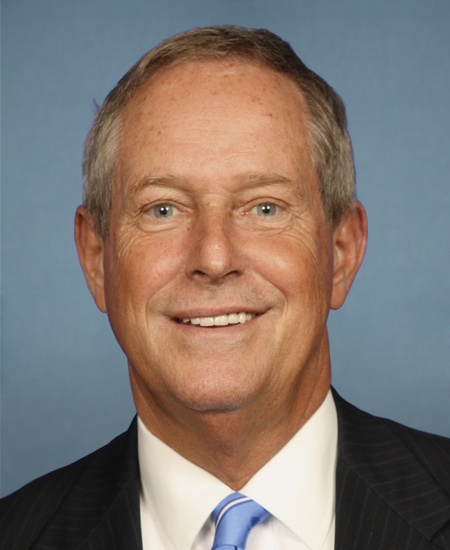
Rep. Joe Wilson
Sponsored bills
Maddy summaryThe Belarus Democracy, Human Rights, and Sovereignty Act of 2025 authorizes U.S. funding to support independent media, civil society organizations, and democratic opposition groups in Belarus. It expands sanctions against Belarusian officials involved in human rights abuses, supporting Russia's war in Ukraine, or participating in the abduction of Ukrainian children. The bill requires annual reports on Belarus's military support for Russia, its involvement in the abduction of Ukrainian children, and efforts to evade sanctions. It also demands the release of all political prisoners and calls for Belarusian elections to meet OSCE standards. The legislation maintains existing sanctions while authorizing continued U.S. assistance to promote Belarus's sovereignty and democratic transition.
Maddy summaryHR 3264 requires the U.S. Treasury to determine within 180 days if Hong Kong should be designated as a "jurisdiction of primary money laundering concern" under U.S. law. It also mandates a 360-day report from the State Department (with Treasury and Commerce) assessing Hong Kong's role in facilitating exports and financial transactions that violate U.S. sanctions on Russia, Iran, and other adversaries. The report must evaluate how Hong Kong enables illegal transfers of goods/technology, assess impacts of Hong Kong's National Security Law on anti-money laundering efforts, and detail U.S.-Hong Kong cooperation on enforcement. This bill directly affects U.S. financial institutions operating in Hong Kong and aims to strengthen oversight of Hong Kong's compliance with U.S. sanctions and export controls.
Maddy summaryThis bill requires the U.S. President to identify and sanction individuals involved in "involuntary harvesting of organs" in China by blocking their U.S. property and banning their entry. It mandates an annual list of designated persons (submitted to Congress) and imposes sanctions like visa restrictions and asset freezes under the International Emergency Economic Powers Act. Exceptions cover humanitarian aid, national security activities, and UN-related travel. The sanctions expire after 5 years, and the bill also requires a report on China's organ transplant practices and whether Falun Gong persecution meets atrocity definitions. The bill directly targets Chinese officials/entities linked to organ harvesting claims, not Falun Gong practitioners.
Maddy summaryThe MEGOBARI Act (HR 36) is a U.S. legislative proposal that aims to strengthen Georgia's democratic development and Euro-Atlantic integration. It directs the U.S. Secretary of State to suspend the U.S.-Georgia Strategic Partnership Commission until Georgia meets specific democratic standards, including respecting citizens' democratic wishes and advancing EU/NATO membership. The bill establishes potential sanctions against Georgian officials who block Euro-Atlantic integration or undermine Georgia's sovereignty, requiring the President to determine if officials have engaged in significant corruption or actions against Georgia's territorial integrity. Additionally, it mandates reports on Russian intelligence assets in Georgia and a 5-year U.S. strategy for bilateral relations, with the Act set to sunset after 5 years from enactment.
Maddy summaryThe Belarus Democracy, Human Rights, and Sovereignty Act of 2025 (HR 3201) maintains U.S. sanctions against Belarusian officials responsible for undermining democracy, committing human rights abuses, or supporting Russia's invasion of Ukraine. The bill expands U.S. assistance to promote democratic institutions, independent media, and civil society in Belarus, including support for the democratic opposition and efforts to counter internet censorship. It requires a detailed report on Belarus's military cooperation with Russia, including the presence of Russian nuclear forces in Belarus and Belarus's role in abducting Ukrainian children from occupied territories. The law directly affects Belarusian government officials, security forces, and entities supporting the Lukashenka regime, while reaffirming U.S. non-recognition of Lukashenka as Belarus's legitimate leader. It represents a continuation of U.S. policy to hold the regime accountable while supporting Belarus's sovereignty and democratic aspirations.
Maddy summaryHR 3178, the Save Healthcare Workers Act, creates a new federal crime for assaulting hospital staff while they are performing their duties, with penalties including fines and up to 10 years in prison (up to 20 years for aggravated cases involving weapons or injuries). The bill directly affects hospital employees - including nurses, doctors, and support staff - across all covered facilities (such as emergency rooms, long-term care centers, and children’s hospitals) by criminalizing violence that disrupts patient care. It also establishes a $25 million annual grant program (2025-2034) to help hospitals implement safety measures like staff de-escalation training, security technology, and coordination with local law enforcement. These provisions aim to address workplace violence in healthcare settings, which the bill cites as a growing problem affecting service delivery and staff retention.
Fentanyl Awareness for Children and Teens in Schools Act or the FACTS Act This bill establishes grant programs and requires strategies and studies to address the misuse of synthetic opioids (i.e., laboratory-derived substances such as fentanyl and its derivatives) among youth. The bill requires the Department of Health and Human Services (HHS) to award grants to partnerships between educational and health organizations for prevention, treatment, and recovery efforts related to the use of synthetic opioids by middle and high school-aged children. It also allows school-based health centers to use existing HHS grants to purchase naloxone to reverse the effects of opioid overdoses and to establish programs to address misuse of synthetic opioids. Also, the bill authorizes state educational agencies to use certain Department of Education (ED) grant funds to provide training to school personnel on addressing students’ misuse of synthetic opioids. State and local educational agencies must also address such misuse in their educational plans in order to qualify for certain ED grants. Finally, the bill (1) establishes an interagency taskforce to coordinate federal efforts to address synthetic opioid misuse among youth, (2) requires an evaluation of the State Unintentional Drug Overdose Reporting System’s effectiveness in identifying the specific synthetic opioids causing youth overdoses, (3) expands the data reported by the National Center for Education Statistics to include information about the use of synthetic opioids in schools, and (4) requires two recurring HHS surveys to include questions on youth exposure to synthetic opioids.
Maddy summaryThis resolution (HRES 358) calls on North Korea to release all abducted Japanese citizens, return remains and information about deceased victims, provide restitution, and issue a formal apology for abductions that began in the 1970s. It directly addresses the families of Japanese citizens held by North Korea and seeks to hold North Korea accountable for violating human rights. The resolution, introduced by Representatives Kiggans and Tokuda, is a symbolic House action with no new legal requirements or funding. It emphasizes the U.S. position that such abductions conflict with fundamental freedoms and human rights principles.
Maddy summaryThis bill temporarily allows doctors to prescribe and dispense certain Medicare-covered medications directly to seniors in their offices from 2026 to 2030, under specific conditions. It requires prior in-person visits, limits dispensing to group practices, and mandates billing through the physician’s practice. The bill also directs the GAO to study whether physician-owned pharmacies are becoming common and how such arrangements might affect prescribing. It directly affects seniors receiving Medicare Part D drugs and physician practices participating in these arrangements. The exception expires in 2030, with no changes to Medicare Part D program rules.