

Maddy summaryHR 649, the Whole Milk for Healthy Kids Act of 2025, amends the National School Lunch Act to allow schools participating in the program to offer students both organic and non-organic whole milk, in addition to reduced-fat, low-fat, and fat-free options. Key provisions include clarifying that milk fat in whole milk should not count toward saturated fat limits for meal compliance, prohibiting schools from purchasing milk from Chinese state-owned enterprises, and ensuring schools cannot be barred from offering the full range of milk types listed. The bill directly affects public and private schools serving the National School Lunch Program by expanding their milk options for students. It focuses on concrete policy changes to dietary offerings and sourcing restrictions within the school nutrition program.
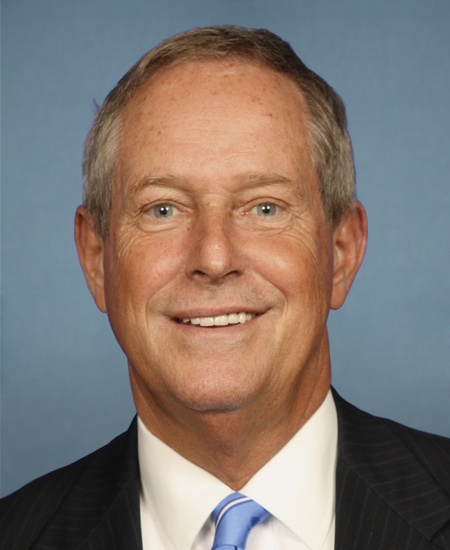
Rep. Joe Wilson
Sponsored bills
Maddy summaryHRES 470 is a non-binding House resolution commemorating the events of June 4, 1989, in Beijing and condemning the Chinese government's ongoing human rights practices. It expresses support for victims' families, calls for an independent UN investigation into the 1989 events, and urges China to cease censorship, uphold Hong Kong's autonomy under the Joint Declaration, and allow peaceful remembrance of the anniversary. The resolution has no legal force but serves as a symbolic expression of congressional concern regarding human rights in China and Hong Kong.
Maddy summaryThis resolution (HRES 459) is a symbolic gesture recognizing National Poppy Day, observed the Friday before Memorial Day. It supports the tradition of wearing red poppies as a symbol honoring U.S. military veterans who died in service, referencing the historical connection to World War I poetry and veterans' organizations. The resolution encourages all U.S. citizens, residents, and visitors to wear poppies on this designated day to express appreciation for those who died preserving freedom. It does not create new laws, funding, or obligations, but formally acknowledges the poppy's role in commemorating military sacrifice.
Maddy summaryHR 3698, the Living Organ Donor Tax Credit Act, creates a federal tax credit for living individuals who donate specific life-saving organs (like kidneys, livers, or bone marrow) for transplantation. It allows donors to claim a credit covering unreimbursed medical costs, travel, lodging, follow-up care, paperwork, and lost wages related to donation, capped at $5,000 per tax year. The credit applies only to living donors whose organ removal and transplantation comply with U.S. law, excludes reimbursed expenses, and does not apply to deceased donors. This bill directly affects living organ donors who bear out-of-pocket costs during the donation process.
Maddy summaryHR 3660, the "Make Autorail Great Again Act," requires the Washington Metropolitan Area Transit Authority (WMATA) to rename itself as the "Washington Metropolitan Authority for Greater Access" (or "WMAGA") and its Metrorail system as the "Trump Train" to continue receiving federal funding. The bill ties all federal funding to amending the governing Compact (the Washington Metropolitan Area Transit Regulation Compact) to reflect these new names. It directly affects WMATA, the regional transit agency serving Washington, D.C., and surrounding areas, by conditioning its primary funding source on this renaming. The bill contains no substantive policy changes beyond this renaming requirement and is purely procedural in nature.
Maddy summaryHJRES 61 is a congressional resolution that formally disapproves an Environmental Protection Agency (EPA) rule setting new air pollution standards for rubber tire manufacturing. It directly affects tire manufacturers by blocking the EPA’s proposed rule (published November 29, 2024), which would have required them to meet specific limits on hazardous air pollutants. The resolution’s key mechanism is a formal congressional vote to nullify the rule, making it legally ineffective under Title 5, U.S. Code. This action stops the EPA rule from taking effect without creating new regulations.
Maddy summaryHRES 444 is a symbolic House resolution calling on all Americans to observe Memorial Day 2025 by honoring military personnel who died in service. It does not create new laws or affect specific groups, as it is a non-binding expression of national remembrance. The resolution states that Americans should commemorate the sacrifices of over one million service members who died pursuing freedom and peace, framing Memorial Day as a day to express respect for their ultimate sacrifice. This is a routine ceremonial resolution with no policy changes or concrete mechanisms beyond urging public observance.
Maddy summaryThe Wrongful Injunction Accountability Act (HR 3502) requires parties who wrongfully obtain court orders stopping U.S. government actions to reimburse the government for costs and damages when courts fail to require adequate financial security. Specifically, if a court issues an injunction against the government without ordering sufficient security (as required under federal civil procedure rules) or if the security provided is insufficient, the requesting party must pay the government’s actual losses. This law directly affects individuals or organizations that file lawsuits seeking to halt government activities without providing proper financial guarantees. It creates a clear mechanism to ensure the government isn’t left bearing financial harm from unjustified legal actions.
Maddy summaryHR 3463 (COUNTER Act) expands the U.S. military's authority to counter drone threats by allowing the Department of Defense and Coast Guard to neutralize unmanned aircraft systems without being restricted by certain federal laws. It exempts related technology, procedures, and protocols from public disclosure requirements under federal and state laws, and permits military commanders to delegate these actions. The bill applies to both domestic and overseas operations, clarifying that other federal laws do not apply to U.S. military or Coast Guard activities mitigating drone threats abroad. Key changes include broadening legal authority beyond previous restrictions and extending reporting deadlines for related activities.
Maddy summaryHR 3277, the Ensuring Lasting Smiles Act, requires group health plans and health insurance issuers to cover medically necessary outpatient and inpatient treatments for congenital anomalies or birth defects primarily affecting the eyes, ears, teeth, mouth, or jaw. This includes reconstructive procedures, dental/orthodontic support during treatment, and follow-up care, but excludes purely cosmetic surgery not tied to a medical diagnosis. Cost-sharing (like copays) for these services must not be stricter than for other medical benefits. The law takes effect for plan years beginning January 1, 2026, and mandates insurers to provide notice about this coverage to beneficiaries.