

Ending Catch and Release Act of 2023 This bill changes the treatment of certain non-U.S. nationals ( aliens under federal law) without lawful immigration status, including by prohibiting the release of asylum seekers into the United States while their cases are pending. The Department of Homeland Security (DHS) may not (with some exceptions) release an individual who is not clearly entitled to admission into the United States while the individual's case is pending, even if the individual is an asylum seeker. DHS may instead detain the individual or return the individual to a neighboring country in certain situations. The bill also expands expedited removal from the United States (i.e., removal without further hearing or review) to include individuals present in the United States without being admitted, with certain exceptions. Under current law, individuals are subject to expedited removal if they lack proper documentation or obtained an immigration benefit through fraud; such individuals are still subject to expedited removal under the bill. The bill also modifies the standard for establishing a credible fear of persecution to avoid expedited removal. Generally, an asylum seeker may avoid expedited removal if an asylum officer finds such a credible fear. Under this bill, an officer may find credible fear if it is more likely than not the individual can establish their eligibility for asylum, whereas under current law, the officer may find credible fear if there is a significant possibility that the individual can establish their eligibility.
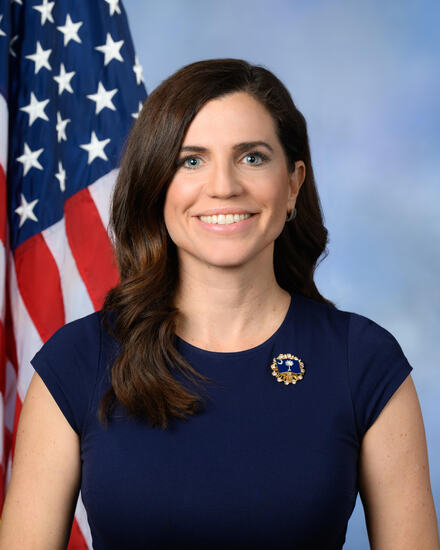
Rep. Nancy Mace
Sponsored bills
WHO Withdrawal Act This bill requires the President to immediately withdraw the United States from the World Health Organization (WHO) and prohibits using any federal funds to provide for U.S. participation in the WHO. The bill also repeals the 1948 act authorizing the United States to join the WHO.
Maddy summaryThis bill establishes nationwide recognition for valid concealed carry permits. It allows permit holders from any state to carry concealed handguns in states that either issue such permits or don't ban concealed carry, provided they carry a photo ID and their valid permit. Key provisions include making presentation of a valid permit and ID prima facie evidence of compliance, shifting the burden of proof to prosecutors if challenged, and requiring courts to award attorney fees to successful defendants. It does not override state laws prohibiting concealed carry on private property or government lands, nor does it affect restrictions on federal lands like national parks.
Maddy summaryThis bill would block federal funding to any state or local government that permits non-citizens to vote in federal, state, or local elections. States and localities seeking federal funds must certify they do not allow non-citizen voting as a condition of receiving those funds. The rule applies only to new funding agreements entered into after the bill's enactment, not existing contracts. It directly affects state and local government budgets by tying federal financial assistance to compliance with citizenship requirements for voting.
Maddy summaryHR 130, the Thin Blue Line Act, amends federal death penalty law to add a new consideration for sentencing. It specifies that killing or targeting a law enforcement officer (including firefighters and other first responders) while they are performing official duties, because of their duties, or due to their status as a public official qualifies as an aggravating factor. This change directly affects defendants convicted of such killings, making the death penalty a potential sentence in these specific cases. The bill does not alter sentencing ranges but adds this circumstance as a factor judges must weigh during sentencing.
Veterans Auto and Education Improvement Act of 2022 This act modifies provisions related to programs and benefits for veterans, including by providing permanent authority for the application of certain flexibilities to assist veterans with their educational assistance benefits during emergency situations. An emergency situation is defined as a situation that the President declares as an emergency and the Department of Veterans Affairs (VA) determines is an emergency for purposes of the laws it administers. Specifically, the act extends certain program adjustments that were implemented during the COVID-19 emergency (including adjustments made in the Student Veteran Coronavirus Response Act of 2020) to other emergency situations that may arise and have an effect on veterans and their educational assistance benefits. Among other flexibilities, the act (1) authorizes the VA to continue to provide educational assistance, including monthly housing stipends or subsistence allowances, for programs of education that have been converted to distance learning due to an emergency or health-related situation; and (2) extends the time limitation for using educational assistance under the Montgomery GI Bill, Post-9/11 GI Bill, or vocational rehabilitation program when institutions are closed due to an emergency situation or executive order. Due to an emergency situation, the VA is authorized to extend by two months the payment of vocational rehabilitation subsistence allowances, continue paying work-study allowances and extend work-study agreements, and continue paying educational assistance and subsistence allowances for a specified amount of time for programs of education that are suspended or closed. This act also adjusts the administration of certain benefits for veterans participating in an apprenticeship or other on-job training during an emergency situation, including by proportionately reducing the 120-hour monthly training requirement to reflect an individual's period of unemployment without a reduction in training assistance. An educational assistance payment shall not be charged against an individual's entitlement to educational assistance if an individual was unable to complete a course or program due to the temporary closure of an educational institution or the temporary termination of a program by reason of an emergency situation. The act provides the requirements that must be met for a study-abroad course to be approved for purposes of VA educational assistance. The act provides eligibility for Post-9/11 GI Bill educational assistance for individuals, including officers, who are discharged or released from active duty with a sole survivorship discharge following at least 30 continuous days on qualifying active duty after September 10, 2001. The VA must partner with state approving agencies, educational institutions, and training establishments to require the use of a uniform application for the VA's course approval process. The uniform application must be developed by October 1, 2023, and be required for the approval of any new course of education proposed on or after that day. The act provides notice requirements for VA education surveys. Specifically, the VA or a state approving agency must provide not more than one business day of notice to an educational institution before conducting a targeted risk-based survey. The VA or state approving agency must provide not more than 10 business days of notice to an educational institution or training establishment before conducting a compliance survey. Under the act, educational institutions are excepted from the requirement to verify the enrollment of certain individuals who are receiving VA educational assistance (e.g., individuals who are enrolled in a program on at least a full-time basis before they are able to withdraw from the course without penalty). The act expands eligibility for self-employment assistance under the Veteran Readiness and Employment Program to include certain veterans who have a service-connected disability or employment handicap in addition to those with the most severe service-connected disabilities. The VA must report on possible definitions for student services , marketing , and classroom instruction for purposes of VA educational assistance. The act extends through November 30, 2031, certain limitations on pension payments to veterans who have no dependents and are being furnished domiciliary care by the VA. The act authorizes a servicemember to terminate specified contracts (e.g., contracts for commercial mobile service or internet service) that are entered into in relation to military orders for a permanent change of station if the member then receives a stop movement order in response to a local, national, or global emergency which prevents the member from using the services provided under the contract. The act provides that a spouse of a servicemember may retain their personal residence or domicile for purposes of taxation. Under the act, a servicemember and the spouse of the member are authorized to elect to use the following locations for purposes of taxation: the residence or domicile of the member, the residence or domicile of the spouse, or the permanent duty station of the member. The act provides for the portability of professional licenses of servicemembers and their spouses who are relocated, because of military orders, outside of the jurisdiction that issued the license. The act authorizes the VA to provide non-articulating trailers (adaptive equipment) to veterans with specified disabilities or diseases incurred or aggravated due to their military service. The act authorizes the VA to provide (or assist in providing) an eligible veteran or servicemember with an additional automobile or other conveyance under the VA automobile allowance and adaptive equipment program if (1) more than 30 years have elapsed since the person last received such benefit; or (2) beginning 10 years after the date of this act, if more than 10 years have elapsed since the person last received such benefit. Finally, the act includes certain vehicle modifications (e.g., van lifts) under the definition of medical services for VA health care purposes.
Sami's Law This act addresses safety requirements for passengers and drivers of ride-sharing companies (e.g., Uber, Lyft, or taxicabs). The act requires the Government Accountability Office to submit to Congress a biennial report that includes the results of a study regarding (1) the incidence of fatal and non-fatal physical assault and sexual assault in the preceding two calendar years on drivers by passengers of ride-sharing vehicles and on passengers by drivers of such vehicles, (2) the nature and specifics of any background checks conducted on prospective drivers of ride-sharing vehicles, and (3) the safety steps taken by ride-sharing companies related to rider and driver safety.
This bill exempts a trade or business that conducts marijuana sales in compliance with state law from a provision in the Internal Revenue Code that prohibits business-related tax credits or deductions for expenditures in connection with trafficking in controlled substances.
Faster Payments to Veterans' Survivors Act of 2022 This act modifies policies and procedures related to the payment of benefits under certain life insurance programs administered by the Department of Veterans Affairs (VA). If a primary beneficiary has not made a claim for payment within one year (currently two years) after the death of the insured under the National Service Life Insurance (NSLI) program or the United States Government Life Insurance (USGLI) program, the VA is authorized to make payment to another designated beneficiary as if the primary beneficiary had predeceased the insured. If no designated beneficiary makes a claim within two years (currently four years) after the death of the insured, the VA is authorized to make a payment to a person the VA deems to be equitably entitled to such benefit. The act also modifies the beneficiary designation process under NSLI and USGLI. Specifically, if a person does not designate a beneficiary for insurance, or if the designated beneficiary predeceases the insured person, the VA must determine the beneficiary in a specified order of succession. Additionally, the act requires the VA to improve its processes and procedures with respect to identifying, locating, and paying hard-to-find beneficiaries of life insurance policies, including by improving its website search tools.
Strengthening VA Cybersecurity Act of 2022 or the SVAC Act of 2022 This act requires the Department of Veterans Affairs (VA) to seek to enter into an agreement with a federally funded research and development center to provide a cybersecurity assessment of five high-impact VA information systems and the effectiveness of the VA's information security program and information security management system. The VA must submit a plan to Congress to address the findings of the assessment. The Government Accountability Office must review the assessment and the VA's response to the assessment and report its findings to Congress.