

Maddy summaryHR 441, the Leak and Lose Act of 2023, makes it a federal crime to conceal, remove, destroy, or alter unpublished Supreme Court opinions or draft opinions before they are officially published. The bill targets anyone who willfully engages in these actions while handling such materials within Supreme Court buildings. Violators face a $5,000 fine and lose the right to practice law in any federal court for life. This law directly affects individuals with access to Supreme Court documents, such as clerks or staff, by imposing severe professional penalties for mishandling sensitive court materials.
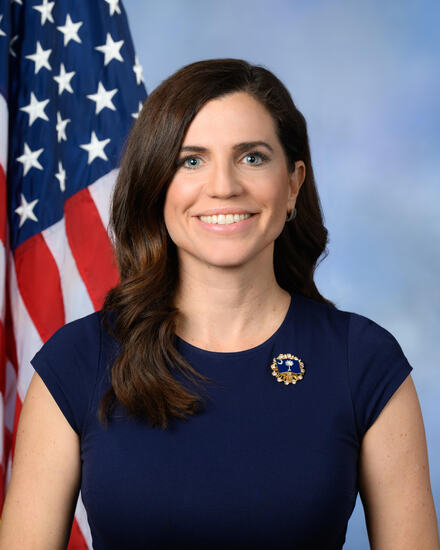
Rep. Nancy Mace
Sponsored bills
Second Amendment Protection Act This bill exempts certain individuals who use medical marijuana from federal firearms-related restrictions. Currently, federal firearms laws prohibit an individual who is an unlawful user of or addicted to a controlled substance from shipping, transporting, receiving, or possessing a firearm or ammunition. This bill exempts from the prohibition an individual who uses marijuana for a medical purpose in accordance with state law.
Maddy summaryHJRES 17 is a congressional resolution disapproving the District of Columbia Council's approval of the Local Resident Voting Rights Amendment Act of 2022 (D.C. Act 24-640), which the Council enacted on October 18, 2022. If passed by Congress and signed into law, this resolution would block the local voting rights amendment from taking effect. The bill directly affects the District of Columbia government by preventing implementation of the amendment, which aimed to address voting rights for residents. This resolution follows the District of Columbia Home Rule Act's requirement for congressional disapproval of certain local laws.
Maddy summaryHR 345, the TRUST in Congress Act, requires Members of Congress, their spouses, and dependent children to place certain investments into a "blind trust" within 90 days of taking office or after the bill's enactment. It directly affects current and future lawmakers and their immediate family members by mandating that covered investments - such as stocks, commodities, or derivatives (excluding Treasury bonds and some mutual funds) - be placed in a trust they cannot manage. Members must certify the trust setup to House or Senate officials within 15 days, and trusts cannot be dissolved until 180 days after leaving office. The law excludes investments providing primary income (e.g., from a spouse's job) but requires transparency through public website disclosures of certifications.
Maddy summaryHR 311, the Cost Estimates Improvement Act, requires the Congressional Budget Office (CBO) and Joint Committee on Taxation (JCT) to include debt servicing costs in their budget estimates where practicable and to list duplicative federal programs covered by legislation. The bill mandates that all CBO and JCT cost estimates must identify overlapping or redundant agency programs, initiatives, or activities within the proposed legislation. This change aims to improve transparency in federal budget analysis by providing clearer data on long-term debt impacts and program efficiency for lawmakers. The bill directly affects the CBO and JCT as they prepare budget estimates for Congress.
Maddy summaryThe GAS Act (HR 337) prohibits any federal agency from banning the sale or use of gas-burning stoves in the United States. This applies to all agencies defined under federal law, including the Environmental Protection Agency and Consumer Product Safety Commission. The bill directly blocks agencies from enacting new regulations that would restrict gas stoves, preventing future regulatory actions. It does not affect existing stove sales or current agency authority but sets a clear restriction on future rulemaking.
American Workforce Empowerment Act This bill allows tax-preferred college savings plans (529 plans) to fund certain postsecondary certificate programs and apprenticeship programs.
Maddy summaryThis bill establishes a "regulatory budget" system requiring federal agencies to estimate and report the costs of regulations on businesses, especially small businesses. It mandates the President to submit annual projections of regulatory costs for proposed rules, and creates a process for Congress to set limits on how much regulatory costs can grow. The Congressional Budget Office would analyze regulatory cost impacts of proposed legislation, while agencies would need to conduct cost-benefit analyses for significant regulations. The bill aims to increase transparency around regulatory costs and provide Congress with tools to monitor and control regulatory burdens on businesses.
Maddy summaryHR 92, the State Immigration Enforcement Act, allows states to create their own criminal and civil penalties for immigration violations that match federal penalty levels. It specifically permits states to enforce penalties for the same conduct prohibited under federal immigration law (like unauthorized presence or employment), but only up to the maximum federal penalty amounts. This bill directly affects state governments and local law enforcement by expanding their authority to address immigration violations within their jurisdictions. The law does not change federal immigration enforcement but gives states the option to implement parallel penalty systems.
Voter Integrity Protection Act This bill imposes additional immigration-related penalties for non-U.S. nationals ( aliens under federal law) who vote in an election for federal office. It shall be an aggravated felony for a non-U.S. national who is unlawfully present to violate an existing prohibition against a non-U.S. national voting in a federal election. (An aggravated felony conviction carries various immigration consequences, such as rendering the non-U.S. national inadmissible, deportable, and barred from establishing good moral character for naturalization.) A non-U.S. national who is unlawfully present and who knowingly violates the prohibition against voting in a federal election shall be deportable.