Inflation Prevention Act This bill establishes a point of order that, when the annualized rate of inflation exceeds 4.5%, prohibits the House and Senate from considering legislation that provides new budget authority and is estimated to result in an increase to the rate of inflation. The prohibition may be waived in the Senate by an affirmative vote of three-fifths of the Senate.
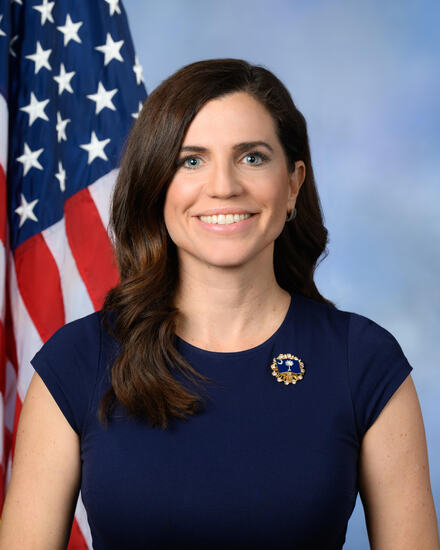
Rep. Nancy Mace
Sponsored bills
Guard and Reserve GI Bill Parity Act of 2021 This bill expands eligibility for Post-9/11 GI Bill educational assistance and addresses other Department of Veterans Affairs (VA) programs and benefits. Specifically, the bill expands the type of duty that is eligible for such educational assistance. Beginning on August 1, 2025, types of duty eligible for educational assistance benefits include (1) active duty for training performed by a member of the Armed Forces on or after this date, and (2) active duty for training occurring before this date only if the individual is a member on or after this date. Furthermore, beginning on August 1, 2032, duty eligible for these benefits includes active or inactive duty training performed by a member of the Armed Forces before, on, or after August 1, 2032. Educational assistance eligibility for individuals who performed qualifying types of duty as provided in the bill before August 1, 2025, expires on the latter of (1) August 1, 2040, or (2) the end of the 15-year period after their discharge or release from the Armed Forces. For individuals who performed such duty on or after August 1, 2025, educational assistance eligibility does not expire. Furthermore, the bill provides for the expiration of eligibility applicable to individuals subject to two different periods of eligible duty. The bill also makes adjustments to certain loan fees under the VA home loan program, including the fee for an interest rate reduction refinancing loan. Additionally, the VA must provide information to new veterans that includes a description of the medical care, services, and other benefits they are entitled to through the VA.

Senior Guardianship Social Security Protection Act of 2022 This bill requires the Social Security Administration (SSA) to establish agreements with each state to share certain information on a monthly basis about the guardianship arrangements of individuals who are entitled to Social Security benefits or Supplemental Security Income (a federal assistance program that provides monthly cash payments to aged, blind, or disabled individuals with limited income and resources). The SSA must also periodically report to Congress about Social Security payments that are diverted to nonfamilial representative payees (i.e., individuals appointed by the SSA to manage payments on behalf of recipients).
Tiny Homes for Homeless Veterans Act This bill requires the Department of Veterans Affairs to implement a six-year pilot program to provide grants for the creation of five villages of tiny homes for homeless veterans. Under the bill, the villages must have associated supportive services to allow veterans to build and live in energy efficient homes, maintain social connections with each other, learn skills, and receive critical counseling. Under the bill, a tiny home is an individual housing unit that is approximately 240 square feet for one person or approximately 340 square feet if the home is for a family.
This bill revises enforcement provisions under the Animal Welfare Act (AWA), including by directing inspectors to confiscate or destroy in a humane manner animals found to be suffering physical or psychological harm as a result of failure to comply with the AWA.
Responsible Education Mitigating Options and Technical Extensions Act or the REMOTE Act This act addresses the administration of certain Department of Veterans Affairs (VA) educational assistance benefits. First, the act extends through June 1, 2022, certain adjustments for veterans' education benefits that were put in place due to COVID-19. The act allows the VA to waive the requirement that an educational institution verify the enrollment of a student utilizing VA educational assistance if the VA determines the institution uses a flat rate tuition and fee structure that would make the use of a second verification unnecessary. The act provides an exception from the imposition of specified disciplinary actions (e.g., suspending course and program approval) in situations where an educational institution provides a commission, bonus, or other incentive payment to entities engaged in student recruiting or admission activities related to recruiting foreign students who reside in foreign countries and are ineligible for federal student assistance. Additionally, the act generally exempts from certain requirements and restrictions imposed by the VA or a state approving agency educational institutions (1) located in foreign countries, or (2) that provide information regarding the costs of a program of education using a form or template developed by the Department of Education. The act also exempts educational institutions located in foreign countries from (1) having records and accounts that pertain to an individual who is not receiving VA educational assistance examined by government representatives, and (2) furnishing certain information related to tests that require payment. The act authorizes the VA, in certain circumstances, to provide educational assistance (including a housing stipend) to veterans or eligible persons who are in their last academic period (e.g., semester) of a program of education and are pursuing the program on less than a half-time basis. Specifically, such assistance may be provided if the number of credits the person needs to complete the program of education is less than the number of credits that would constitute enrollment on more than a half-time basis for that last academic period and the person (1) is enrolled in or has completed every course offered by the program of education during that academic period, and (2) enrolls in an additional course that is not required for the program of education to reach enrollment on a more than a half-time basis. The act extends certain loan fee rates through January 14, 2031, under the VA's home loan program. Finally, the act removes the cap on the number of full-time VA employees who provide equal employment opportunity counseling.
Protecting Our Democracy by Preventing Foreign Citizens from Voting Act This bill prohibits federal funds from being made available to state or local governments that allow noncitizens to vote in federal, state, or local elections.
This bill posthumously provides for the award of a Congressional Gold Medal in commemoration of the 13 service members who died on August 26, 2021, while stationed at Hamid Karzai International Airport in Afghanistan.
Preserving Rights Of Tenants by Ensuring Compliance To the Second Amendment Act or the PROTECT the Second Amendment Act This bill establishes a right for a resident of covered federally assisted rental housing to lawfully possess a firearm within the residential dwelling unit occupied by the resident and any common area of the federally assisted rental housing in which the resident resides in the course of entering or exiting the rental housing.
Humane Cosmetics Act of 2021 This bill generally prohibits animal testing in the evaluation of cosmetic products, and it prohibits the sale or transport of cosmetics developed using animal testing, subject to civil penalties. These prohibitions begin one year after enactment. The bill specifies exceptions to these prohibitions, including if such animal testing (1) is conducted outside the United States to comply with a foreign regulatory authority; (2) is pursuant to a specified finding that there are no nonanimal alternatives to test the safety of a potentially dangerous cosmetic product or ingredient; (3) is of a product or ingredient for a drug or device subject to regulation by the Food and Drug Administration (FDA); or (4) is required for a noncosmetic purpose pursuant to a state, federal, or foreign regulatory authority. Further, no animal-testing evidence may be used to establish the safety of a cosmetic product or ingredient that is regulated by the FDA after the effective date of this bill, subject to limited exceptions.