Maddy summaryHRES 227 is a non-binding resolution expressing the House of Representatives' support for designating March 18, 2025, as "National Agriculture Day" to honor agriculture's role as a vital U.S. industry. It does not create new laws, allocate funds, or impose requirements on any group. The resolution serves as a symbolic gesture to highlight agriculture's economic impact and contributions to the nation. As a procedural resolution, it has no direct policy effect beyond raising awareness.
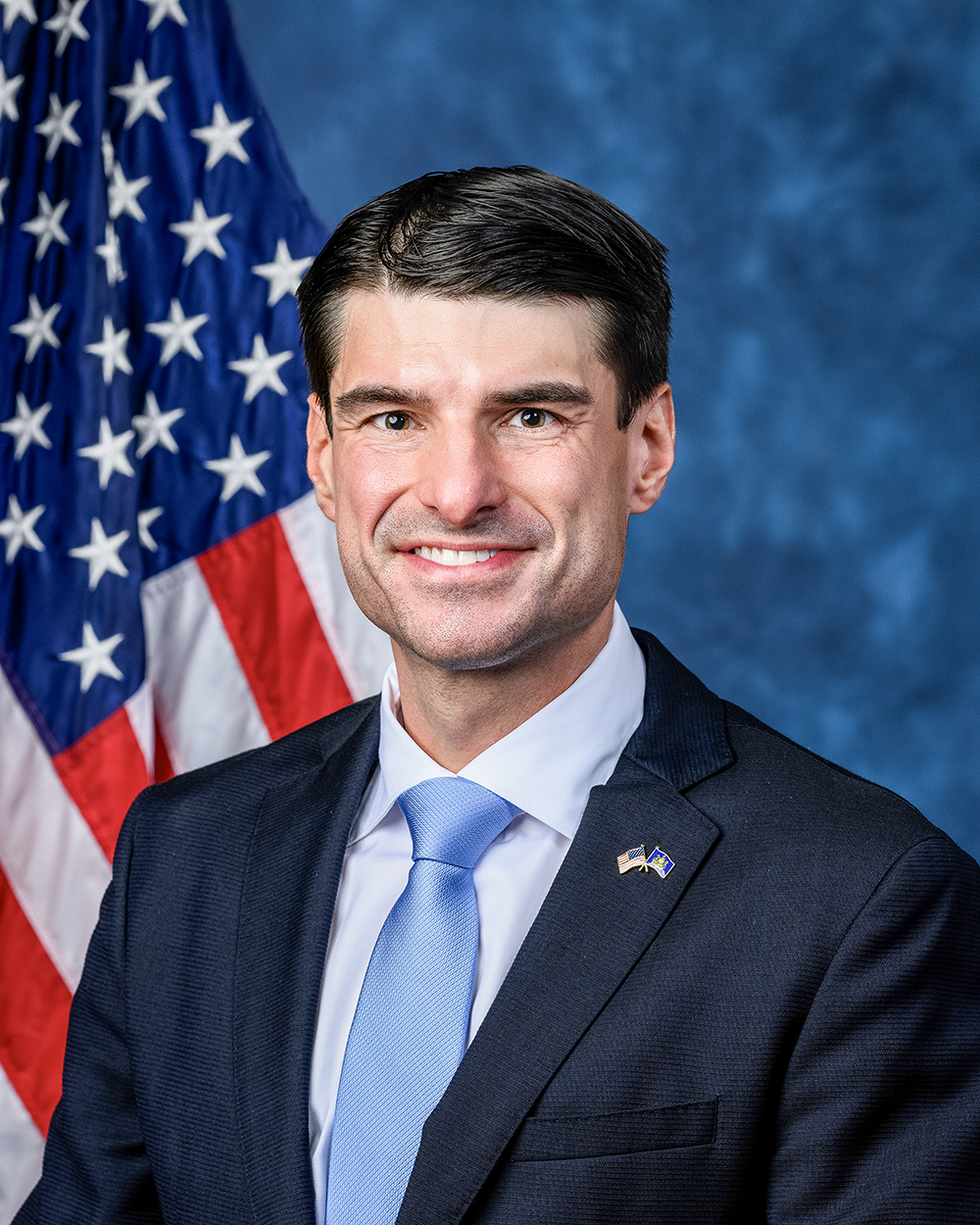
Rep. Robert P. Bresnahan, Jr.
Sponsored bills
Maddy summaryThis bill (HR 2199) prevents private health insurance plans from discriminating against patients with end-stage kidney disease (ESRD) who require dialysis. It amends the Social Security Act to prohibit plans from treating dialysis coverage differently than other medical services or applying network restrictions that disproportionately harm ESRD patients. The law clarifies that plans cannot deny or limit benefits for dialysis based on a patient’s diagnosis, while preserving a plan’s right to choose which dialysis providers are in their network. It directly affects ESRD patients and their private health insurance coverage, ensuring dialysis is treated equally with other covered medical services. The bill does not require plans to include specific dialysis providers but stops them from unfairly restricting access to necessary care.
Maddy summaryHR 2122, the IMPACT Act 2.0, provides federal funding to help states adopt low-emission construction materials for highway projects. It reimburses states for the extra cost of using low-emission cement, concrete, asphalt binder, or mixtures (up to 2% of project costs) and creates a public directory of approved materials. States must update their specifications to prioritize performance and emissions data to qualify, with $15 million authorized for 2025-2027. The bill also allows states to enter multi-year contracts for innovative, domestically produced low-emission materials that meet durability and environmental standards. It directly affects state highway departments and construction material producers seeking to supply these materials.
Homes for Every Local Protector, Educator, and Responder Act of 2025 or the HELPER Act of 2025 This bill establishes a program administered by the Department of Housing and Urban Development to provide mortgage assistance to law enforcement officers, elementary and secondary school teachers, firefighters, or other first responders. Specifically, these individuals may be eligible for a first-time mortgage on a primary family residence with no down payment. Instead, the mortgage is subject to a one-time, up-front mortgage insurance premium.
Metastatic Breast Cancer Access to Care Act This bill expedites payment of Social Security Disability Insurance (SSDI) benefits and eligibility for Medicare coverage for those with metastatic breast cancer (i.e., breast cancer that has spread to other sites in the body). Specifically, the bill eliminates the 5-month waiting period for SSDI benefits and the subsequent 24-month waiting period for Medicare coverage for individuals with metastatic breast cancer. Under current law, individuals generally must wait 5 months after the onset of disability to begin receiving SSDI benefits and an additional 24 months to become eligible for Medicare.
Maddy summaryThis bill requires the Transportation Security Administration (TSA) to transition its workforce from a special personnel management system to the standard federal personnel system under Title 5 of the U.S. Code by December 31, 2025. It protects TSA employees by ensuring no reduction in pay, benefits, or retirement rights during the transition, while preserving collective bargaining rights for screening agents. The legislation also mandates consultation with labor unions during the process and requires several reports on workforce issues including recruitment, harassment policies, and workplace safety.
Maddy summaryHR 1973, the "No Pay for Congress During Default or Shutdown Act," would withhold pay from members of Congress during periods when the U.S. government reaches the public debt limit or experiences a shutdown. Specifically, for each 24-hour period the debt limit is reached or a shutdown occurs during the 119th Congress (2025-2027), members' pay would be reduced daily and placed into an escrow account. The withheld funds would be released to members on the last day of the 119th Congress, with no effect after the November 2026 general election. This bill directly affects current House and Senate members serving in the 119th Congress during these fiscal crises.
Maddy summaryThis bill amends Medicare eligibility rules to clarify that beneficiaries needing occupational therapy *or* speech therapy qualify for home health services. It updates two sections of the Social Security Act (Parts A and B) to replace "need occupational therapy or speech therapy" with "need occupational, or speech therapy," ensuring both therapies are explicitly covered. The change directly affects Medicare beneficiaries requiring either therapy for home-based care, removing potential confusion about eligibility. The updated rules will take effect for services provided on or after January 1, 2026.
Farm Credit Administration Independent Authority Act This bill specifies that the Farm Credit Administration (FCA) is the sole regulator of the Farm Credit System (FCS) and establishes reporting requirements for FCS institutions (i.e., lenders). Specifically, the bill states that the FCA is the sole and independent regulator of the FCS and exempts entities that are supervised by the FCA from the Equal Credit Opportunity Act (ECOA). As background, the bill addresses a rule issued by the Consumer Financial Protection Bureau (CFPB) that implements provisions of the ECOA by requiring covered financial institutions, including FCS institutions, to collect and report to the CFPB data on credit applications for small businesses, including the principal owner's race, sex, and ethnicity. This 2023 rule has been challenged in court. The bill also requires FCS institutions to (1) request that loan applicants and borrowers that are small farmers disclose information identifying their race, sex, and ethnicity; and (2) annually report the collected information to the FCA. The FCA must make the collected information available to the public on annual basis. If an FCS institution customer does not voluntarily report the requested information, the FCA may not require the institution to use other means to deduce the information. In addition, the bill specifies that FCS institutions shall not be required to comply with the bill's requirements if financial institutions are not required to comply with the CFPB rule due to a court invalidating the rule or a repeal of the rule.

Maddy summaryTim's Act establishes pay parity for Federal wildland firefighters employed by the Department of Agriculture, Department of the Interior, and Tribal Firefighters. It creates special base pay rates that increase General Schedule base rates by specific percentages (1.5% to 42%) based on job grade, and provides incident response premium pay at 450% of hourly rate for qualifying wildfire incidents. The bill also establishes rest and recuperation leave after firefighting operations, requires a public cancer database tracking environmental exposure, and creates a mental health support program for firefighters. Additionally, it addresses retirement benefits, disability annuities, and creates a casualty assistance program for families of firefighters injured or killed in the line of duty.