

Maddy summaryThe Multigenerational Caregiving Data Act requires the U.S. government to add a specific question to major national surveys to identify people who provide unpaid care to both children and older adults. This change aims to better track individuals who juggle responsibilities for dependents across different generations, addressing a gap in current data collection. Before the question is fully used, the government will test it to ensure it is clear and not too burdensome for respondents, and all answers will remain voluntary. Within three years of passing, the survey must include this new question, and within two years of its inclusion, the government must report to Congress on how well the data works and suggest any needed adjustments. Ultimately, the bill seeks to improve official statistics on caregiving to help policymakers make more informed decisions about health, work, and family support.
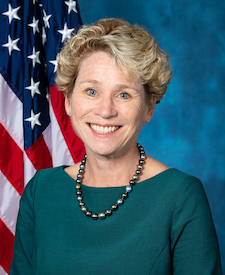
Rep. Chrissy Houlahan
Sponsored bills
This resolution expresses support for police officers and other law enforcement personnel. The resolution further recognizes law enforcement officers across the United States in the pursuit of preserving safe and secure communities; the need to ensure that such officers have the equipment, training, and resources necessary to protect their health and safety while they are protecting the public; and the law enforcement community for acts of sacrifice and heroism. The resolution expresses condolences and appreciation to the loved ones of each law enforcement officer who has made the ultimate sacrifice in the line of duty.
Maddy summaryHRES 64 is a non-binding House resolution affirming the U.S.-South Korea alliance. It highlights historical ties (dating to 1882), economic partnerships (including 2023 trade data), and security cooperation (like the 1953 Mutual Defense Treaty), while celebrating Korean American contributions to U.S. society. The resolution formally supports strengthening security, economic, and cultural ties between the two nations and notes the 2025 anniversary of Korean liberation. It does not create new laws or funding, but serves as a symbolic statement of congressional support for the alliance.
Maddy summaryThis bill would amend federal law to strengthen penalties for organized retail crime by expanding definitions of theft to include digital goods, gift cards, and setting a $5,000 aggregate value threshold for charges over a 12-month period. It would establish a new "Organized Retail and Supply Chain Crime Coordination Center" under Homeland Security to coordinate Federal, State, local, and Tribal law enforcement efforts against cross-jurisdictional theft groups. The Center would share information with retailers, transportation companies, and law enforcement agencies, track crime trends, and produce annual reports on organized retail crime. This legislation directly affects retailers, supply chain businesses, and law enforcement agencies, while targeting organized crime groups responsible for a 93% increase in larceny incidents and rising safety concerns for retail employees. The bill aims to address significant financial losses and supply chain disruptions noted in the National Retail Federation's 2023 data.
Maddy summaryThis bill creates a new senior official within the Department of Defense to oversee programs that help active-duty service members and reservists transition to civilian life. The designated official must have extensive experience in veterans' services and will serve as the department's chief transition officer, coordinating efforts with agencies like the Department of Veterans Affairs. Their main duties include reviewing existing transition programs, ensuring they are effective and legally compliant, and working with other government bodies to improve support services for military families. The Under Secretary of Defense for Personnel and Readiness is required to appoint this official within 90 days of the law's enactment and report to Congress on the progress.
Maddy summaryThe Respect Tribal IDs Act requires the Department of Homeland Security to create and enforce annual training for immigration officers on how to properly identify and accept Native American tribal documents as proof of U.S. citizenship. This legislation directly affects federal immigration officials by mandating that they complete specific curricula developed in collaboration with the Bureau of Indian Affairs and Indian tribes. Key provisions include establishing a database of tribal document examples, incorporating scenario-based exercises, and ensuring officers understand the historical trust responsibility between the U.S. government and American Indians. Additionally, the bill defines which tribal documents, such as enrollment cards and certificates of degree of Indian blood, are considered valid proof of citizenship.
Maddy summaryThe Connected Vehicle Security Act of 2026 restricts the importation, sale, and manufacture of vehicles and related technology from specific countries, including China, Russia, Iran, and North Korea, to address national security concerns. The law defines prohibited items as connected vehicles, their software, and hardware components and sets different effective dates, with vehicle bans starting in 2027 and hardware restrictions beginning in 2030. A government official can grant exceptions for specific items after reviewing security risks and notifying Congress, while the agency must publish annual reports on enforcement actions and compliance.
Maddy summaryThis bill prohibits the U.S. government from spending money on military actions against Iran between its enactment and December 31, 2026, unless Congress explicitly approves the use of force. It allows for military action only if Congress declares war, passes a specific authorization, or if the action is necessary to defend the United States or its allies from an imminent attack while following reporting requirements. The law directly restricts the President's ability to deploy troops without legislative approval during the specified timeframe.
Maddy summaryThe Guard the Skies Act allows the National Guard to protect specific facilities and assets from unmanned aircraft when requested by a state's chief executive officer. This law authorizes the Secretary of Defense to deploy National Guard members to take actions normally reserved for federal agencies, such as the Department of Transportation and the Federal Aviation Administration, during these security missions. The bill also adjusts existing rules to ensure that selected Reserve and Individual Ready Reserve members can be ordered to active duty specifically for these protection efforts. By clarifying the roles of the Department of Defense and other agencies, the legislation aims to streamline coordination for safeguarding critical infrastructure against drone threats.
Maddy summaryThe MISSION Rx Act ensures that military beneficiaries and veterans pay no more for specific negotiated drugs than Medicare Part D beneficiaries do. It achieves this by capping the out-of-pocket costs for TRICARE-covered servicemembers and copayments for veterans at the same levels established under the federal drug price negotiation program. Additionally, the bill requires federal agencies to limit the maximum prices they agree to pay pharmaceutical manufacturers for these same negotiated drugs. These changes apply to existing contracts and new agreements involving drugs selected for federal price negotiation.