Fairness to Kids with Cancer Act of 2023 This bill requires the share of federal funds for cancer research that is allocated to pediatric cancer research to equal the percentage of the U.S. population that is under the age of 18.
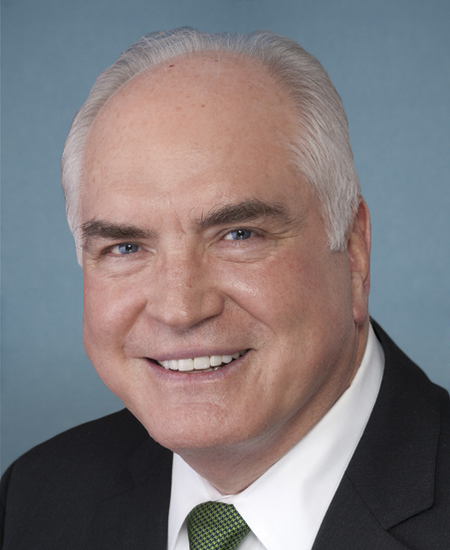
Rep. Mike Kelly
Sponsored bills
Maddy summaryThe Life.Gov Act (HR 5406) requires the U.S. Department of Health and Human Services to create a federal website called life.gov within one year of enactment. The website will provide pregnant and postpartum women with locally tailored resources - such as health services, financial assistance, and mental health support - via zip code searches, multilingual access, and user feedback tools. States must submit resource recommendations meeting strict criteria (e.g., no abortion providers, 3+ years of service), and the website cannot list "prohibited entities" (defined as abortion providers or supporters). The Secretary must report to Congress within 180 days on website usage, user feedback, and gaps in resources, using existing HHS funding.
Safeguarding Endangered Children, Unaccompanied and at Risk of Exploitation Act of 2023 or SECURE Act of 2023 This bill requires regular reports to Congress detailing the status of unaccompanied non-U.S. national ( alien under federal law) children. The bill also rescinds certain funding for the agencies responsible for the report for each day that a report is late. Specifically, the Department of Health and Human Services (HHS), the Department of Homeland Security (DHS), and the Federal Bureau of Investigation must jointly report to Congress every 60 days on such children that have been in the custody of the Office of Refugee Resettlement (ORR) since January 1, 2021, and have been released to a parent, family member, or sponsor within the United States. This report must provide each child’s age, sex, location, and detail the child’s health and well-being. Additionally, the report must provide specified information about adults living in the child’s home, such as whether adults in the home have been subject to a fingerprint-based check of national crime information databases. The report must also specify the number of children that ORR has tried to contact without success on at least three separate attempts. The report must be provided for up to three years or until all of the specified children have been accounted for. The bill also rescinds certain funding from HHS, DHS, and the FBI for each day that a report is late. Up to $10 million may be rescinded from each agency for each fiscal year.

This bill requires the acquisition and installation of a statute in the Capitol or on the Capitol grounds to honor Roberto Clemente Walker, a humanitarian and athlete.
Maddy summaryThis resolution supports designating September 22 as "National Military and Veterans Suicide Awareness Day" to raise public awareness about suicide prevention among active-duty service members and veterans. It does not create new policies or funding but aims to highlight mental health challenges like PTSD and depression that contribute to higher suicide rates in these communities. The resolution emphasizes reducing stigma and encouraging help-seeking during Suicide Prevention Awareness Month (September). It directly affects military personnel, veterans, and the public by promoting national attention to this issue through a designated awareness day.
Maddy summaryHR 5326, the Empowering Local Curriculum Act, prohibits federally funded schools from being required to teach or promote specific concepts related to race and gender. It explicitly blocks the mandatory teaching of ideas such as the U.S. being "fundamentally racist," individuals being inherently racist based on race, or meritocracy being racist. The bill applies to institutions receiving federal funds under the Higher Education Act (for colleges) and the Elementary and Secondary Education Act (for K-12 schools). It does not ban these topics but prevents federal requirements from mandating their inclusion in curricula.
This bill increases from 20% to 25% the value of the total assets represented by securities of one or more taxable Real Estate Investment Trust (REIT) subsidiaries (thus restoring the REIT subsidiary asset test).
This bill allows for the refundability of a portion of the tax credit for increasing research activities for small businesses (gross receipts not exceeding $1 million) engaged in specified medical research. Under the Public Health Service Act, specified medical research means research with respect to qualified countermeasures (i.e., a drug, biological product, or device for preventing harm from any biological agent or from a condition that may result in adverse health consequences or death).
This bill expands the tax credit for increasing research activities to add a new credit amount equal to 14% of specified medical research expenditures. The bill defines specified medical research expenditures as amounts paid or incurred for research with respect to any qualified countermeasure (i.e., a drug, biological product, or device determined to be a priority in protecting against harm from a biological agent or adverse health condition).
Maddy summaryHR 5156, the First Responders’ Equipment Access Act, simplifies access to national security exemptions for engines and equipment used by first responders. It requires the EPA to revise regulations within 90 days, allowing manufacturers to request exemptions for equipment intended for law enforcement, fire response, emergency medical services, disaster relief, or search and rescue. The key change eliminates the need for exemption requests to specify exact quantities of equipment, streamlining the process for agencies like fire departments and emergency medical services. This directly affects manufacturers seeking exemptions and state/local first responder agencies needing equipment for critical operations.