

Maddy summaryThe Dennis and Lois Krisfalusy Act expands eligibility for Department of Veterans Affairs headstones, markers, and burial receptacles by removing a requirement that veterans must have died on or after November 11, 1998. This change allows veterans who died before that date to qualify for these burial items, directly affecting veterans who previously fell outside the eligibility window. The bill also extends a related administrative deadline from October 1, 2024, to October 1, 2034, providing more time for implementation. These provisions aim to broaden access to VA burial benefits for a wider group of veterans and their families.
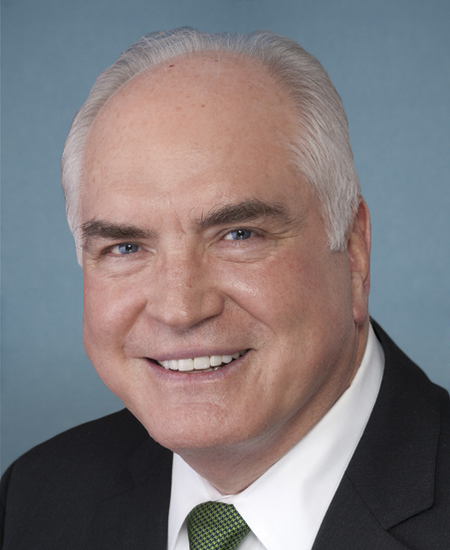
Rep. Mike Kelly
Sponsored bills
Maddy summaryHRES 1345 is a ceremonial resolution recognizing the 100th anniversary of diplomatic relations between the United States and Ireland, established on October 7, 1924. It commemorates the historical milestone, highlighting the strong cultural ties (with over 30 million Americans claiming Irish heritage), economic partnership (over $1 trillion in annual trade), and shared values supporting peace in Northern Ireland. The resolution does not create new laws or directly affect any individuals or entities, as it is purely symbolic. It affirms congressional support for continued U.S.-Ireland friendship and the enduring people-to-people connections between the two nations.
Maddy summaryThis bill designates the U.S. Postal Service facility at 521 Thorn Street in Sewickley, Pennsylvania, as the "Mary Elizabeth 'Bettie' Cole Post Office Building." It updates all official references in federal documents, maps, and records to use this new name, with no changes to postal services or operations. The bill is purely procedural and honors Mary Elizabeth "Bettie" Cole through a naming convention.
Maddy summaryThis bill prevents student athletes (and former athletes) from being classified as employees under federal or state law solely due to their participation in varsity intercollegiate sports programs or competitions. It directly affects college athletes whose eligibility or participation might otherwise be challenged under employment law. The key provision explicitly states that institutions, conferences, or associations cannot consider athletes as employees based on their sports involvement, regardless of existing rules or requirements. This is a definitional and legal clarification, not a new benefit or compensation measure.
Maddy summaryThis bill (HR 2365, Public Law 118-66) directs the U.S. Department of Health and Human Services (HHS) to establish the National Parkinson’s Project. It requires HHS to create and update a coordinated national plan for preventing, diagnosing, treating, and researching Parkinson’s disease and related disorders (including multiple system atrophy and progressive supranuclear palsy), while coordinating federal research and care efforts across agencies like the NIH, CDC, and VA. The law mandates annual progress assessments, an advisory council with patient advocates and diverse experts, and annual reports to Congress on federal Parkinson’s programs and recommendations for improvement. It affects federal agencies managing Parkinson’s-related programs and aims to improve care coordination and research efficiency for patients and caregivers, with the law sunsetting in 2035.
Maddy summaryHR 8903, the UPRISERS Act, would revoke the student visas of international students on F, J, or M visas who are convicted of assaulting a police officer or participating in riot-related violence. It specifically targets offenses like inciting riots, organizing riots, committing violence during riots, or aiding others in such activities. The bill amends immigration law to make these convictions grounds for visa revocation and deportation. This policy directly affects international students holding these specific visa types who face criminal charges for the listed violent acts.
Maddy summaryHR 8902, the FAFSA Act of 2024, terminates federal student aid eligibility for individuals convicted of assault against police officers or specific riot-related offenses (including inciting, organizing, or participating in riots involving violence). It requires affected individuals to repay any grants received under Title IV of the Higher Education Act, converting those grants into unsubsidized loans that accrue interest from the grant award date. These converted loans are ineligible for any forgiveness, cancellation, or repayment assistance programs under federal law. The bill applies to aid received for programs of study ongoing at the time of the conviction.
Maddy summaryHRES 1307 is a non-binding House resolution designating June 20, 2024, as "World FSHD Day" to raise awareness about facioscapulohumeral muscular dystrophy (FSHD), a rare genetic muscle disease affecting approximately 41,487 Americans. The resolution supports efforts to improve public education about FSHD, encourage early genetic diagnosis, and advance research for treatments and cures. It directly affects FSHD patients, caregivers, and advocacy groups like the FSHD Society, which aims to develop treatments by 2025. The resolution expresses symbolic support for ongoing advocacy but does not create new laws or allocate funding.
Maddy summaryHRES 1303 is a resolution passed by the U.S. House of Representatives on June 14, 2024, that condemns the Biden administration's suspension of pending approvals for liquefied natural gas (LNG) exports to countries without free trade agreements with the U.S. The resolution argues this action is politically motivated, citing studies showing economic benefits of LNG exports and noting that previous administrations conducted similar environmental reviews without halting permits. It calls for lifting the suspension to restore confidence in the energy sector, prioritize U.S. workers and communities, and align with the administration's stated goals of economic growth. As a non-binding resolution, it does not change policy but formally expresses congressional disapproval of the administration's approach.
Maddy summaryThis bill amends the Northern Border Security Review Act to establish a new annual deadline for threat analysis (September 2, 2025, and each year after) and requires the Department of Homeland Security to update its northern border strategy within 90 days of each analysis. It mandates that the Secretary provide a classified briefing to congressional committees within 30 days of each threat analysis and develop performance measures for U.S. Customs and Border Protection's Air and Marine Operations to secure the northern border in air and maritime areas within six months of enactment. The bill directly affects the Department of Homeland Security and congressional committees by imposing specific reporting deadlines and review requirements. These changes focus on improving the frequency and structure of security assessments without altering existing border security operations.