

Maddy summaryThis bill increases the tax credit for railroad track maintenance from $3,500 to $6,100 per mile of track. It adds an inflation adjustment starting in 2026, linking future credit amounts to the cost-of-living index. The bill also extends the qualifying period for maintenance expenditures from January 1, 2015, to January 1, 2024. These changes apply to tax years beginning after December 31, 2024, directly affecting railroad companies that maintain tracks.
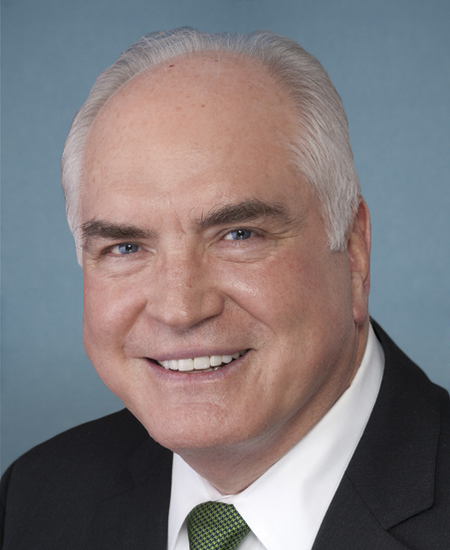
Rep. Mike Kelly
Sponsored bills
Maddy summaryHRES 1056 is a non-binding House resolution recognizing recent trilateral cooperation among the United States, Japan, and South Korea. It formally acknowledges specific collaborative efforts, including resumed summitry, joint military exercises, shared missile warning systems, economic partnerships, and coordinated responses to regional challenges like North Korea and crises in Sudan and Israel. The resolution does not create new policies or funding but expresses congressional support for strengthening this alliance framework. It highlights the importance of continued cooperation across diplomatic, security, and economic domains to promote stability in the Western Pacific. The resolution was introduced by multiple House members and referred to the Foreign Affairs Committee.
This resolution supports the designation of National FFA Week. It also (1) recognizes the important role of the National FFA Organization (Future Farmers of America) in developing the next generation of globally conscious leaders who will change the world; and (2) celebrates the 10th anniversary of the Give the Gift of Blue program, which has donated more than 17,000 FFA blue jackets to FFA members in need.
Maddy summaryThis resolution aims to block a rule issued by the National Highway Traffic Safety Administration (NHTSA) that sets new fuel efficiency standards for passenger cars, light trucks (starting in 2027), and heavy-duty pickup trucks/vans (starting in 2030). If passed, it would prevent this specific rule from taking effect by disapproving it under a congressional review process. The rule directly affects vehicle manufacturers by requiring them to meet these updated fuel economy targets for future model years. This is a procedural resolution, not a new law, focused solely on halting the implementation of the existing NHTSA rule.
Maddy summaryHR 9263 creates a new 30% federal tax credit for businesses investing in qualifying agricultural technology projects focused on specialty crops. It directly affects farmers and agribusinesses adopting precision agriculture (like GPS-guided equipment or soil sensors) or controlled environment agriculture (such as indoor vertical farms with climate control systems). The credit applies to qualified property like equipment, software, and infrastructure placed in service before 2035, with specific definitions for eligible technologies. Businesses cannot double-benefit by claiming this credit alongside certain existing grant programs for similar projects. The credit is available for investments completed after January 1, 2023, and integrates into the existing tax code via amendments to sections 48F and 6417.
Maddy summaryHRES 1371 is a House resolution condemning the Biden Administration and Vice President Kamala Harris for failing to secure the U.S. border. It cites statistics including over 9.7 million illegal immigration encounters since 2021 and the end of the Remain in Mexico program as evidence. As a symbolic resolution with no policy changes, it publicly expresses the House's disapproval of current border policies without altering any laws or enforcement actions.
Maddy summaryThis resolution establishes a House task force to investigate the July 13, 2024, attempted assassination of Donald J. Trump in Butler, Pennsylvania. The task force, composed of up to 11 members appointed by the Speaker (with minority leader input), will examine actions by federal, state, local, and private entities related to the incident and must issue a final report with recommendations by December 13, 2024. It has standing committee authority to hold hearings, issue subpoenas, and access relevant records, and will terminate 10 days after submitting its report. The task force directly affects the House of Representatives and the entities under investigation.
Maddy summaryThis is a commemorative resolution (HRES 1369) honoring Corey Comperatore, a volunteer firefighter, U.S. Army Reserves veteran, and community leader from Sarver, Pennsylvania, who died on July 13, 2024. The resolution formally mourns his passing and celebrates his life, noting he left behind his wife, Helen, and two daughters, Allyson and Kaylee. It recognizes his service to the Buffalo Township Volunteer Fire Department, his military service, and his role as a devoted member of Cabot Methodist Church. As a ceremonial resolution, it has no policy impact or direct effect on legislation or constituents beyond this formal acknowledgment.
Maddy summaryHJRES 148 is a joint resolution seeking to block a Treasury Department rule that would have modified clean vehicle tax credits. The rule, published in the Federal Register on May 6, 2024, aimed to restrict credits for vehicles using critical minerals or battery components sourced from "Foreign Entities of Concern" and to limit credit transfers. This resolution would nullify that rule, preventing it from taking effect and preserving the existing structure of the clean vehicle credit program under Sections 25E and 30D of the tax code. It directly affects electric vehicle buyers, manufacturers, and dealers participating in the federal tax credit program.
Maddy summaryThe Revitalizing Downtowns and Main Streets Act creates a 20% tax credit for converting non-residential buildings into affordable housing. To qualify, buildings must be at least 20 years old and nonresidential, with conversion costs exceeding 50% of the building's adjusted basis or $100,000. The converted housing must be rent-restricted for 30 years for residents earning 80% or less of area median income (60% in certain designated areas), with a $12 billion national credit limit. Special provisions apply for economically distressed areas and rural historic preservation projects, primarily affecting developers who convert vacant commercial buildings in downtown or main street areas into affordable housing.