

Protect Our Letter Carriers Act of 2025 This bill requires or authorizes certain actions related to the U.S. Postal Service (USPS). The bill requires the Department of Justice to appoint an assistant U.S. attorney in each judicial district to coordinate and supervise the investigation and prosecution of various crimes related to postal services (for example, assault on a postal service employee, breaking into a post office, or obstruction of mails). The bill also requires the U.S. Sentencing Commission to amend sentencing guidelines to provide that the assault or robbery of a postal employee shall be treated the same as the assault of a law enforcement officer. Additionally, the bill authorizes appropriations for the USPS to install high security collection boxes and replace older versions of the universal mailbox key with electronic versions.
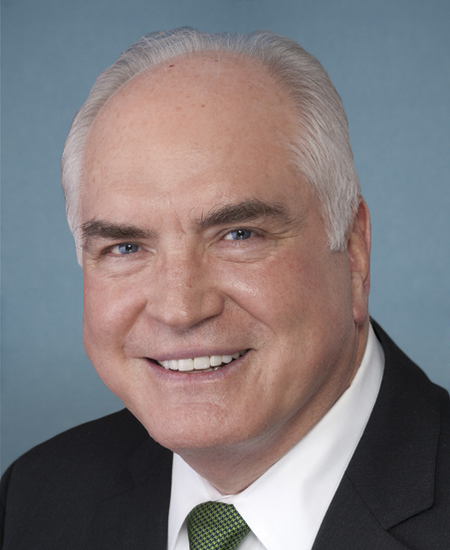
Rep. Mike Kelly
Sponsored bills
Maddy summaryHR 1046, the Marc Fischer Memorial Act, requires the Bureau of Prisons to implement digital mail scanning technology at all federal prisons to detect fentanyl and other synthetic drugs in inmate mail. It mandates a strategy within 90 days of an evaluation, including 100% scanning of all mail, digital copies of mail to inmates within 24 hours, and physical mail delivery within 30 days for non-contaminated items. The bill directly affects federal prison staff, inmates, and the Bureau of Prisons by aiming to reduce drug-related overdoses and alleviate staff workload tied to mail processing. Implementation must be completed within three years, with annual reports tracking detected drugs and strategy efficiency. The legislation focuses on concrete technological and procedural changes to enhance safety, referencing a successful pilot program at two facilities.
Maddy summaryThis bill permanently extends the New Markets Tax Credit (NMTC), a federal tax incentive that encourages private investment in low-income communities. It directly affects community development entities (CDEs) that channel capital into underserved neighborhoods for projects like housing, healthcare, and businesses. Key provisions include permanently extending the credit beyond 2025, adding annual inflation adjustments to the credit amount starting in 2026, and ensuring the credit isn't reduced by the alternative minimum tax for investments made after December 2024. The changes apply to taxable years beginning after December 2024, providing long-term stability for community development financing.
Maddy summaryThe Primary Care Enhancement Act of 2025 changes how certain primary care arrangements are treated for tax purposes. It defines "direct primary care service arrangements" as fixed-fee models (max $150/month per person, excluding prescriptions/anesthesia/labs) that won’t count as "health plans" under tax law. This allows the fees to be treated as deductible medical expenses and requires employers to report them on W-2 forms. The law applies to taxable years starting after 2025, affecting patients in these arrangements, employers offering them, and tax filing processes.
Fair Access to Banking Act This bill places restrictions on certain banks, credit unions, and payment card networks if they refuse to do business with a person who complies with the law. Restrictions include prohibiting the use of electronic funds transfer systems and lending programs, termination of an institution's depository insurance, and specified civil penalties. Banks and other specified financial institutions are allowed to deny financial services to a person only if the denial is justified by a documented failure of that person to meet quantitative, impartial, risk-based standards established in advance by the institution. This justification may not be based upon reputational risks to the institution. The bill establishes the right for a person to bring a civil action for a violation of this bill.
Maddy summaryHR 1024, the US-Kazakhstan Trade Modernization Act, terminates the application of Title IV of the Trade Act of 1974 to Kazakhstan. This means the U.S. will no longer apply special trade restrictions tied to Kazakhstan's emigration policies, as Kazakhstan has been found compliant since 1997. The bill allows the President to determine that Title IV no longer applies and extend normal trade relations (NTR) treatment to Kazakhstan's products. As a result, Kazakhstan's exports to the U.S. will be subject to standard U.S. trade rules rather than the specific Title IV provisions.
Maddy summaryHR 925, the "Dismantle DEI Act of 2025," would eliminate diversity, equity, and inclusion (DEI) programs across federal government operations. The bill requires federal agencies to close DEI offices, rescind related executive orders, and prohibit the use of federal funds for DEI training, offices, or initiatives. It defines "prohibited diversity, equity, or inclusion practice" as any activity that discriminates based on race, ethnicity, religion, biological sex, or national origin, or requires employees to complete training asserting that certain groups are inherently superior or inferior. The legislation also prohibits requiring employees to sign statements about race, ethnicity, or gender, and establishes private lawsuits for violations with potential damages of $1,000 per violation per day. This bill would directly affect federal agencies, contractors, grantees, and advisory committees receiving federal funding.
Maddy summaryThe Student Empowerment Act (HR 939) expands the use of 529 college savings plans to cover more K-12 education costs. It allows families to use these tax-advantaged savings for tuition, curriculum materials, books, online learning, approved tutoring (by licensed instructors), standardized test fees, dual enrollment, and educational therapies for students with disabilities. Homeschooling expenses are included if they meet state requirements. This change applies to distributions made after the bill's enactment, enabling tax-free savings for a broader range of elementary and secondary education expenses.
Maddy summaryHR 833 creates a federal tax credit for individuals and corporations that contribute to scholarship granting organizations (SGOs) providing scholarships for elementary and secondary education. The credit allows taxpayers to deduct up to 10% of their adjusted gross income or $5,000 (whichever is less) for contributions to SGOs serving students from households with income up to 300% of the area median income. The bill establishes a $10 billion annual cap on the tax credit program, requires SGOs to verify student eligibility and maintain separate accounts, and prohibits government control over SGOs or private schools. It ensures scholarships can be used at public, private, or religious schools without discrimination based on religious character. The tax credit would be available for contributions made after December 31, 2025, with annual volume cap increases based on usage.
Maddy summaryHCONRES 4 is a symbolic resolution expressing Congress's support for tax-exempt fraternal benefit societies (like mutual aid organizations). It recognizes these groups, which have over 7 million members nationwide, as historically and currently providing critical community benefits - including life/health insurance, charitable work, and volunteer services - valued at over $3.8 billion annually. The resolution affirms that their tax-exempt status under Section 501(c)(8) of the Internal Revenue Code remains beneficial and should continue to be promoted. This is a non-binding expression of congressional sentiment, not a policy change.