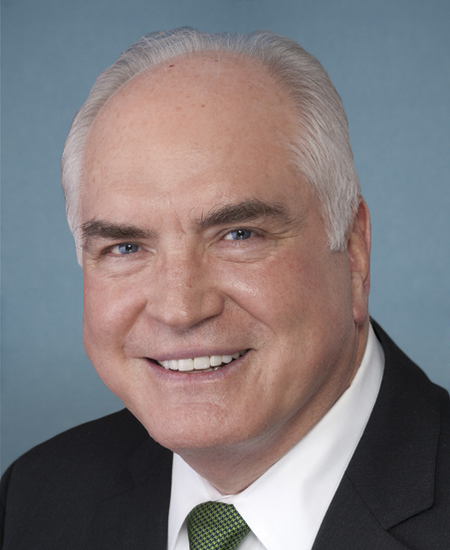
Photo of Mike Kelly
R United States House · District 16 · Pennsylvania On the 2026 ballot

Rep. Mike Kelly

Compare
Total votes
2,837
all sessions
Attendance
95%
150 missed
Near the chamber average
With party
95%
of cast votes
Higher than 86% of chamber peers
Bipartisan score
3%
crosses aisle rarely
Lower than 87% of chamber peers
Sponsored
1,026
bills & resolutions
Near the chamber average
Committees
3
assignments
1,026 bills and resolutions

Sponsored bills

Total
1,026
Primary
86
Co-sponsor
940
This page
1,026
matching current filters
Co-sponsor HR 1227
In committee · Indiana House · Co-sponsor
Alternatives to PAIN Act

Alternatives to Prevent Addiction In the Nation Act or the Alternatives to PAIN Act This bill reduces cost-sharing and prohibits the imposition of certain utilization requirements under the Medicare prescription drug benefit for certain non-opioid pain management drugs. Specifically, the bill requires such drugs to be covered without a deductible and to be placed on the lowest cost-sharing tier (if any). The bill also prohibits the imposition of prior authorization requirements (i.e., requiring prior approval from a plan) or step therapy requirements (i.e., requiring the use of alternative drugs before a drug is covered under a plan) with respect to such drugs.

In committee Feb 12, 2025 1 co-sponsor
Co-sponsor HR 1269
In committee · Indiana House · Co-sponsor
Honoring Our Fallen Heroes Act of 2025

Maddy summaryHR 1269, the Honoring Our Fallen Heroes Act of 2025, expands benefits for public safety officers (like police and firefighters) who develop certain cancers linked to their work. It adds 22 specific cancers - including lung, mesothelioma, and breast cancer - to the list of conditions presumed to be "exposure-related" and sustained in the line of duty. This presumption applies if the officer served at least 5 years, was diagnosed with the cancer within 15 years after last active duty, and the cancer directly caused death or permanent disability. The bill also establishes a process for adding new cancers every 3 years based on medical evidence from agencies like NIOSH, and allows claims to be filed within 3 years of the law's enactment.

In committee Feb 12, 2025 1 co-sponsor
Co-sponsor HR 1232
In committee · Indiana House · Co-sponsor
National Right-to-Work Act

Maddy summaryHR 1232, the National Right-to-Work Act, would make union membership voluntary for workers in most private-sector jobs by removing legal requirements for employees to join a union or pay dues as a condition of employment. It directly affects workers in unionized workplaces covered by the National Labor Relations Act (including most private employers) and railroad workers covered by the Railway Labor Act. The key change eliminates provisions that allowed "union security agreements" (requiring dues or membership), meaning workers could no longer be forced to pay union fees to keep their jobs. This bill does not change other labor rights or create new programs - it only modifies existing laws to allow workers to opt out of union membership and financial obligations.

In committee Feb 12, 2025 1 co-sponsor
Co-sponsor HR 1200
In committee · Indiana House · Co-sponsor
Freight RAILCAR Act of 2025

Maddy summaryThis bill creates a 10% tax credit for businesses that modernize or replace freight railcars, directly affecting railcar owners and manufacturers. To qualify, railcars must meet an 8% improvement standard in capacity or fuel efficiency, be built or modernized after enactment, and replace two scrapped railcars. The credit is limited to 1,000 qualified railcars per business annually, with reporting requirements for the Treasury to track claimed credits, scrapped railcars, and new railcar production. The credit applies to railcars placed in service after December 2024, ending three years after enactment.

In committee Feb 11, 2025 1 co-sponsor
Co-sponsor HR 1177
In committee · Indiana House · Co-sponsor
Improve and Enhance the Work Opportunity Tax Credit Act

Maddy summaryHR 1177, the "Improve and Enhance the Work Opportunity Tax Credit Act," increases tax credits for employers hiring from targeted groups. It raises the credit rate from 40% to 50% for qualified first-year wages up to $6,000, plus 50% for wages between $6,000 and $12,000. The bill also creates higher credit limits for veterans (up to $24,000/$48,000), removes an age cap for Supplemental Nutrition Assistance Program (SNAP) recipients, and adjusts rules for summer youth workers and long-term family assistance recipients. These changes apply to employees hired after December 31, 2024, directly benefiting employers who hire from these eligible groups.

In committee Feb 10, 2025 1 co-sponsor
Co-sponsor HR 1175
In committee · Indiana House · Co-sponsor
Blind Americans Return to Work Act of 2025

Blind Americans Return to Work Act of 2025 This bill requires the Social Security Administration to carry out a demonstration project during which blind Social Security Disability Insurance (SSDI) beneficiaries receive reduced benefits commensurate with income above certain thresholds. Under current law, only individuals who earn under a specified monthly income, known as the substantial gainful activity (SGA) threshold, are considered disabled and thereby eligible for SSDI benefits. For blind workers, this limit is $2,700 per month in 2025. SSDI beneficiaries may earn beyond the SGA threshold for a limited period of time, known as the trial work period , before their benefits are suspended and ultimately terminate. The bill establishes a 20-year demonstration project during which individuals who are entitled to SSDI benefits by reason of blindness and who earn above the SGA threshold continue to receive benefits at an amount gradually reduced commensurate with their earnings beyond a specified amount. During this period, blind workers’ SSDI benefits must be reduced by $1 for every $2 that a worker earns above the sum of (1) the SGA threshold, and (2) the worker’s expenses reasonably attributable to their work. The SGA threshold may not be used to determine whether an individual is disabled during this period, and blind workers’ SSDI benefits may not be terminated due to work-related earnings. The trial work period also must not apply.  After 10 years, affected beneficiaries may opt out of the modified benefits structure.

In committee Feb 10, 2025 1 co-sponsor
Co-sponsor HR 1130
In committee · Indiana House · Co-sponsor
Bonus Tax Relief for America’s Seniors Act

Maddy summaryThis bill increases the additional standard deduction for seniors aged 65 or older from $600 to $5,000 for tax years beginning after December 31, 2025. It also requires annual inflation adjustments to the $5,000 amount starting in 2026, using the cost-of-living adjustment formula. The change directly affects seniors filing taxes who qualify for the standard deduction, lowering their taxable income. The provision applies to all eligible seniors regardless of income level or filing status.

In committee Feb 7, 2025 1 co-sponsor
Co-sponsor HR 1126
In committee · Indiana House · Co-sponsor
East Palestine Health Impact Monitoring Act of 2025

Maddy summaryThis bill funds a long-term health study on the 2023 train derailment in East Palestine, Ohio, which released chemicals through venting and burning. It directs the Health Secretary to award grants to university consortia with community ties to study residents' health impacts over time. The study must report progress within two years and final results within a year of publication, with Congress receiving both updates. Funding is authorized for fiscal year 2026 through 2030 to support this research.

In committee Feb 7, 2025 1 co-sponsor
Co-sponsor HR 1131
In committee · Indiana House · Co-sponsor
Family Farm and Small Business Exemption Act

Maddy summaryHR 1131 exempts certain family farms and small businesses from being counted as assets when calculating financial need for federal student aid under the Higher Education Act. Specifically, it amends the law to exclude the net value of a family farm where the family resides and small businesses (with ≤100 employees) owned by the family from need analysis calculations. This change directly affects students from qualifying family farm or small business households when applying for federal financial aid. The exemption applies to need analysis conducted for award years beginning after the bill's enactment date. The bill modifies Section 480(f)(2) of the Higher Education Act of 1965 to implement this policy change.

In committee Feb 7, 2025 1 co-sponsor
Co-sponsor HR 1151
In committee · Indiana House · Co-sponsor
Freedom to Invest in Tomorrow’s Workforce Act

Maddy summaryThis bill expands 529 college savings account flexibility by allowing funds to cover costs for industry-recognized postsecondary credentials, not just traditional degrees. It defines "qualified expenses" to include tuition/fees for recognized credential programs (like certifications or apprenticeships), required testing fees, and continuing education needed to maintain credentials. To qualify, programs must meet specific criteria, such as appearing on state lists under the Workforce Innovation and Opportunity Act or being listed in VA or Defense directories. The change applies to 529 distributions made after the law's enactment, giving families more options to use these accounts for job-focused training.

In committee Feb 7, 2025 1 co-sponsor
Showing 261 to 270 of 1,026 bills
Previous 1 … 26 27 28 … 103 Next