

Maddy summaryHR 6046, the Standing Against Houthi Aggression Act, requires the Secretary of State to designate Ansarallah (the Houthis) as a Foreign Terrorist Organization within 90 days of enactment and mandates the President to impose sanctions under existing authorities (Executive Orders 13224 and 13780) against Ansarallah and its members, agents, or affiliates. The bill directly affects Ansarallah and any foreign entities linked to it by triggering U.S. sanctions. Key provisions set strict 90-day deadlines for both the designation and sanctions implementation. The law focuses on reversing a prior designation revocation and enforcing existing legal mechanisms against the group.
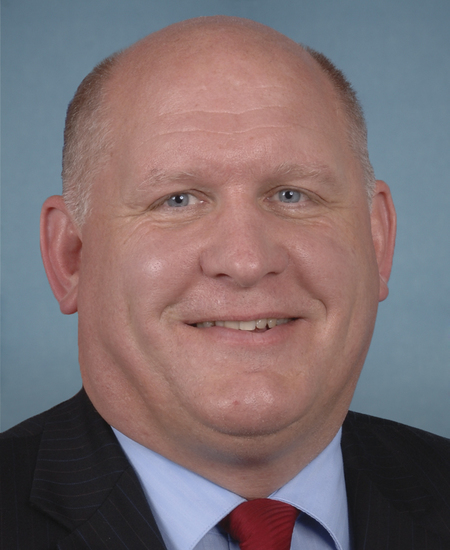
Rep. Glenn Thompson
Sponsored bills
Maddy summaryHRES 1148 is a resolution passed by the U.S. House of Representatives that condemns the Iranian government for supporting terrorism, regional proxy conflicts, and internal suppression of dissent - including its crackdown on protests following Mahsa Amini's death in 2022. It specifically calls for maintaining sanctions against Iran, supporting the Iranian Resistance's Ten-Point Plan (which advocates for a democratic, secular, nonnuclear Iran), and protecting Iranian political refugees in Albania. The resolution also affirms the Iranian people's right to self-determination under international law and urges the U.S. to recognize their struggle for freedom. As a non-binding resolution, it does not create new laws but formally expresses congressional stance.
Maddy summary# Summary of Proposed WIOA Amendment This document proposes significant amendments to the Workforce Innovation and Opportunity Act (WIOA), with key changes including: 1. **YouthBuild Program Enhancement**: - Increased annual funding authorization to $108,150,000 - New performance reporting requirements - Added focus on opioid-related training and services 2. **New Reentry Employment Opportunities Program** (Section 172): - Creates a competitive grant program for justice-involved individuals - Requires evidence-based practices and performance metrics - Includes specific requirements for recidivism reduction - Defines "eligible adult" (age 25+) and "eligible youth" (age 14-24) 3. **Strengthening Community Colleges Program** (Section 173): - Creates new grant program with $65,000,000 annual funding - Requires industry partnerships for workforce development - Mandates evidence-based program design - Focuses on recognized postsecondary credentials and career pathways 4. **Performance Accountability System**: - Enhanced data collection and reporting requirements - New requirement for making data available in "linked, open, and interoperable data formats" - More detailed performance metrics for all programs 5. **Funding Increases**: - Increased authorizations for multiple programs: - Native American programs: $61,800,000 annually - Migrant and seasonal farmworker programs: $100,317,900 annually - Technical assistance: $5,000,000 annually - Evaluations and research: $12,720,000 annually 6. **Administrative Changes**: - New consultation requirement with labor organizations for on-the-job training - Revised definitions (e.g., "English language learners" changed to "English learners") - New requirements for public reporting of matching funds 7. **Data Infrastructure**: - New "Workforce Data Infrastructure" provisions (Section 174) - Requirements for interoperable data systems - Focus on credential registries and data sharing The proposed amendment emphasizes data-driven decision making, industry-aligned training, performance accountability, and expanded opportunities for underserved populations including justice-involved individuals, opioid treatment participants, and individuals with barriers to employment.
Maddy summaryH.J.Res. 116 seeks to block a Department of Labor rule finalized on January 10, 2024, which aimed to clarify how businesses classify workers as employees or independent contractors under the Fair Labor Standards Act (FLSA). If passed, this resolution would prevent the rule from taking effect, directly affecting businesses that use independent contractors and their workers, who rely on FLSA protections for minimum wage and overtime pay. The bill uses a specific congressional process (under Chapter 8 of Title 5, U.S. Code) to disapprove the rule, rather than creating new policy. This action would maintain the existing classification standards until a new rule is established.
Maddy summaryHR 7808, the EARLY Minds Act, amends the Public Health Service Act to require states receiving federal mental health funds to include evidence-based prevention and early intervention strategies for children and adolescents in their state plans. It allows states to use up to 5% of their annual mental health allotment to support these programs, which aim to prevent, delay, or reduce the severity of mental health issues before they become serious. States must report biennially to Congress by 2025 on the programs they implement, including demographics served, outcomes like reduced care access delays, and how programs lessen the onset of serious mental illness. The bill directly affects states administering federal mental health funds and targets youth populations aged 0-18.
Maddy summaryThis bill freezes new energy efficiency standards for distribution transformers. It prohibits the Energy Secretary from proposing or implementing any rules different from the 2013 standards (published April 18, 2013) for five years after the bill's enactment. The law directly affects the Department of Energy and transformer manufacturers by maintaining existing efficiency requirements. It ensures no changes to the 2013 rule during this five-year period.
Maddy summaryHR 7801, the Sultana Steamboat Disaster Commemorative Coin Act of 2024, authorizes the U.S. Mint to produce commemorative coins honoring the 1865 Sultana steamboat disaster - the worst maritime disaster in U.S. history, which killed nearly 1,200 people. The bill specifies three coin types ($5 gold, $1 silver, and half-dollar clad) to be minted between January 1, 2027, and December 31, 2027, with surcharges from sales directed to the Sultana Historical Preservation Society for museum development and artifact preservation. The coins will be sold at face value plus surcharges ($5-$35 per coin), and the funds must support constructing a museum, exhibits, and preserving disaster-related history. This bill does not create new laws but enables commemorative coin sales to fund a specific historical preservation effort.
Maddy summaryHR 7810, the Clock Hour Program Student Protection Act, sets a new limit on instructional hours for certain vocational training programs preparing students for recognized professions (like nursing or cosmetology). It requires that such programs, which already meet state minimums, cannot exceed 150% of either the state's or a federal agency's minimum hour requirement for that profession. This rule applies to determine eligibility for federal student aid under the Higher Education Act. The law takes effect July 1, 2024, for the 2024-2025 academic year and beyond.
Maddy summaryHR 7504, the Rural Veterans Transportation to Care Act, expands a VA transportation grant program to specifically assist rural veterans and tribal organizations. The bill modifies eligibility by adding "rural or highly rural" to program criteria, allows tribal organizations to apply for grants, and sets a maximum grant amount of $60,000 (up to $80,000 for ADA-compliant vehicles). It defines "rural" using USDA's RUCA system and "tribal organization" per the Indian Self-Determination Act, ensuring grants directly support transportation access for veterans in remote areas and tribal communities.
Maddy summaryThe GO Ag Act (HR 7731) creates a federal grant program to fund new agricultural education programs in secondary schools. It provides competitive grants of up to $100,000 per applicant for 5 years, requiring schools to demonstrate how programs will serve all students - including special populations - and align with existing career education standards. Grants cover curriculum development, equipment, and materials but cannot fund programs already operating or prepare students exclusively for one employer. The bill authorizes $5 million through fiscal year 2027 to support these new initiatives.