

Maddy summaryThis bill designates the U.S. Postal Service facility at 101 South 8th Street in Lebanon, Pennsylvania, as the "Lieutenant William D. Lebo Post Office Building." It requires all federal references - including laws, maps, and documents - to use this new name for the location. The bill has no policy provisions or financial impact; it solely changes the facility's official name. It was passed by Congress and signed into law on May 7, 2024.
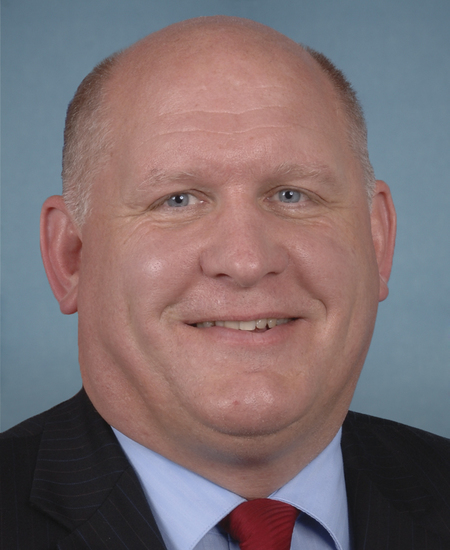
Rep. Glenn Thompson
Sponsored bills
Maddy summaryHRES 1197 is a non-binding House resolution recognizing the contributions of elementary and secondary school teachers. It formally thanks teachers for their role in building civic, cultural, and economic well-being, aligning with National Teacher Appreciation Week (May 6-10, 2024). The resolution encourages students, parents, school leaders, and officials to acknowledge teachers during this week. It does not create new programs, allocate funding, or impose obligations on schools or educators. As a symbolic gesture, it directly addresses the teaching profession without altering any laws or policies.
Maddy summaryThis bill amends the 340B drug discount program to include rural emergency hospitals as eligible participants. Specifically, it adds these hospitals - owned by government, operating as non-profits with governmental powers, or contracted to serve low-income patients - to the list of covered entities under the program. The change directly affects rural emergency hospitals that provide care to low-income communities but previously couldn't access the discounted drug pricing. This expands access to affordable medications for these facilities and their patients without altering the core 340B program structure.
Maddy summaryHJRES 134 is a joint resolution seeking congressional disapproval of a Department of Labor rule titled "Improving Protections for Workers in Temporary Agricultural Employment." The bill targets the specific rule published in the Federal Register (89 Fed. Reg. 33898, April 29, 2024) that aimed to strengthen worker protections for temporary agricultural employees. If passed, this resolution would block the rule from taking effect, preventing the Department of Labor's new regulations from being implemented. The measure directly affects the rule's implementation, not the workers or employers it was designed to protect.
Maddy summaryThis bill requires federal agencies to publish detailed early notices about new regulations on their websites within 7 days of receiving an agency rulemaking ID number. The notices must explain the problem the rule addresses, justify why it's necessary (including whether alternatives like market incentives were considered), and invite public input on cost-effective solutions. Agencies must also provide these notices to the Comptroller General, who will create a public database and submit annual compliance reports to Congress. The bill directly affects all federal agencies developing new regulations and aims to increase transparency and public engagement in the regulatory process.
Maddy summaryHR 8170, the ARC Development Act of 2024, modifies a federal highway mileage rule to provide flexibility for Appalachian development projects. It allows the Appalachian Regional Commission to approve waivers exempting projects from mileage limits if their approved route exceeds the standard limit, as determined by environmental review processes. Any approved excess mileage counts toward the total eligible mileage under the program. This directly affects participating Appalachian states and their highway development projects seeking federal assistance under the Appalachian Regional Commission's program.
Maddy summaryHR 615, the Protecting Access for Hunters and Anglers Act of 2023, prevents federal agencies from banning lead ammunition or tackle on public lands and waters managed for hunting or fishing, except in specific cases. The bill allows exceptions only if a state wildlife department confirms lead use is harming local wildlife, and the federal action aligns with state law or state agency approval. It directly affects hunters and anglers using federal lands and waters, ensuring they can continue using lead products unless a state verifies a local wildlife issue requiring a ban. The law requires federal agencies to justify any exception with state data and policy compliance in official notices.
Maddy summaryHR 8147 repeals the Corporate Transparency Act, which required certain businesses (typically those with more than 20 employees) to report beneficial ownership details to the Treasury Department. This bill eliminates the requirement for companies to disclose who ultimately owns or controls them, directly affecting business owners and financial institutions that previously submitted this information. The bill also makes minor technical changes to Title 31 of the U.S. Code to remove references to the repealed provisions. The repeal would end the existing financial transparency reporting obligation for covered entities.
Maddy summaryThis bill requires public colleges and universities that receive federal student aid to adopt and disclose free speech policies that protect students from political discrimination. It prohibits schools from requiring applicants or faculty to pledge support for specific political views or diversity initiatives, and mandates clear policies about speech, association, and religion. The bill also protects student organizations' rights to form single-sex groups, receive funding without viewpoint discrimination, and have appeal processes if denied recognition. Schools that fail to comply could lose eligibility for federal student aid programs.
Maddy summaryHR 8041, the Driving Forward Act, extends a temporary exemption from pre-trip safety checks for school bus drivers operating within states until November 2027. This directly affects school bus drivers and state transportation agencies responsible for implementing the exemption. The bill requires the Transportation Secretary to seek public input on making the exemption permanent after 120 days and allows states to use existing highway funds to cover associated costs. It makes no changes to driver qualification standards but delays a requirement that would have otherwise taken effect.