

Maddy summaryHJRES 152 is a congressional resolution seeking to block an Environmental Protection Agency (EPA) rule on managing coal ash waste from power plants, specifically for older disposal ponds (legacy CCR surface impoundments). The rule, published on May 8, 2024, established requirements for electric utilities to handle coal ash, including safety standards for existing disposal sites. If passed, this resolution would prevent the EPA rule from taking effect, removing the compliance requirements for utilities. This directly affects electric utilities that manage coal ash and the EPA's regulatory authority over waste disposal practices.
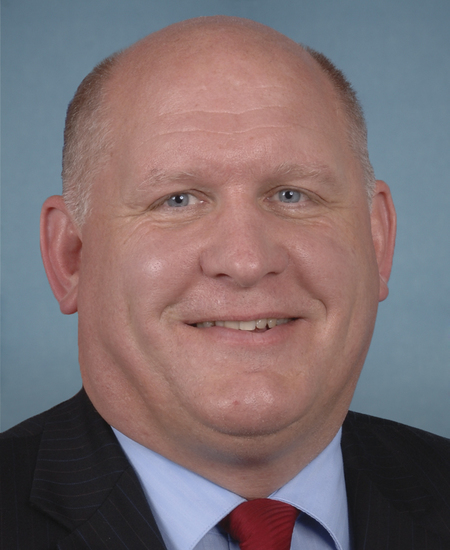
Rep. Glenn Thompson
Sponsored bills
Maddy summaryThis resolution (HRES 1252) honors emergency medical services (EMS) personnel across the United States for their critical work. It recognizes their 24/7 service in rural and underserved areas, their role in stabilizing and transporting patients during emergencies, and their dedication to public health care. The resolution specifically expresses appreciation for EMS workers during Emergency Medical Services Week (May 19-25, 2024). As a ceremonial resolution, it contains no new policies, funding, or legal requirements - only symbolic recognition of their contributions.
Maddy summary# Summary of the Farm, Food, and National Security Act of 2024 (Conservation Provisions) This legislation amends the Food Security Act of 1985 to establish and reform multiple conservation programs, with the primary goals of: 1. **Strengthening conservation easement programs**: - Creating a new Forest Conservation Easement Program (Subtitle I) - Amending Agricultural Land Easement Program (Section 1265B) - Enhancing Wetland Reserve Easement Program (Section 1265C) 2. **Establishing the Regional Conservation Partnership Program (Section 1271)**: - Streamlining partnership agreements with eligible partners - Allowing adjustments to covered program requirements - Creating a simplified process for technical assistance 3. **Key improvements to conservation programs**: - Increased flexibility in easement terms and conditions - Enhanced support for socially disadvantaged farmers and ranchers - New requirements for technical assistance through third-party providers - Updated procedures for easement management, monitoring, and enforcement - New provisions for habitat connectivity and wildlife corridors 4. **Administrative improvements**: - Streamlined certification processes for third-party technical providers - New Office of Conservation Innovation to drive innovation in conservation practices - Updated review processes for conservation practice standards - Enhanced transparency requirements for third-party provider utilization 5. **New funding mechanisms**: - Specific funding allocations for stewardship activities - Requirements for annual reports on program implementation - New reporting requirements for conservation program performance The legislation emphasizes working forests, habitat connectivity, climate resilience, and increased support for socially disadvantaged landowners while streamlining administrative processes to improve program effectiveness and accessibility.
Maddy summaryThis bill reauthorizes the National Alzheimer's Project Act through 2035 (extending the previous deadline of 2025) and adds new requirements to promote healthy aging and reduce Alzheimer’s risk factors. It mandates the program to provide information on healthy behaviors that may lower cognitive decline risk and expands the advisory group to include representatives from agencies like the Department of Justice, FEMA, and Social Security Administration, plus experts with diverse clinical trial experience. The bill directly affects Alzheimer’s research, care programs, and the federal advisory group overseeing national efforts. Key changes include requiring annual evaluations instead of initial ones and adding a focus on reducing health disparities in Alzheimer’s initiatives.
Maddy summaryHRES 1255 is a non-binding House resolution introduced on May 23, 2024, that calls on all Americans to observe Memorial Day 2024 as a day of remembrance for military personnel who died in service. The resolution specifically honors "the men and women of the Armed Forces who have died in the pursuit of freedom and peace" and urges the public to demonstrate appreciation for their sacrifices. It does not create new laws or policies but serves as a symbolic expression of national gratitude, emphasizing respect for those who died while defending democratic values. The resolution was co-sponsored by multiple House members and aligns with the traditional observance of Memorial Day.
Maddy summaryThe Help Grandfamilies Prevent Child Abuse Act amends the Child Abuse Prevention and Treatment Act (CAPTA) to better support children raised by kinship caregivers - such as grandparents or relatives caring for children without their parents, both inside and outside the foster care system. Key provisions require states to prioritize placing children with relatives when possible, provide training for kinship caregivers on trauma and substance use, and coordinate with a national support network to share evidence-based practices. States must also track and report on children placed with relatives outside foster care to ensure they receive necessary services. These changes aim to strengthen kinship care support within the child welfare system without altering funding or creating new programs.
Maddy summaryThis bill amends the Law Enforcement Officers Safety Act (LEOSA) to expand where current and retired law enforcement officers can carry concealed firearms. It specifically allows qualified officers to carry in Federal facilities like post offices and courthouses (previously restricted), clarifies they may carry on public property and transportation, and updates firearms training requirements to accept certification from any state-certified instructor. The key change requires officers to meet recent firearms training standards (using flexible state-based criteria), rather than relying solely on their former agency's standards. This directly affects retired officers seeking to carry in more public spaces and federal buildings without needing prior agency certification.
Maddy summaryHR 8383, the Rural Obstetrics Readiness Act, creates a federal program to improve emergency obstetric care in rural areas lacking dedicated obstetric units. It authorizes $5 million (2025-2027) for training programs that teach non-obstetric rural healthcare providers to handle emergencies like severe bleeding, high blood pressure, or mental health crises during pregnancy or postpartum. The bill also allocates $15 million (2025-2028) for grants to rural hospitals and consortia to purchase equipment, hire staff, integrate training, and develop transfer protocols for obstetric emergencies. Additionally, it funds a $5 million teleconsultation pilot (2025-2028) to connect rural facilities with maternal health specialists via telehealth for urgent consultations. The program directly supports rural health facilities in designated maternity care shortage areas, aiming to expand access to emergency obstetric care.
Maddy summaryHRES 1226 is a non-binding resolution honoring 282 law enforcement officers killed in the line of duty during 2023, listed by name in the resolution. It formally acknowledges their sacrifice, expresses unwavering support for current officers, and recognizes the need for adequate resources to protect them. The resolution does not create new laws or policies but serves as a ceremonial tribute to memorialize fallen officers and support their families, aligning with existing National Police Week observances established since 1962.
Maddy summaryHJRES 98 is a congressional resolution seeking to block a National Labor Relations Board (NLRB) rule that defined how businesses are considered "joint employers" for labor law purposes. The bill targets the NLRB's October 2023 rule (88 Fed. Reg. 73946), which would have changed how companies like franchisors or staffing agencies are held responsible for workers' rights. If passed, this resolution would cancel the rule, directly affecting businesses managing multiple employer relationships and labor organizations enforcing workplace standards. The measure uses a standard process under federal law to disapprove an agency rule, not creating new policy but reversing an existing regulation.