

Maddy summaryHRES 920 is a ceremonial resolution celebrating the 50th anniversary of the Individuals with Disabilities Education Act (IDEA) on November 29, 2025. It recognizes IDEA’s historical impact - establishing the right to free, appropriate public education in the least restrictive environment for children with disabilities - and notes how it transformed access to education after over 1 million children were previously excluded from schools. The resolution does not create new policy or funding; it solely commemorates IDEA’s legacy, honors the students and families it has served, and acknowledges educators and advocates who advanced its implementation. This is a symbolic gesture with no direct effect on current law or services.
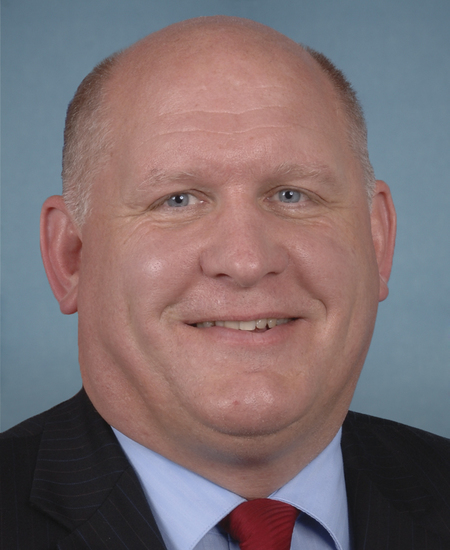
Rep. Glenn Thompson
Sponsored bills
Maddy summaryHR 5731, the School Food Modernization Act, provides funding to help schools upgrade facilities and equipment for healthier meal programs. It authorizes $300 million in loan guarantees (covering up to 80% of costs) and $35 million annually for grants to support kitchen renovations, equipment purchases, and food safety improvements for local schools and tribal organizations. The bill also allocates $10 million yearly to fund training programs for school food service staff, developed by third-party organizations, to meet nutrition standards. These provisions directly affect public school districts, tribal schools, and their food service operations by enabling infrastructure upgrades and staff training.
Give Kids a Chance Act of 2025 This bill expands the Food and Drug Administration’s (FDA’s) authority with respect to research on rare pediatric diseases, including by permitting the FDA to take enforcement action against drug sponsors that fail to satisfy pediatric study requirements and by reauthorizing programs that support pediatric research. Specifically, the bill modifies requirements relating to molecularly targeted pediatric cancer investigations to permit research on new drugs in combination with active ingredients that have already been approved, provided certain conditions are met; permits the FDA to take enforcement action against drug sponsors that fail to comply with pediatric study requirements, if such sponsors demonstrated a lack of due diligence in satisfying the requirement; renews the FDA’s authority to award priority review vouchers to sponsors of new products intended to treat rare pediatric diseases through September 30, 2029; and reauthorizes through FY2027 certain funding for the National Institutes of Health to support priority pediatric research. The bill also provides statutory authority for the FDA’s interpretation of the orphan drug exclusivity period. The bill specifies, consistent with FDA regulations, that the seven-year market exclusivity period for drugs for rare diseases or conditions (i.e., orphan drugs) prohibits the approval of the same drug for the same approved use or indication with respect to the disease or condition. (In Catalyst Pharmaceuticals, Inc. v. Becerra , a court rejected the FDA’s interpretation and held that orphan drug exclusivity extends to all uses or indications for the disease or condition.)
Maddy summaryThis bill allows workers aged 50 or older to directly roll over employer retirement contributions (from 401(k) plans) into an individual retirement annuity without triggering immediate taxes or penalties. It requires retirement plan administrators to provide clear, plain-language written explanations about rollover rules, including a 30-day review period, tax implications (like the 10% early withdrawal penalty), and what types of distributions cannot be rolled over (such as required minimum distributions). The rules apply to taxable years starting after December 31, 2025, and aim to simplify the process for older workers changing jobs or managing retirement funds. It directly affects workers aged 50+ and retirement plan administrators who must comply with the new disclosure standards.
Maddy summaryThis bill corrects an error in the distribution of funds to specific 9/11-related claimants. It ensures "Havlish Settling Judgment Creditors" (a group who settled claims through a 2014 court case related to the 9/11 attacks) receive funds previously withheld from them and can participate in future payments like other eligible claimants. The key mechanism releases all withheld funds held in escrow for these creditors and explicitly states they are eligible for future payments under the same rules as other claimants. The changes apply retroactively from December 29, 2022.
Maddy summaryHR 6243, the Semiquincentennial Congressional Time Capsule Act, directs the Architect of the Capitol to create and bury a time capsule commemorating the U.S. 250th anniversary. The capsule, to be sealed in the Capitol Visitor Center by July 4, 2026, will contain a joint letter from congressional leadership, commemorative coins, and other durable items (like metal or archival paper) that won’t degrade. It will remain sealed until July 4, 2276, when the 244th Congress will receive and decide how to preserve its contents. This is a ceremonial act with no policy impact, solely marking the semiquincentennial anniversary.
Maddy summaryHRES 896 is a symbolic resolution (not a law) expressing the House's support for designating November 2025 as "National Career Development Month." It does not create new policies or affect specific groups directly; instead, it affirms the value of career development services and encourages the public to utilize career professionals. The resolution cites statistics showing most Americans value career counseling (85%) but few have used it (13%), and it urges workers, educators, and employers to promote career development. This is a non-binding expression of support with no funding or regulatory changes.
Maddy summaryThis bill changes how Medicare pays doctors and healthcare providers after 2025. It replaces the current two-part payment system with a single annual update based on the Medicare Economic Index (MEI), which tracks costs providers face. Starting in 2026, the payment rate for physician services will automatically adjust each year using the MEI, rather than separate calculations. This directly affects doctors, clinics, and other Medicare providers who receive payments under the physician fee schedule.
Maddy summaryHR 6137 would create a new separate job code for "direct support professionals" (DSPs) within the federal Standard Occupational Classification system. This change aims to better recognize DSPs - who provide daily support for people with intellectual and developmental disabilities (like helping with daily living, community participation, and goal-setting) - as distinct from other roles like home health aides. The bill requires the Office of Management and Budget to consider this revision during the next system update, without authorizing new funding. It addresses data gaps caused by high turnover rates (39% nationally) in DSP hiring and retention.
United States Grain Standards Reauthorization Act of 2025 This bill reauthorizes the U.S. Grain Standards Act (USGSA) through FY2030 and modifies authorities under the act. Under the USGSA, the Department of Agriculture (USDA) establishes official marketing or quality standards for certain grains (e.g., corn, soybeans, and wheat), and the Federal Grain Inspection Service (FGIS) conducts and supervises official grain inspections and weighing services. Most provisions of the act are permanently authorized; however, several expire on September 30, 2025. Specifically, the bill reauthorizes through FY2030 FGIS's authority to collect fees for required federal supervision of inspections and weighing services; the 30% cap on administrative and supervisory costs which may be incurred for services performed, with exceptions; standardization and compliance activities and monitoring of foreign ports; and the Grain Inspection Advisory Committee. The costs associated with equipment and the development of technology are excluded from the current 30% cap for administrative and supervisory costs for services. The bill also includes a technical change that specifies fees are part of a trust fund , instead of the current fund . Under the bill, USDA may inspect domestic non-export grain that is loaded or unloaded at an export port, as needed. Further, USDA must prioritize the adoption of improved grain grading technology to provide for efficient, accurate, and consistent grading of grain. Additional revisions include allowing USDA to work in cooperation with official agencies in a continuing research program, expanding reporting requirements, and allowing an advisory committee member to serve until a new member is appointed.