

Maddy summaryThis bill allows groups of small businesses or self-employed individuals to form a single health plan that treats all members as one employer for coverage purposes. It directly affects small business associations and self-employed people who can join such groups to access pooled health coverage, provided they meet specific requirements (e.g., 51+ total employees, 2+ years in existence, no health-based discrimination). Key mechanisms include permitting modified community rating for premiums (based on pooled claims) while prohibiting health status-related discrimination in enrollment, premiums, or pre-existing condition coverage. The plan remains subject to federal ERISA rules, and self-employed members must meet defined criteria to participate as both employers and employees.
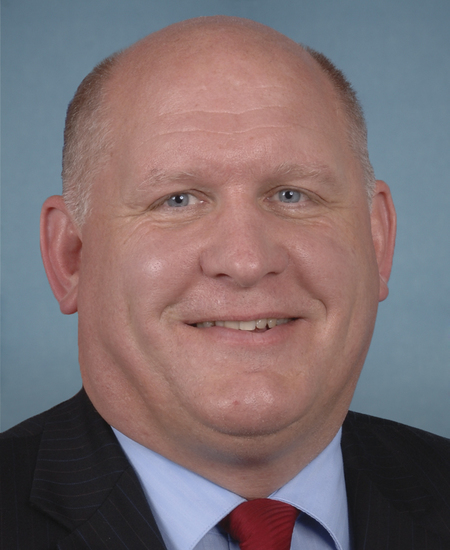
Rep. Glenn Thompson
Sponsored bills
Miracle on Ice Congressional Gold Medal Act This act provides for the award of Congressional Gold Medals to the members of the 1980 U.S. Olympic men's ice hockey team in recognition of the team's achievement at the 1980 Winter Olympic Games.
Maddy summaryThe HIRRE Prosecutors Act of 2025 establishes a federal grant program to help state, local, tribal, and territorial prosecutor offices hire, retain, and train prosecutors and support staff. It authorizes $10 million annually (2026-2030) for competitive grants, covering up to 75% of eligible costs, with preference given to rural, tribal, and areas rehiring laid-off prosecutors. Grantees must cover the remaining 25% of costs (or qualify for a waiver), and funds cannot replace existing state/local funding but must supplement it. All funded projects require data tracking and annual performance evaluations by the Attorney General.
Maddy summaryHR 1461 designates the U.S. Postal Service facility at 521 Thorn Street in Sewickley, Pennsylvania, as the "Mary Elizabeth 'Bettie' Cole Post Office Building." The bill updates all official references to this specific post office location to reflect the new name. This is a ceremonial naming resolution honoring Mary Elizabeth "Bettie" Cole, with no new policies, funding, or operational changes to the postal facility.
Maddy summaryThis bill exempts certain wages earned by health care workers and first responders during the COVID-19 pandemic (January 2020-May 2023) from Social Security’s earnings test, ensuring these workers receive full retirement benefits without reduction. It also creates a future framework: during federally declared public health emergencies with healthcare worker shortages, the Social Security Commissioner may issue waivers to exclude such wages from the earnings test. The bill defines "health care professional" and "first responder" using existing law and requires annual reporting on issued waivers. It directly affects workers in these fields who earned wages during qualifying periods, removing a barrier to full Social Security benefits. The policy change is purely procedural, adjusting how Social Security calculates earnings for these specific workers.
Maddy summaryThis bill amends the Natural Gas Act to give the Federal Energy Regulatory Commission (FERC) exclusive authority to approve U.S. LNG export terminal projects, requiring FERC to deem such exports consistent with the public interest. It directly affects natural gas companies seeking to build or expand export facilities and streamlines FERC's review process by removing prior requirements for interagency coordination. The bill clarifies that FERC's decisions won't override existing sanctions laws, including restrictions on trade with countries designated as state sponsors of terrorism under current law. This change aims to accelerate domestic LNG export projects while maintaining legal safeguards for national security and foreign policy.
Maddy summaryHR 6466, the Forced Abortion Prevention and Accountability Act, prohibits non-consensual administration of abortion drugs (like mifepristone or misoprostol) to pregnant women without their informed consent. It criminalizes this act with penalties up to 25 years in prison and allows victims to sue for triple damages, psychological/physical injury compensation, and attorney fees. The bill directly affects pregnant women who might face coerced procedures and medical providers or others who administer such drugs without consent. Key provisions include criminal penalties for the act itself, enhanced penalties for serious injury or death, and a civil remedy framework for victims seeking compensation.
Maddy summaryThis bill creates two federal grant programs to support medical residency training in rural areas. The first program provides grants to eligible organizations (like rural hospitals, health centers, and medical schools) to establish or expand residency programs where doctors train in rural settings for over half their residency time, focusing on primary care, high-need specialties, or maternal health. The second program funds technical assistance grants to help these organizations apply for and run the training programs. The bill authorizes $12.7 million annually from 2026 to 2030, with grants for the training programs lasting up to 3 years and technical assistance grants up to 4 years.
Maddy summaryThis bill increases the annual contribution limit for certain retirement savings accounts from $2,500 to $5,000. It directly affects workers participating in defined contribution retirement plans (like 401(k)s) who meet basic eligibility requirements. The key change raises the maximum amount individuals can contribute annually to these accounts, with the new limit applying to taxable years starting after December 31, 2026. The bill also updates related definitions in retirement law to align with this increased limit.
Maddy summaryHR 6407, the RCORP Authorization Act, authorizes $165 million annually (2026-2030) to fund the Rural Communities Opioid Response Program. This program provides grants to states, tribes, rural health offices, and other eligible entities to expand prevention, treatment, and recovery services for opioid and substance use disorders in rural areas. Funds can support planning, evidence-based service models, and coordination with local communities but cannot be used for real property acquisition. The bill directly affects rural communities facing opioid crises and the organizations delivering care through these grants.