

Essential Caregivers Act of 2025 This bill prohibits certain health care facilities from limiting the access of essential caregivers to residents of those facilities, including during designated emergency periods. Specifically, the bill generally prohibits Medicare skilled nursing facilities, Medicaid nursing facilities, Medicaid intermediate care facilities, and associated inpatient rehabilitation facilities from restricting the access of essential caregivers to residents of the facilities, including during emergency periods in which visitation rights are otherwise restricted. During emergency periods, facilities may restrict access for an initial period of up to seven days and for one additional maximum seven-day period (if the additional period is approved by the state health department). Facilities may restrict access for a total of 7 days (or 14 days with the approval of the state health department) during an emergency period. Essential caregivers must agree to comply with any safety protocols set by the facility, which may be no more stringent for caregivers compared to those for staff. Caregivers who fail to comply with these requirements may be denied access, subject to an appeals process.
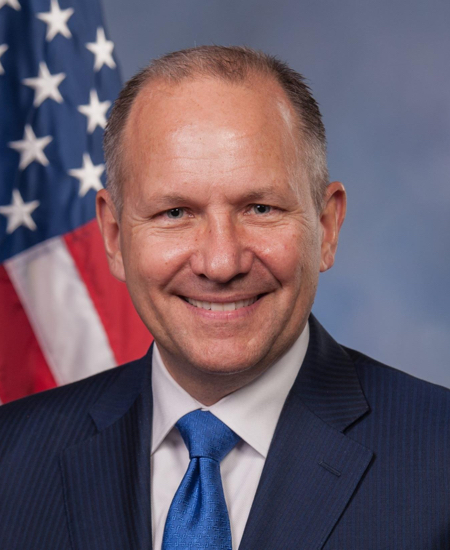
Rep. Lloyd Smucker
Sponsored bills
Miracle on Ice Congressional Gold Medal Act This act provides for the award of Congressional Gold Medals to the members of the 1980 U.S. Olympic men's ice hockey team in recognition of the team's achievement at the 1980 Winter Olympic Games.
Maddy summaryHR 1461 designates the U.S. Postal Service facility at 521 Thorn Street in Sewickley, Pennsylvania, as the "Mary Elizabeth 'Bettie' Cole Post Office Building." The bill updates all official references to this specific post office location to reflect the new name. This is a ceremonial naming resolution honoring Mary Elizabeth "Bettie" Cole, with no new policies, funding, or operational changes to the postal facility.
Maddy summaryHRES 932 is a symbolic resolution passed by the House of Representatives that condemns six specific members of Congress (including Senators Kelly and Slotkin and Representatives Crow, Deluzio, Goodlander, and Houlahan) for allegedly making statements that encouraged military and intelligence personnel to disobey orders from the President. The resolution claims these lawmakers falsely suggested the administration issued "illegal orders" and undermined the military chain of command, violating the Uniform Code of Military Justice (UCMJ). It does not create new laws or policies but formally denounces the lawmakers' statements as "dangerous and seditious rhetoric." As a procedural resolution, it has no binding effect on military conduct or policy.
Maddy summaryHR 6420 (the ACCESS Act) defines and regulates "short-term limited duration insurance" (STLDI) as health coverage with a contract term under 12 months and total duration under 3 years, including renewals. The bill changes existing health care rules to allow STLDI to be marketed as a temporary coverage option during transitions like job changes, specifically for small businesses and workers needing flexible, affordable plans while avoiding full-year coverage requirements. This directly affects small business owners and employees seeking portable, low-cost health insurance during coverage gaps, without requiring the full benefits of standard plans.
Maddy summaryThe IMPACT Act of 2025 amends the Affordable Care Act to expand eligibility for catastrophic health insurance plans. Specifically, it allows individuals who do not qualify for financial subsidies or tax credits based on their household income to purchase these plans. This change modifies the existing rules that previously restricted catastrophic plans primarily to those with higher incomes who were ineligible for premium assistance. The new eligibility rules will take effect for insurance plan years starting six months after the law is enacted.
Maddy summaryThis bill allows the Social Security Administration to reissue a new Social Security number to children under 14 if their card was lost or stolen, after a parent or guardian provides sworn evidence of the incident. It amends the Social Security Act to create a formal process for reissuing numbers when a child’s card was compromised during transmission. The Commissioner must issue a new number and document the loss/theft reason in the child’s records. This directly affects minors under 14 whose Social Security cards were lost or stolen before they turned 14.
Maddy summaryThe Claiming Age Clarity Act (HR 5284) requires the Social Security Administration to update its official terminology by January 1, 2027. It directs the replacement of specific terms: "early eligibility age" becomes "minimum monthly benefit age," "full retirement age" and "normal retirement age" become "standard monthly benefit age," and "delayed retirement credit" is eliminated, with "maximum monthly benefit age" used instead of age 70 references. This change applies to all Social Security Administration rules, regulations, guidance, and materials, both online and in print, affecting how the agency communicates retirement benefit rules to the public.
Maddy summaryHR 4313, the Hospital Inpatient Services Modernization Act, extends Medicare's waiver allowing acute hospital care at home until 2030 (previously expiring in 2025). It requires the Secretary of Health and Human Services to conduct a detailed study by September 2028 comparing home-based hospital care to traditional inpatient care. The study must analyze quality metrics (like readmission rates and patient outcomes), costs, staffing patterns, and patient demographics - including racial, ethnic, and socioeconomic data - across participating and non-participating hospitals. This bill directly affects Medicare beneficiaries receiving home-based care and hospitals operating under the waiver program.
Give Kids a Chance Act of 2025 This bill expands the Food and Drug Administration’s (FDA’s) authority with respect to research on rare pediatric diseases, including by permitting the FDA to take enforcement action against drug sponsors that fail to satisfy pediatric study requirements and by reauthorizing programs that support pediatric research. Specifically, the bill modifies requirements relating to molecularly targeted pediatric cancer investigations to permit research on new drugs in combination with active ingredients that have already been approved, provided certain conditions are met; permits the FDA to take enforcement action against drug sponsors that fail to comply with pediatric study requirements, if such sponsors demonstrated a lack of due diligence in satisfying the requirement; renews the FDA’s authority to award priority review vouchers to sponsors of new products intended to treat rare pediatric diseases through September 30, 2029; and reauthorizes through FY2027 certain funding for the National Institutes of Health to support priority pediatric research. The bill also provides statutory authority for the FDA’s interpretation of the orphan drug exclusivity period. The bill specifies, consistent with FDA regulations, that the seven-year market exclusivity period for drugs for rare diseases or conditions (i.e., orphan drugs) prohibits the approval of the same drug for the same approved use or indication with respect to the disease or condition. (In Catalyst Pharmaceuticals, Inc. v. Becerra , a court rejected the FDA’s interpretation and held that orphan drug exclusivity extends to all uses or indications for the disease or condition.)